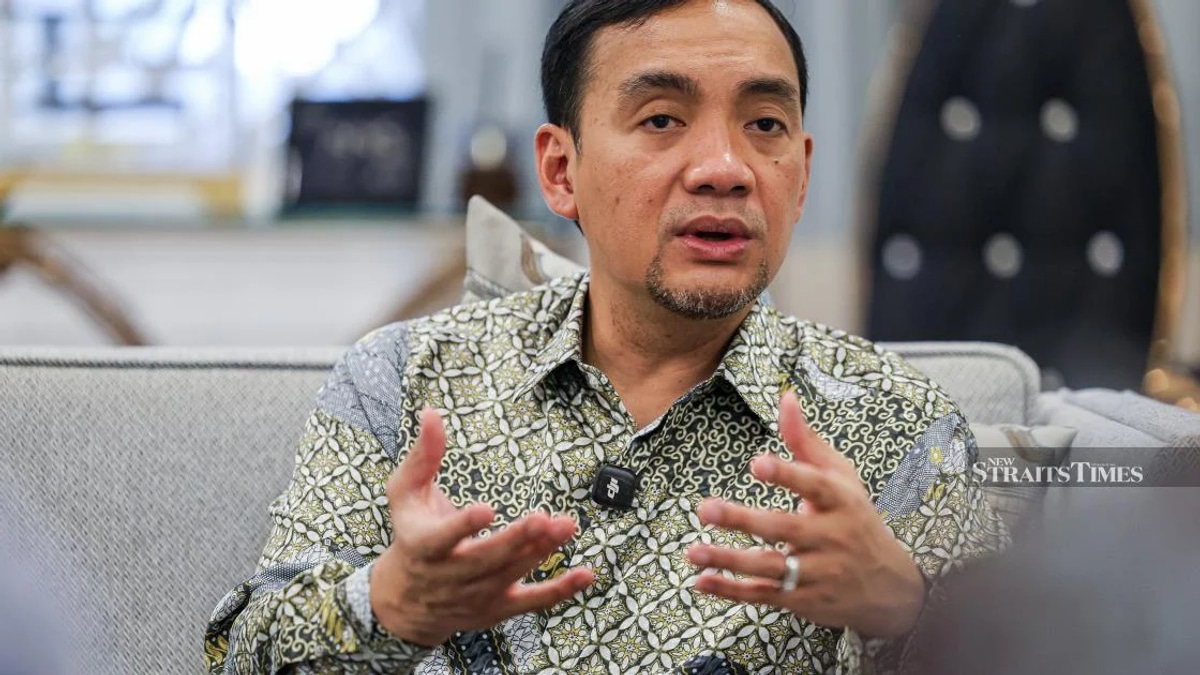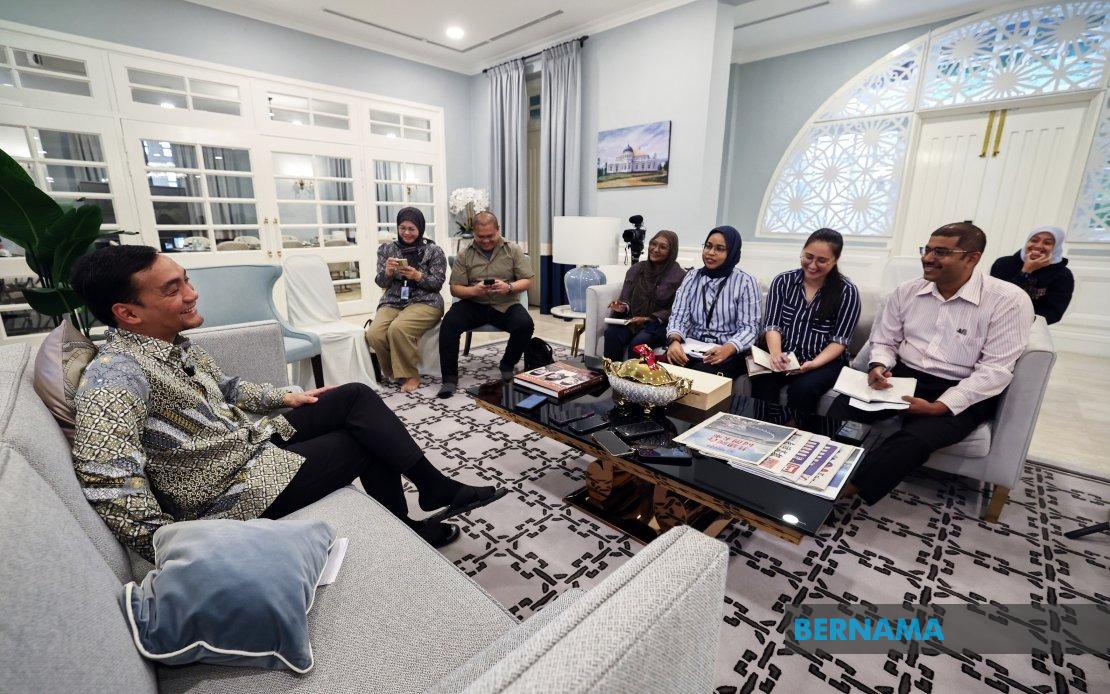
Johor Barisan Nasional chairman Datuk Onn Hafiz Ghazi has called on party members who failed to secure candidate nominations for the upcoming state election to sustain their dedication to the coalition's broader mission. Speaking in an exclusive media interview at his official residence in Saujana, the Johor Menteri Besar framed non-selection not as a definitive setback but as an opportunity for alternative contributions to party endeavours and public service.
The candidate vetting process remains fluid, Onn Hafiz indicated, with the selection mechanism currently at the eighty percent completion stage. This fluidity underscores the provisional nature of preliminary decisions, as final confirmation only materializes upon issuance of the formal watikah, or letter of appointment. The Menteri Besar emphasized that circumstances can shift dramatically even at advanced stages, citing instances where previously issued letters have been rescinded. This transparency about the ongoing nature of deliberations reflects the complexity inherent in balancing multiple party and community interests during candidate finalization.
For those excluded from the ballot, alternative pathways within the political structure remain available. Parliamentary representation, involvement in party administration, and other organizational responsibilities represent avenues through which unsuccessful aspirants can channel their energies. Onn Hafiz stressed that the limitation of available seats necessitates such diversification of roles, a reality confronting all major political movements. The critical imperative, he argued, centres not on immediate candidacy but on maintaining unwavering commitment to strengthening party machinery and prioritizing constituent welfare.
The selection framework itself reflects sophisticated criteria spanning professional diversity, generational inclusivity, and community rootedness. Rather than adhering to rigid templates, the approach privileges candidates with demonstrated local standing and proven acceptability within their respective constituencies. This philosophy aligns with the Barisan Nasional president's articulated standard of winnable, acceptable, and likeable candidates—shorthand for balancing electability with community confidence. Age represents merely one variable within this multidimensional calculus; competence in service delivery and genuine commitment to constituent needs supersede chronological considerations.
Onn Hafiz underscored that candidate designation operates through hierarchical institutional channels rather than individual discretion. All nominations require ratification from the BN chairman and UMNO president Datuk Seri Dr Ahmad Zahid Hamidi, alongside consultation with senior party echelons. This layered approval mechanism, whilst potentially protracted, distributes accountability across organizational levels and incorporates diverse leadership perspectives in constructing the final slate. Such institutional deliberation, though sometimes frustrating for aspirants, serves to legitimize selections across factional and grassroots constituencies.
Demographic realities increasingly shape electoral calculations in contemporary Johor politics. Voters below forty years constitute between one-fifth and two-fifths of the state's population, positioning this cohort as potentially decisive in government formation. The BN's organizational infrastructure has invested substantially in youth engagement initiatives, recognizing that generational perceptions of governance efficacy transcend traditional party machinery. Onn Hafiz expressed confidence that young voters comprehend BN's dependence on their participation, suggesting that messaging resonance extends beyond conventional partisan appeals to encompass substantive policy concerns.
Voter participation rates carry particular salience in a state practicing democratic governance. Higher turnout translates into enhanced representational legitimacy, a principle Onn Hafiz emphasized when exhorting all Johoreans—including those employed across the border in Singapore—to exercise their franchise on July 11. This inclusive framing acknowledges the transnational labour patterns characterizing modern Johor, where significant populations maintain dual economic interests yet retain voting rights in their home state. The administrative accommodation of overseas voters through early polling on July 7 reflects institutional recognition of these contemporary mobility patterns.
The incumbent administration's track record forms the substantive foundation for its reelection petition. Onn Hafiz characterized the state government's tenure as demonstrating consistent dedication to constituent delivery, positioning continuation under BN stewardship as preferable to electoral uncertainty. This appeals to a particular political psychology—preference for proven governance over untested alternatives—that has historically advantaged incumbent coalitions in Malaysian state contests. The invocation of divine approval, framed through the Arabic phrase 'insya-Allah,' locates the continued mandate within both democratic process and religious endorsement, resonating with the religiously-conscious segments of Johor's electorate.
The nomination calendar establishes June 27 as the formal candidate declaration date, with July 11 designated for balloting. This compressed timeframe between registration and election day permits limited campaigning duration compared to parliamentary contests, potentially advantaging incumbents with established organizational presence. The fifteen-day campaign window requires efficient resource mobilization and message discipline across both selected and non-selected party members. Onn Hafiz's appeal for steadfast commitment from disappointed aspirants thus carries practical significance, as party cohesion during this condensed schedule directly influences ground-level campaign effectiveness and ultimately electoral performance in marginal constituencies.
The broader political context situates this Johor contest within a regeneration cycle confronting Malaysia's main coalitions. The tension between organizational continuity and renewal—preserving experienced leadership while accommodating emerging talent—manifests acutely during candidate selection. Onn Hafiz's nuanced messaging acknowledges these competing pressures, legitimizing both chosen nominees and excluded members within an integrated party narrative. For Malaysian political observers tracking evolving governance dynamics, the Johor election mechanics and leadership rhetoric illuminate how established institutions navigate personnel transitions whilst maintaining organizational stability during periods of electoral contestation.