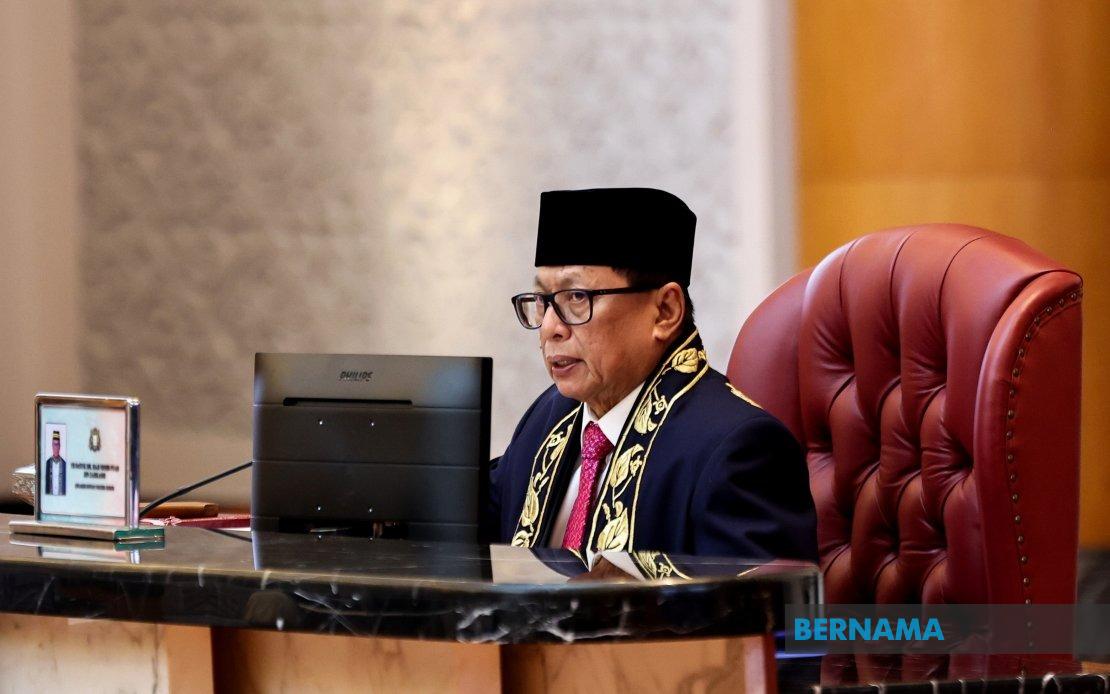
Datuk Dr Mohd Puad Zarkashi, the incumbent Rengit assemblyman and Speaker of the Johor State Legislative Assembly, has formally announced his withdrawal from contesting the seat in the upcoming state election scheduled for July 11. The seasoned politician made this announcement through a Facebook post, ending months of speculation about his political future as Johor prepares for one of its most closely watched electoral contests in recent years.
The decision to step down comes after careful deliberation, with Mohd Puad revealing that he had made up his mind approximately a year ago. He informed UMNO president Datuk Seri Dr Ahmad Zahid Hamidi and Johor UMNO chairman Datuk Onn Hafiz Ghazi of his intentions just two weeks prior to the public announcement, ensuring that party leadership had adequate time to identify and prepare alternative candidates for the Rengit constituency.
Age emerged as the defining factor in his decision. At 69 years old, Mohd Puad expressed concern that seeking another term would be inappropriate given the physical and mental demands of state-level politics. He articulated a clear projection of his circumstances five years hence, when he would reach 74, a threshold he views as too advanced for shouldering the responsibilities of a state assemblyman. This candid assessment reflects growing conversations within Malaysian politics about succession planning and the integration of younger voices into governance structures.
His withdrawal carries particular significance for Johor's political landscape because it signals a conscious effort to rejuvenate UMNO's candidate roster ahead of the election. Mohd Puad explicitly advocated for the advancement of those aged 50 and below, positioning this as essential for revitalizing the party's electoral prospects and demonstrating commitment to generational change. This stance aligns with broader national discourse about leadership renewal and the integration of mid-career professionals into electoral politics.
The outgoing assemblyman further endorsed Datuk Onn Hafiz Ghazi's authority to lead a restructured team comprising younger candidates. By voluntarily stepping aside and publicly supporting the new direction, Mohd Puad removes potential complications that might arise from contested nominations or internal party tensions. This approach strengthens Onn Hafiz's mandate to reshape the Johor UMNO slate and demonstrates party discipline during a critical electoral juncture.
Beyond his personal withdrawal, Mohd Puad has contributed substantively to the party's broader candidate selection process by proposing criteria for evaluating prospective contenders. He emphasized the importance of educational credentials, personal integrity, ideological commitment to party principles, and a demonstrated understanding of Malaysia's national direction. These guidelines suggest an effort to professionalize candidate selection and move away from purely patronage-based nomination patterns that have occasionally plagued Malaysian state elections.
His track record in Rengit provides context for understanding the seat's electoral dynamics. In the 2022 Johor state election, Mohd Puad secured victory with a margin of 1,920 votes, indicating a moderately competitive constituency where UMNO's hold could be vulnerable if replacement candidates lack comparable grassroots support or political acumen. The relatively narrow margin suggests that the successor candidate will require strong organizational backing and community engagement to retain the seat for UMNO.
Mohd Puad's role as State Assembly Speaker adds another dimension to his departure. The Speaker position commands significant procedural authority and symbolic prestige within Johor's legislature. His decision to step down from electoral politics while potentially maintaining this institutional role—or arranging a smooth transition—demonstrates the importance he places on orderly governance and institutional continuity during the electoral process. He has committed to resolving outstanding matters before nomination day on June 27, ensuring that administrative loose ends do not undermine either his successor or the functioning of state institutions.
The broader context of the July 11 election underscores why Mohd Puad's withdrawal matters beyond Rengit. Johor has remained a UMNO stronghold, yet the party faces mounting pressure from PAS and other opposition coalitions. The state government's legitimacy and electoral prospects depend significantly on presenting an energized, competent candidate slate capable of engaging contemporary voter concerns about the cost of living, infrastructure, and governance effectiveness. Younger candidates often carry advantages in connecting with younger voters and projecting an image of forward-looking administration.
Mohd Puad's public gratitude toward Sultan Ibrahim, King of Malaysia, for approving his Speaker appointment, and his expression of appreciation for Rengit constituents' support, reflects the formal courtesy expected of outgoing elected representatives. These ceremonial acknowledgments, while routine, underscore the respectful manner in which he has managed his political exit and his attempt to preserve relationships that may extend beyond this electoral cycle.
The timing of his announcement, just two weeks before UMNO's nominations were to be finalized, provided the party with sufficient runway to vet replacement candidates and build campaign infrastructure around new faces. For Rengit voters accustomed to Mohd Puad's representation, this advance notice allows time to familiarize themselves with the incoming UMNO candidate and assess their suitability for the role.
Mohd Puad's exit also carries implications for how UMNO manages generational transitions more broadly. If the party successfully field younger candidates in vacated seats and those candidates perform credibly in the election, it could validate the approach and encourage further recruitment of mid-career professionals. Conversely, if replacements underperform, it may trigger internal debate about whether such transitions were premature. The Rengit outcome will thus function as a barometer for broader party strategy.
Ultimately, Mohd Puad's decision represents a measured acknowledgment of personal mortality and political reality. Rather than clinging to power until forced out or becoming a liability, he has orchestrated a voluntary transition that preserves his dignity, supports party leadership, and potentially opens space for Johor UMNO to pursue electoral gains through renewed candidate profiles. Whether this calculated exit strategy translates into electoral success for UMNO in Rengit and across Johor will become evident on July 11.