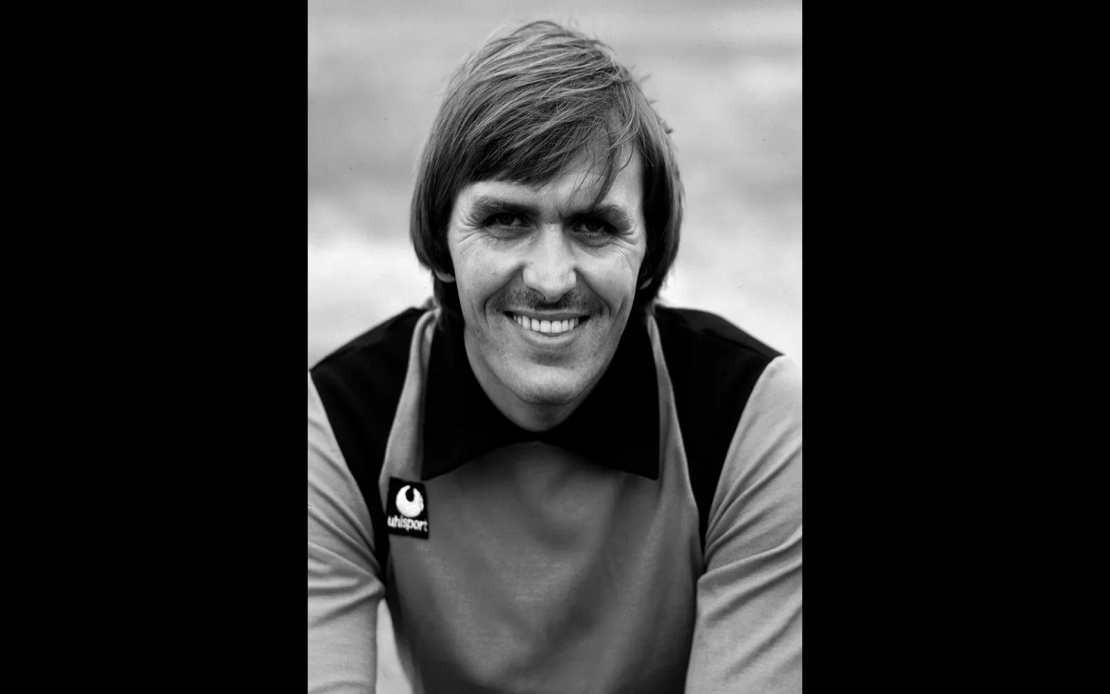
Jimmy Rimmer, the Aston Villa goalkeeper whose career was defined by remarkable achievement coupled with cruel misfortune at football's grandest moments, has passed away at the age of 78. The English shot-stopper, who played a pivotal role in Villa's 1981 First Division championship triumph, became one of the most poignant figures in the club's storied history—a man who won European football's most prestigious trophy yet watched from the sidelines as his teammates secured it.
Rimmer's journey at Villa Park began in 1977, when he arrived from Arsenal following a spell at Highbury that had interrupted his earlier time at Manchester United. At Old Trafford, he had struggled to break past Alex Stepney's stranglehold on the number-one position, a setback that might have derailed lesser careers. After leaving United for Arsenal in 1974, he accumulated experience before finding his opportunity in the Midlands, where he would become integral to one of English football's most remarkable periods of continental dominance.
During the 1980-81 season, Rimmer was ever-present between the posts as Aston Villa, managed by Ron Saunders and later Tony Barton, secured the English league title. His performances were steady and assured, forming the backbone of a defensive unit that proved decisive in claiming England's top-flight crown. This achievement alone would have secured his place in club folklore, but Villa's trajectory continued upward with remarkable momentum into European competition.
Yet Rimmer's story carries an element of genuine tragedy that distinguishes it from typical sporting narratives. Just twelve months after anchoring Villa to domestic glory, the club travelled to Rotterdam to face Bayern Munich in the 1982 European Cup final. In what ranks among the cruellest moments of his professional life, Rimmer suffered a severe neck injury after merely nine minutes of play. He was forced to leave the field, his participation in the match—and potentially in football's greatest night—abruptly terminated through no fault of his own.
Nigel Spink, the reserve goalkeeper, entered the field to replace him and proceeded to deliver one of goalkeeping's great underdog performances. With Peter Withe scoring the decisive second-half goal, Spink maintained a clean sheet as Villa became European champions, a feat the club has never replicated in the four decades since. Rimmer collected a winner's medal for his involvement in the early stages, yet the psychological weight of not playing in a final he had helped the team reach proved immeasurable.
The symmetry of Rimmer's misfortune becomes even more striking when considering his earlier experience. Fourteen years prior to Rotterdam, as a young Manchester United player, he had sat on the bench watching his teammates defeat Benfica in the 1968 European Cup final at Wembley. Here again, Rimmer found himself celebrating a continental triumph from the periphery rather than the pitch. Two European Cup medals earned through steadiness and commitment, yet neither secured through the honour of playing the decisive ninety minutes.
Following the Rotterdam final, Spink's outstanding performance effectively sealed his position as Villa's number-one goalkeeper for the years ahead. Rimmer, despite his proven quality and the club's appreciation of his contributions, faced the realistic prospect of limited first-team opportunities. The club's decision to transfer him to Swansea City in 1983 reflected this new reality, bringing an end to his tenure in Birmingham after more than 200 competitive appearances.
Rimmer's sole England cap represented another unfulfilled chapter in a career marked by promise and frustration in equal measure. Despite the evident quality he demonstrated at club level, he never managed to establish himself as a regular international performer, a failure that seems particularly unjust given the standards he maintained for Villa and his other employers. His exclusion from regular England duty remains one of football's minor mysteries, a reflection perhaps of the exceptional depth of talent in English goalkeeping during that era.
Aston Villa released a statement acknowledging Rimmer's passing with evident emotion and respect. The club recognised him as one of the finest goalkeepers of his generation, whilst simultaneously acknowledging the extraordinary bad luck that pursued him across the biggest occasions of his career. This paradoxical tribute—celebrating his achievements whilst mourning his unrealised potential on the greatest stages—captures something essential about Rimmer's legacy.
For Malaysian and Southeast Asian football enthusiasts, Rimmer's story offers instructive lessons about the unpredictable nature of sporting success and the importance of character in the face of disappointment. His professionalism in serving Villa during the periods when fortune turned against him demonstrates a dignity that transcended the immediate frustration of circumstances. Though European club football remains distant from the daily concerns of Malaysian supporters, Rimmer's narrative resonates as a reminder that individual excellence sometimes counts for less than timing and circumstance in determining how history remembers us.

