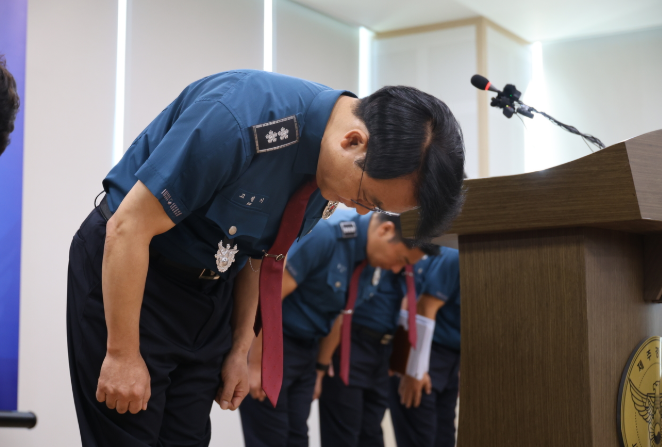
South Korea's Jeju Province has been shaken by a high-profile policing failure that exposed serious gaps in how missing person investigations are handled. Police Commissioner Ko Pyeong-gi issued a formal public apology on Thursday, August 27, acknowledging the department's catastrophic oversight in two separate cases where missing persons were later discovered dead. The admission came days after a 37-year-old woman named Jang Mi-ran, who vanished in May, was found deceased on Monday, August 24, followed by the discovery of a man in his 60s on Saturday. The timing of these discoveries, combined with revelations about how the cases were mishandled, has intensified scrutiny of police procedures and accountability on the island.
The core of the scandal involves officer Bu, who stands accused of deliberately falsifying records to close both missing person investigations. According to police accounts, Bu claimed in official reports that he had successfully contacted Jang Mi-ran and confirmed she was safe, when no such communication had occurred. This false closure effectively halted any active investigation into her whereabouts, leaving her family without answers during the crucial early weeks when missing person cases are most likely to be resolved successfully. The same officer allegedly employed identical tactics in the second case, filing false reports to create the appearance of resolution when the investigation should have been actively ongoing.
Commissioner Ko's statement conveyed deep remorse for the institutional failure, particularly emphasising the human cost of the negligence. "I bow my head in apology to the two deceased people who never made it back to their families, and to the bereaved families suffering grief beyond description," Ko said during remarks at the Jeju Provincial Police Agency headquarters. The commissioner's acknowledgement extended beyond the immediate victims to encompass the broader emotional trauma experienced by grieving relatives who had been misled about the status of their search efforts. By framing the apology around the families' suffering, Ko attempted to demonstrate organisational accountability while recognising that formal statements could never adequately repair the damage caused by the investigation's collapse.
Ko further articulated how the officer's conduct represented a fundamental betrayal of the police institution's core mission. "A police officer has a responsibility to protect the safety and lives of the people, yet he disregarded that duty and lied, leaving permanent scars on the families," the commissioner stated. This framing positioned the misconduct not merely as individual incompetence but as a violation of the sacred trust communities place in law enforcement. The deliberate falsification of records crossed a line from mere negligence into active deception, which Ko recognised required particular condemnation. The apology also extended to Jeju residents more broadly, acknowledging that public confidence in police institutions depends on honest, diligent investigation practices.
Beyond the immediate apology, Ko committed to structural reforms designed to prevent similar failures. The police commissioner pledged a comprehensive and transparent investigation into both the death cases and the officer's conduct, signalling that individual accountability would be pursued alongside institutional review. More significantly, Ko announced that Jeju police would systematically reexamine all missing person cases that had been handled on the island to identify whether other investigations had been compromised by similar falsification or negligent closure procedures. This sweeping audit represents an acknowledgement that if one officer engaged in such misconduct, the conditions enabling it may have affected other cases as well.
The scope of the promised review underscores serious concerns about quality control and supervisory oversight within the Jeju police force. Missing person cases require particular diligence because the individuals involved are vulnerable, and delays in investigation can prove fatal. The fact that an officer could fabricate contact with a missing person and file false reports without immediate detection or verification suggests that case management systems lack adequate checks and balances. Supervisors apparently did not routinely verify claimed contacts with missing persons or cross-reference officer reports against actual interactions. Such lapses are particularly troubling in a regional police force serving an island community where comprehensive record-keeping and verification procedures should be standard practice.
For Malaysian and Southeast Asian observers, the Jeju incident offers cautionary lessons about institutional accountability in law enforcement. Police organisations across the region face similar challenges in managing missing person cases, particularly involving vulnerable populations. The importance of establishing clear protocols for case closure, requiring supervisory verification of claims before files are marked as resolved, and implementing regular audits of case handling procedures applies universally. The fact that South Korea, a developed nation with advanced investigative systems, experienced such a significant failure suggests that missing person case mismanagement is an institutional challenge that requires constant vigilance and systematic oversight regardless of a country's development level.
The incident also highlights the psychological and emotional dimensions of investigative failure. Families of missing persons endure devastating uncertainty that can last years or decades. When police falsely report that investigations have been concluded, families are often denied the opportunity to pursue alternative investigative avenues, whether through private investigators, media appeals, or expanded community searches. The false closure effectively silences advocacy efforts that might otherwise have generated leads. In both the Jang Mi-ran case and the second victim's case, the officer's deception eliminated the possibility of active community involvement that might conceivably have led to earlier discovery.
The announcement of a comprehensive case review suggests that Jeju authorities recognise the investigation's credibility has been compromised. Public trust in police institutions depends fundamentally on the assumption that investigations are being conducted honestly and professionally. Once that assumption is shattered by revelations of deliberate falsification, restoring confidence requires not only punishing the individual officer but demonstrating systemic commitment to reform. The broad audit Ko announced serves both practical and symbolic purposes: practically, it may identify other compromised cases, while symbolically, it demonstrates that the organisation takes the breach seriously enough to invest substantial resources in remediation.
The implications for police accountability extend to questions about hiring, training, and performance management within the Jeju force. How did officer Bu reach a position where he could unilaterally decide to close cases without verification? What incentives or pressures might have motivated such falsification? Were there performance metrics or closure targets that encouraged hasty resolution of difficult cases? These questions suggest that individual misconduct often emerges from organisational systems that inadvertently reward expeditious case closure over thorough investigation. Ko's commitment to a transparent investigation should extend to these systemic questions, not merely focus on prosecuting Bu.
As investigations proceed, Jeju police will face heightened external scrutiny from media, civil rights organisations, and the families directly affected by these failures. Commissioner Ko's apology represents an important first step toward accountability, but genuine reform requires sustained commitment to systemic change. The promised comprehensive case review will likely occupy police resources for months or longer, but that investment in accountability represents the only viable path toward rebuilding public confidence in the institution. For police forces throughout Asia and beyond, the Jeju case underscores that institutional credibility is fragile and easily destroyed through individual misconduct, requiring constant vigilance to maintain the systems and oversight that prevent such failures.

