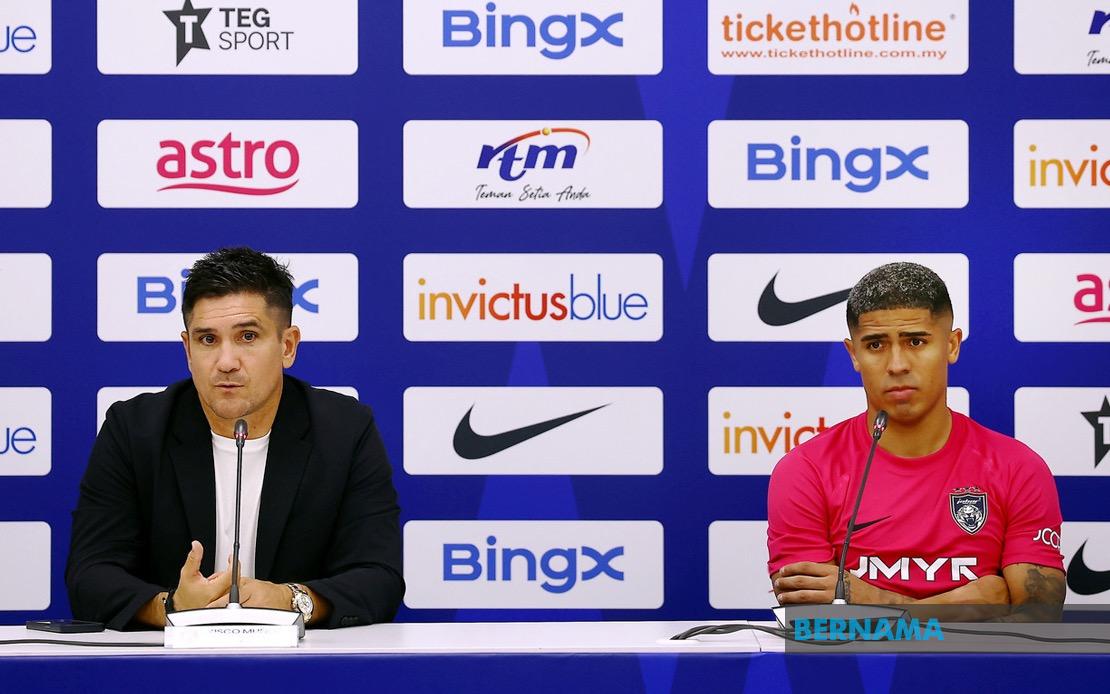
Johor Darul Ta'zim concluded their pre-season campaign with an impressive 3-3 draw against English Premier League powerhouse Chelsea FC at the Sultan Ibrahim Stadium in Iskandar Puteri on Friday evening. The result represented a significant statement of intent from the Southern Tigers as they prepare for a demanding competitive schedule, demonstrating that their preparation work has yielded tangible progress in match fitness, tactical understanding, and collective confidence.
Head coach Xisco Munoz walked away from the encounter with considerable satisfaction, viewing the performance as validation of the intensive work undertaken throughout the build-up period. Rather than focusing purely on the final scoreline, Munoz emphasised the quality of execution displayed across the match, particularly the team's ability to maintain intensity and composure against one of world football's elite organisations. The fixture served multiple purposes beyond mere preparation—it functioned as a genuine examination of how the squad would fare against international-standard opposition and whether the investments in training methodology and team cohesion had translated into visible improvement on the pitch.
Munoz articulated particular pride in how his players demonstrated character and resilience throughout the 90 minutes. The coach stressed that hosting Chelsea was not simply a physical test but rather a comprehensive examination of tactical discipline, decision-making under pressure, and the squad's capacity to absorb and implement coaching instructions in real-time against a formidable opponent. The ability to hold firm against world-class attacking threats whilst simultaneously creating genuine goalscoring opportunities reflected a team that had profited meaningfully from their pre-season schedule.
The goals came from multiple contributors, with Arif Aiman Mohd Hanapi, Oscar Aribas, and Bergson Da Silva each finding the back of the net. This distribution of goalscoring responsibility underscores a strength that Munoz considers fundamental to JDT's championship aspirations: the capacity to breach defences through various attacking channels rather than relying on isolated individuals. Depth in attacking options provides both tactical flexibility and insurance against injury misfortune as the season progresses.
A particularly illuminating aspect of Munoz's commentary concerned the tactical maturity evident in how his team transitioned between different defensive shapes and pressing intensities throughout the match. Rather than committing rigidly to a single formation or approach, JDT demonstrated the flexibility to shift between a low defensive block, a middle-block approach, and proactive high pressing depending on match circumstances and Chelsea's patterns of play. This tactical intelligence suggests that the coaching staff has successfully embedded concepts of contextual decision-making within the squad's collective understanding.
Munoz emphasised that competitive depth within the squad represents the foundation of JDT's ambitions for sustained success. When every player recognises that appearing for the badge demands maximum commitment and that no individual position is guaranteed, the resulting competitive environment elevates standards across the entire group. This philosophy explains JDT's historical capacity to maintain competitive intensity over lengthy seasons whilst managing fixture congestion and player rotation requirements.
The coach's remarks about the season ahead being "strong" carry particular significance for Malaysian football observers. JDT's domestic dominance is well-established, but increasingly the club faces continental ambitions and the prospect of defending their position against better-resourced competitors. The pre-season narrative Munoz constructed positions his team as driven by internal ambition rather than external pressure, suggesting psychological readiness for challenges ahead.
For Malaysian football supporters and analysts, the Chelsea draw offers encouraging signals about the domestic league's competitive trajectory. While the gap between JDT and Chelsea remains substantial, the capacity of a Malaysian club to compete meaningfully against Premier League opposition within a structured match context demonstrates that quality football development is achievable within Southeast Asian frameworks. The presence of overseas talent like Bergson Da Silva, combined with emerging local players such as Arif Aiman, creates a blend that Munoz has evidently worked successfully to integrate.
The broader context of this friendly also reflects JDT's positioning as the region's most ambitious club in terms of international exposure and competitive benchmarking. Rather than retreating into domestic comfort, the club actively courts high-profile opposition to test systems and expose players to elevated competitive standards. This mentality, arguably, has contributed to JDT's regional dominance and their ability to attract quality players who recognise the club as a platform for development and achievement.
Looking forward, Munoz's evident confidence in his squad's readiness suggests JDT will enter the new season with clear objectives and a functioning tactical framework. The pre-season canvas has been completed; the question now becomes whether the squad can sustain this performance level across a full domestic season whilst managing additional demands. For Malaysian football enthusiasts and regional observers, JDT's trajectory under Munoz continues to represent the closest contemporary example of how local clubs can credibly measure themselves against international opposition and translate such encounters into sustained domestic success.

