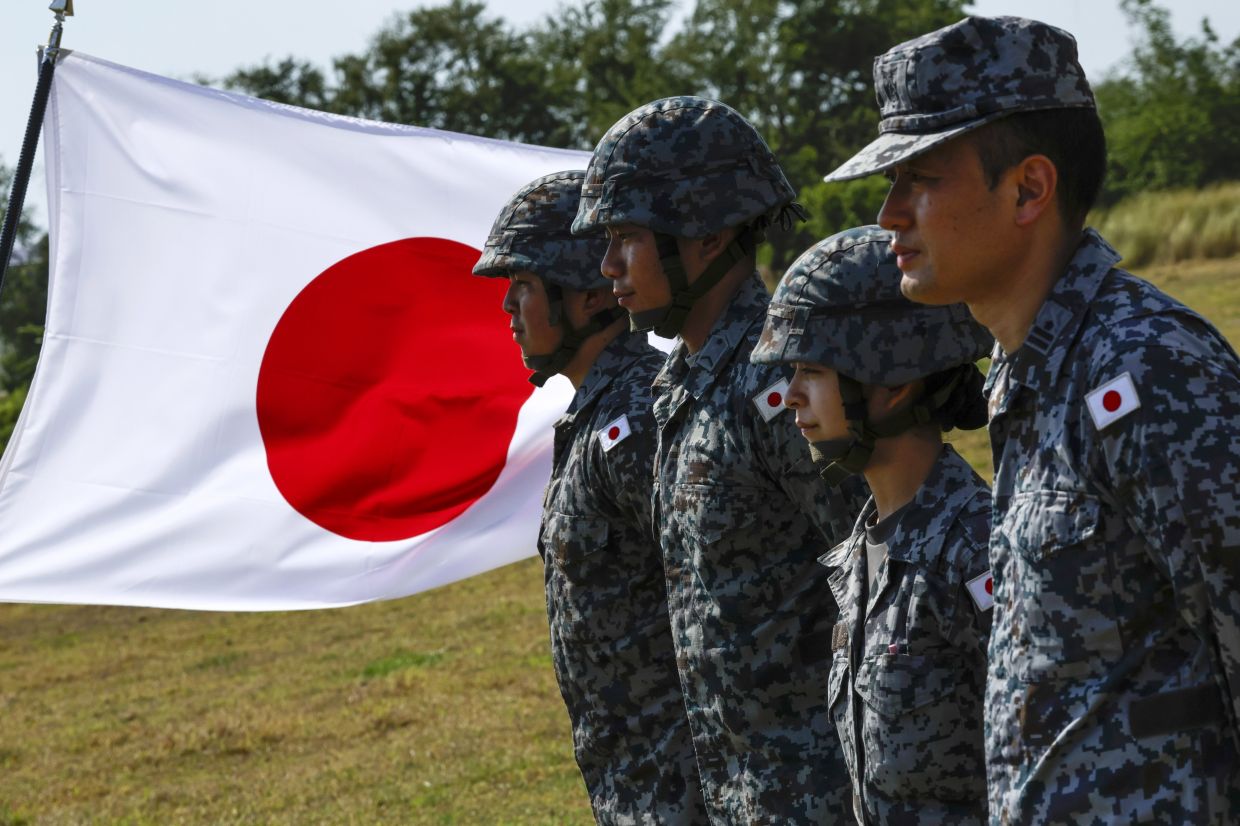
Japan's Defence Minister Koizumi used last month's Singapore security forum as a platform to demonstrate Tokyo's expanding regional influence, attempting to reshape the terms of debate around Asia-Pacific security architectures. The staging was deliberate: with a scheduled session on China's cooperative regional partnerships cancelled, Japan claimed the rhetorical high ground, preventing Beijing from presenting its own vision for the region to an influential audience of defence officials and analysts. Yet this apparent victory masks deeper anxieties within Tokyo's strategic establishment about both China's military ascendancy and the reliability of Japan's crucial American ally in an era of unpredictable US leadership.
The Koizumi-Hegseth meeting epitomised this underlying unease. While styled as a demonstration of US-Japan solidarity, the very need for such a public display revealed Tokyo's concern that Washington's commitment to Asian security might be weakening. This anxiety has become acute under the Trump administration, which has demanded allied nations substantially increase defence spending while simultaneously imposing punitive tariffs on strategic partners like India and threatening to reduce engagement with countries perceived as freeloading on American security guarantees. For Japan, historically dependent on the US security umbrella, this shift requires a fundamental recalibration of regional strategy.
Tokyo's response has been to construct what specialists call a multilayered regional military architecture, with Japan positioned not merely as a subordinate security consumer but as an active shaper of Indo-Pacific stability. This represents an unprecedented assertiveness for postwar Japan. Last year, officials openly discussed building nuclear-powered attack submarines, a proposal that challenges Japan's carefully maintained nuclear taboo and signals Tokyo's willingness to acquire the technological capabilities associated with genuine military powers. Such moves would have been unthinkable in earlier decades and reflect how dramatically regional security dynamics have shifted in Japan's perception.
Beyond submarine ambitions, Japan has aggressively expanded bilateral security partnerships, particularly with Commonwealth nations. The recent announcement that an upgraded Mogami-class frigate would deploy to New Zealand exemplifies this network-building, weaving together traditional allies and newer strategic partners into a flexible framework that avoids the rigid alliance-versus-alliance structure of earlier geopolitical eras. This approach appeals to Southeast Asian and Pacific nations wary of being forced to choose definitively between Washington and Beijing. Rather than presenting an explicitly anti-China coalition, Tokyo frames these arrangements as safeguards for maritime stability, open sea lanes, and the principle that smaller states should remain free from coercion.
Crucially, Japan recognises that military measures alone cannot sustain regional partnership. Many Indo-Pacific nations prioritise economic development, infrastructure investment, and energy security far above traditional security concerns. Tokyo has therefore integrated security assistance into a broader development toolkit, moving away from the abstract principles that characterised Shinzo Abe's 2016 Free and Open Indo-Pacific framework towards concrete economic and security instruments. Prime Minister Sanae Takaichi's recent FOIP update emphasises undersea cables, energy supply chain resilience, and maritime domain awareness—practical tools that appeal to recipient nations as much for their developmental benefits as their strategic utility.
Japan's Overseas Security Assistance programme exemplifies this integrated approach. Established to circumvent constitutional constraints against direct military aid, the OSA framework has expanded dramatically from four countries and 2 billion yen in 2021 to twelve countries receiving 18.1 billion yen in support, including advanced radar systems and drones. This expansion addresses a critical gap in regional military capabilities, particularly for maritime domain awareness—an area where development assistance alone proved insufficient. By providing military equipment to nations that could not otherwise afford advanced systems, Japan effectively forestalls the power vacuum that Beijing would otherwise fill. Unlike overt military aid, however, the programme appears less provocative to recipient publics and their regional neighbours, framing Japanese assistance as development-oriented rather than militaristic.
Infrastructure financing proves politically more palatable than direct weapons sales, yet often serves identical strategic purposes. Ports and airports funded by Japanese development aid create the logistical foundations for coastguard operations and defence logistics, generating security benefits without triggering nationalist backlash. This approach reflects a sophisticated understanding that long-term regional partnerships depend on perceived mutual benefit rather than cold security calculation. By integrating connectivity infrastructure with strategic assistance, Tokyo positions itself as a development partner supporting regional resilience, not merely a military actor hedging against China.
Japan's April decision to lift its ban on lethal weapons exports has accelerated this strategic pivot considerably. The new policy permits defence equipment sales to seventeen countries, including six ASEAN members: the Philippines, Malaysia, Indonesia, Vietnam, Thailand, and Singapore. This liberalisation serves multiple purposes simultaneously. It demonstrates Japan's seriousness about regional engagement and creates commercial opportunities for Japan's defence industrial base, which has atrophied during decades of pacifist constraints. A potential sale of Asagiri-class destroyers to Indonesia, currently under discussion, would represent the kind of high-value defence transaction that simultaneously strengthens a strategic partner and showcases Japanese military technology to potential customers throughout the region.
Yet this defence industrial dimension introduces complications. By creating commercial incentives for weapons exports, Tokyo risks being perceived as pursuing narrowly commercial interests rather than disinterested partnership. The transformation of defence hardware into an export commodity—and the defence industrial base into a driver of foreign policy—represents a significant departure from Japan's postwar trajectory. While strategists argue this creates opportunities to prove Japanese equipment's quality and efficiency, critics worry that commercialisation could undermine the development-oriented framing that makes Japanese assistance attractive to regional partners.
The Power Asia initiative, launched in April with a ten-billion-dollar commitment to help regional partners secure emergency energy supplies and build long-term energy resilience, demonstrates how thoroughly Japan has integrated economic and security concerns. Framed as a response to Middle Eastern instability and potential disruptions to energy supplies passing through the Strait of Hormuz, the initiative provides tangible benefits to Southeast Asian and Pacific economies while simultaneously reducing their vulnerability to Chinese pressure. Energy security, unlike military capability, carries no taint of militarism and appeals directly to development priorities that define these nations' strategic concerns.
Yet significant obstacles constrain Tokyo's ability to compete with Beijing's far greater financial resources and willingness to offer unconditional support. Japan's basic ODA policy enshrines non-military principles, creating legal and political complications for even the recalibrated security assistance framework. Many regional partners, while welcoming Japanese investment and technology transfer, remain reluctant to align explicitly against China, their largest trading partner. This contradiction between Japan's strategic ambitions and regional partners' economic interests creates fundamental limitations on how far Tokyo can push its security agenda without triggering nationalist backlash or accusations of neocolonial interference.
Experts increasingly emphasise that Japan must work collectively with allies—particularly the United States, Australia, and India—to achieve quantitative military balance while maintaining the diplomatic flexibility that characterises Japan's preferred engagement style. The challenge lies in collaborating on substantive security matters while avoiding the explicit anti-China messaging that would alienate Southeast Asian and Pacific nations seeking to benefit from relationships with multiple great powers. This requires Japan to position its initiatives as supporting regional autonomy and maritime stability rather than as moves in a zero-sum competition for dominance. As Washington's reliability as a security guarantor faces increasing questions, Tokyo's success in balancing these competing imperatives will significantly shape Indo-Pacific security architecture for decades ahead.

