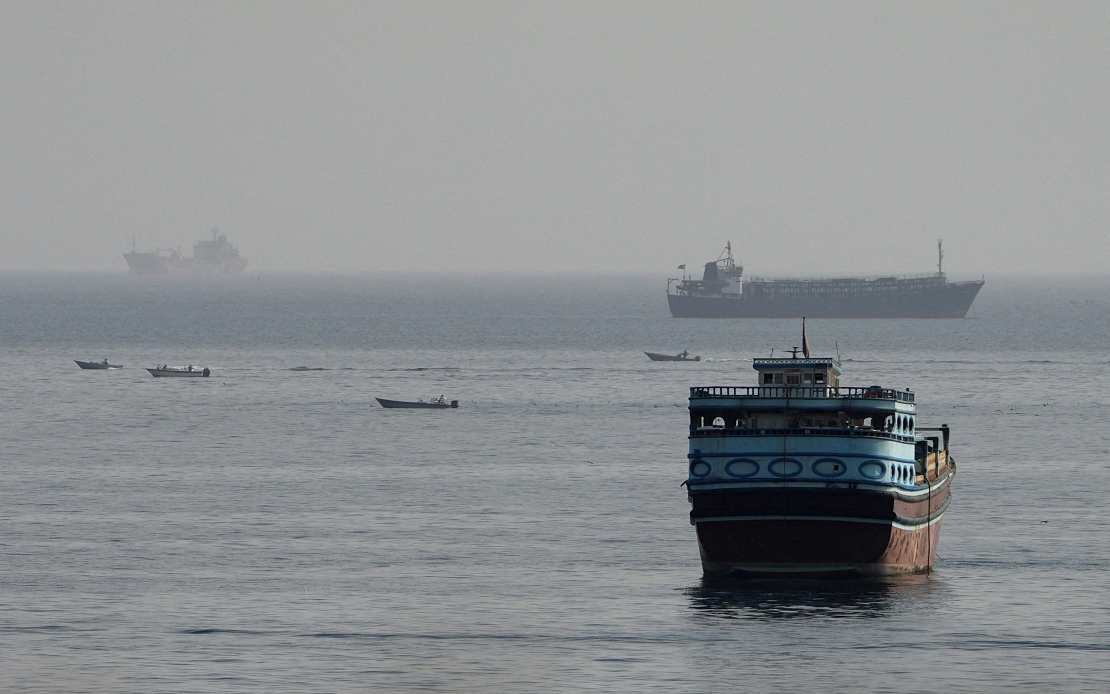
Japanese Prime Minister Sanae Takaichi has called on Iran to guarantee that passage through the Strait of Hormuz remains free from additional charges, according to remarks she made following a telephone conversation with Iranian President Masoud Pezeshkian on Wednesday. The appeal comes as the critical waterway faces functional closure stemming from protracted diplomatic stalemate between the United States and Iran, a situation with significant ramifications for global energy trade and regional stability.
During her address to the media at her Tokyo office, Takaichi outlined the substance of her discussion with Pezeshkian, emphasizing that the principle of unimpeded passage through the Strait of Hormuz must be preserved. The conversation marked the first direct engagement between the two leaders since June, representing a crucial diplomatic channel at a time of heightened regional tensions. Japan's willingness to maintain dialogue with Tehran, despite its traditional alliance with Washington, underscores Tokyo's pragmatic approach to Middle Eastern affairs and its determination to safeguard critical shipping lanes essential to its energy security.
The Prime Minister also raised serious concerns regarding escalating maritime violence in the Bab el-Mandeb Strait, located on the opposite flank of the Arabian Peninsula. Takaichi conveyed Japan's alarm at the deteriorating security situation and explicitly requested that Iran leverage its influence with the Tehran-backed Houthi movement in Yemen to promote restraint and de-escalation. This dual messaging reflects Tokyo's nuanced position: maintaining constructive relations with Iran while simultaneously pressing for stabilization of shipping corridors that have become increasingly vital to international commerce.
The Houthis, a Yemeni militia aligned with Iran's regional interests, declared what they termed a maritime blockade in July specifically targeting Saudi Arabian vessels. However, their operations have extended far beyond this stated objective, encompassing attacks on neutral commercial shipping transiting one of the world's most congested maritime chokepoints. Tuesday brought reports of a lethal strike against a cargo vessel navigating the Bab el-Mandeb, highlighting the acute danger faced by merchant mariners and the fragility of supply chains dependent on this route.
The Bab el-Mandeb Strait has emerged as an improvised alternative corridor for petroleum shipments precisely because the Strait of Hormuz has become increasingly unreliable for commerce. Ordinarily, approximately one-third of global seaborne traded crude oil passes through the Hormuz chokepoint, making its stability fundamental to worldwide energy markets. The functional closure of this route has forced shippers to reroute cargoes through the Bab el-Mandeb and onward toward the Suez Canal, a considerably longer and costlier passage that nonetheless remains preferable to the perceived risks of the Hormuz route.
For Malaysia and other Southeast Asian economies, the implications are substantial. Regional nations depend significantly on stable energy supplies sourced from the Middle East, and disruptions to these maritime corridors translate directly into higher fuel costs, increased logistics expenses, and broader inflationary pressures throughout the supply chain. The threat of additional fees imposed unilaterally by Iran would compound these challenges, potentially rendering energy imports prohibitively expensive and undermining industrial competitiveness across the region.
The broader geopolitical context frames these discussions. The US-Israeli conflict with Iran, which intensified following February's escalation, has created a destabilized environment where traditional diplomatic norms face strain. Japan, maintaining its historical position as a bridge between Western and Middle Eastern interests, finds itself uniquely positioned to advocate for restraint and adherence to international maritime law. Tokyo's sustained engagement with both American and Iranian leadership provides diplomatic leverage that many other nations simply do not possess.
Takaichi's overture represents the fourth high-level communication between Tokyo and Tehran since the February conflict commenced, suggesting deliberate Japanese efforts to maintain working relationships even as broader regional dynamics become increasingly fractious. This continuity of dialogue serves Japan's strategic interests while also positioning the nation as a potential intermediary in future negotiations aimed at reducing tensions and restoring normalcy to maritime commerce.
The principle of free passage through international straits constitutes a cornerstone of post-World War II maritime law and remains essential to global economic functioning. Iran's potential imposition of fees would represent a significant departure from established legal norms and would invite international response. By raising this issue directly with Pezeshkian, Takaichi signalled that Japan—alongside other maritime trading nations—views such actions as unacceptable departures from customary practice.
Looking forward, the success of Takaichi's diplomatic initiative will depend on Iran's receptiveness to Japan's counsel and the efficacy of Iranian pressure on Houthi leadership. The underlying grievances motivating both Iranian policy and Houthi operations remain fundamentally unresolved, suggesting that maritime security challenges in the region will persist absent broader diplomatic breakthroughs addressing the root causes of the current conflict. For Malaysian policymakers and regional analysts, monitoring the trajectory of Japanese-Iranian relations and the evolving security situation in these critical waterways remains essential to understanding future energy price movements and supply chain stability.

