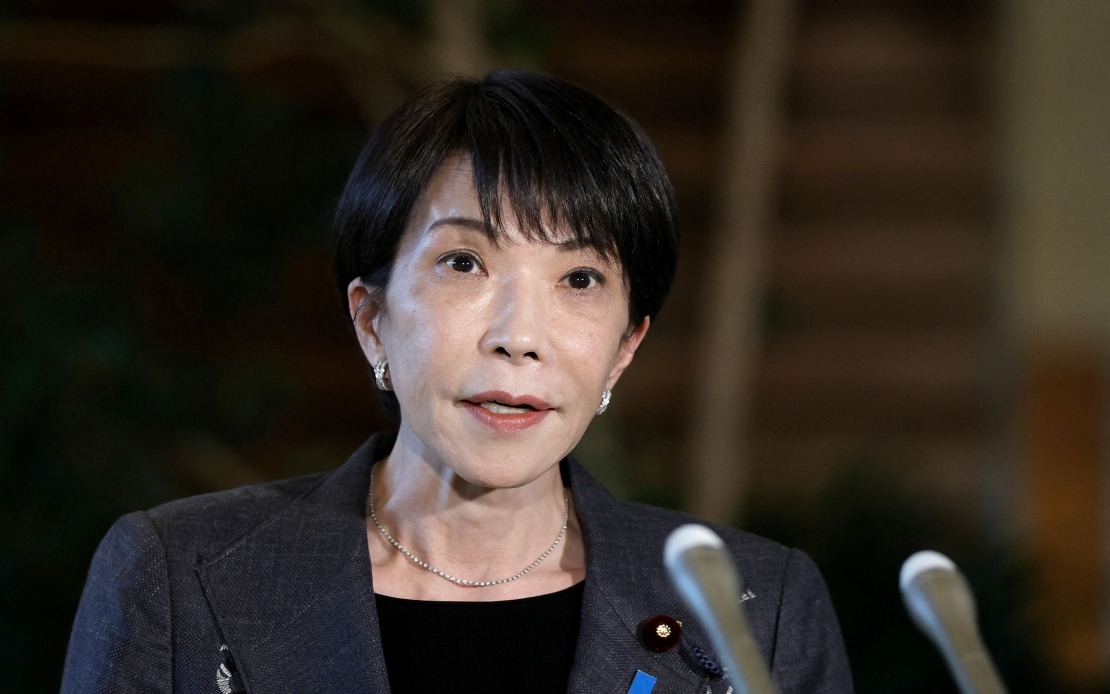
Japan's Prime Minister Sanae Takaichi moved to clarify her government's fiscal intentions on Monday, publicly pledging that the consumption tax rate on food products would return to its original 8 per cent level once a planned two-year reduction concludes. Her statement comes as the ruling Liberal Democratic Party navigates competing pressures between honouring campaign promises to ease household expenses and maintaining Japan's increasingly fragile public finances.
The commitment represents a significant clarification of policy direction after months of deliberation within the LDP's policymaking machinery. During a House of Representatives committee debate, Takaichi directly addressed concerns raised by opposition lawmaker Ken Tanaka, who warned that reversing a tax reduction could provoke substantial public resistance. The psychological difficulty of raising taxes after lowering them has long troubled Japanese policymakers, yet Takaichi framed the restoration as a necessary step to prevent further fiscal deterioration.
Last week, the LDP formally proposed reducing the consumption tax on food and beverages to 1 per cent beginning April 2027, a significant retreat from the party's campaign pledge to eliminate the tax entirely on these essential goods. This adjustment reflects practical considerations: implementing a zero rate would require extensive recalibration of point-of-sale systems across Japan's retail sector, creating technical and operational complications that a 1 per cent rate avoids. The distinction may appear modest, yet it carries substantial implications for implementation timelines and system compatibility across thousands of establishments nationwide.
To bridge the gap between the promised zero rate and the practical 1 per cent alternative, the LDP developed a compensatory mechanism involving direct cash transfers to households. The government would distribute approximately 600 billion yen annually—equivalent to the tax revenue foregone through the reduced rate—providing households with support that ostensibly achieves the inflation-relief objectives without the implementation complications of a full tax elimination. This approach essentially transforms the tax cut into a targeted spending programme, shifting the fiscal burden from foregone revenue to direct expenditure.
The timing of this initiative reflects ongoing economic pressures across Japanese households. The LDP, together with its junior coalition partner the Japan Innovation Party, had campaigned vigorously in February's lower house election on promises to reduce consumption tax burdens as a primary mechanism for countering persistent inflation. Multiple opposition parties adopted similar platforms, recognising that household purchasing power remains a critical electoral issue. What distinguished the LDP's proposal was its scope and specificity, particularly regarding food items that consume disproportionate portions of lower-income households' budgets.
However, Japan's deteriorating macroeconomic position creates significant constraints on implementing expansionary fiscal policies. The nation's government bond yields have recently surged to their highest levels in decades, signalling international concern about sovereign debt sustainability. Simultaneously, the Japanese yen has remained persistently weak despite periodic intervention attempts, complicating import costs and limiting policy flexibility. These developments occur within the context of Japan maintaining the worst fiscal position among Group of Seven economies, with debt levels exceeding 260 per cent of GDP.
For Southeast Asian observers, Japan's fiscal predicament offers cautionary lessons regarding long-term consequences of sustained budget deficits. Malaysia, while not facing Japan's extreme debt ratios, increasingly confronts questions about fiscal sustainability and the sequencing of growth-supportive policies against debt management imperatives. Japan's difficulty in implementing and unwinding temporary measures demonstrates how populist fiscal commitments can calcify into structural pressures that constrain future policy space.
Takaichi has signalled her intention to advance the tax reduction programme as expeditiously as possible following the national council's anticipated interim report later this month. This urgency suggests political pressure to demonstrate early policy wins, particularly given that her government must sustain momentum following February's electoral contest. The compressed timeline for implementation also reflects sensitivity to the notion that delayed action risks appearing as broken commitment to voters who prioritise inflation relief.
The proposal undergoes scrutiny from the cross-party national council on taxation and social security, which has been deliberating fiscal and social policy architecture for months. This institutional framework ensures that decisions regarding consumption tax rates receive input from multiple political perspectives, though the LDP's parliamentary majority means its preferences carry decisive weight. The interim report's recommendations will likely shape parliamentary debate when legislation reaches the Diet.
For Malaysia and the broader region, Japan's approach to balancing inflation relief with fiscal consolidation reflects broader policy tensions confronting upper-middle and high-income economies. The mechanisms Japan employs—temporary tax reductions coupled with cash transfers—have parallels in regional policy responses to inflation. However, Japan's constrained fiscal position demonstrates that such measures must eventually encounter structural limits, particularly when debt levels approach sustainability thresholds and international bond markets begin pricing in risk premiums.
The commitment to restore the full tax rate in 2029 ultimately represents a recognition that temporary measures cannot substitute for sustainable fiscal architecture. Yet politically delivering that restoration—framing it not as a broken promise but as responsible governance—constitutes the genuine challenge ahead. How successfully Takaichi's government executes this communication strategy will offer valuable lessons regarding fiscal accountability and democratic governance in managing competing economic pressures.