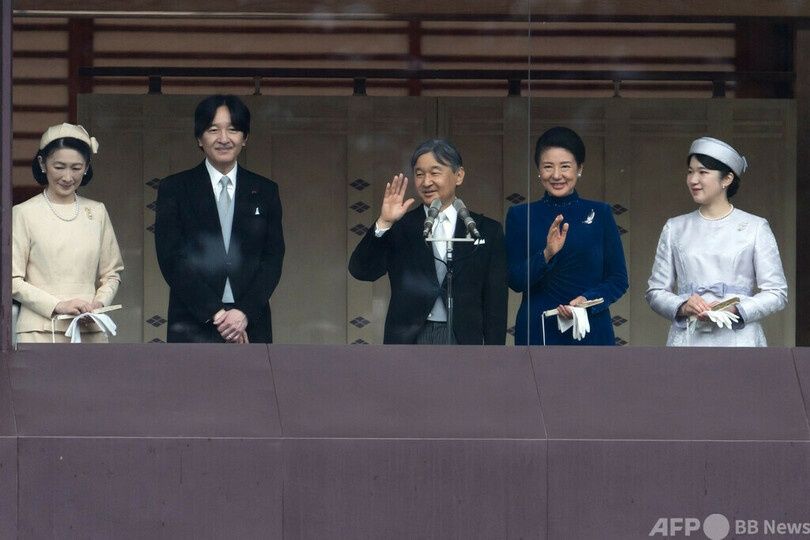
The Japanese government's cabinet has ignited a political firestorm by approving revisions to the Imperial House Law on Tuesday, with opposition parties accusing the ruling coalition of circumventing consensus-building processes on one of the nation's most constitutionally sensitive subjects. The contentious bill has exposed fractures between the governing Liberal Democratic Party and opposition camps over how Japan should manage the succession of the Imperial throne, a matter historically treated with extreme caution across party lines.
The core complaint from opposition lawmakers centres on the government's decision to include specific provisions governing male descendants adopted into the Imperial family, a detail that prior cross-party negotiations had deliberately excluded from deliberation. Constitutional Democratic Party of Japan Secretary General Masayo Tanabu articulated the grievance directly after cabinet approval, asserting that the bill contained elements absent from the legislative proposals that both chamber leaders and their deputies had jointly compiled. She characterised the government's approach as departing substantially from the collective will of the Diet, Japan's parliament.
At the heart of the controversy lies a proposed system that would permit male descendants of former Imperial branches to be readopted into the Imperial household, potentially stabilising the number of active Imperial family members in a context of demographic decline. However, the approved bill explicitly states that male descendants born to adopted family members would retain the right to succeed to the Chrysanthemum Throne. This formulation reflects the ruling party's ideological commitment to preserving an exclusively male-line, male-only succession system—a position that diverges sharply from the more open-ended approach certain opposition members favour.
Chief Cabinet Secretary Minoru Kihara defended the government's interpretative position during his Tuesday press conference, arguing that since the legislative proposals from chamber leaders contained no mention of adopted members' children, the existing Imperial House Law provisions must logically apply. His reasoning revealed the government's view that the legislative framework itself demanded clarification on this point to render the system coherent and functional. A senior government drafter elaborated that without determining how to handle such cases within the current legal structure, the adoption mechanism would remain conceptually incomplete—a technical argument designed to justify what critics see as substantive policy overreach.
Yet opposition analysis interprets this move as precisely the sort of unilateral advancement of the LDP's ideological preferences that undermines genuine interparty consensus. Several lawmakers openly characterised the cabinet action as a "sneak attack," suggesting the government weaponised technical arguments to entrench positions that should have remained subject to broader legislative debate. This framing resonates particularly in a political climate where ruling and opposition benches are already locked in confrontation, with opposition parties boycotting Diet proceedings over separate disputes with the governing coalition.
Komeito, the ruling coalition's junior partner, has registered measured discomfort. While the party supports the adoption system's underlying concept, its House of Councillors caucus leader Masaaki Taniai cautioned that deliberations cannot meaningfully proceed without first establishing genuine legislative consensus. This qualification hints at potential complications when the bill eventually reaches committee and floor debates. Similarly, Hirofumi Ryu of the Centrist Reform Alliance noted pointedly that Imperial succession had been explicitly deferred during the plenary meetings that both ruling and opposition parties attended, casting the cabinet's decision as a violation of that understanding.
Another contentious deferral concerns the legal status of husbands and children after female Imperial family members marry commoners. Opposition parties, particularly the CDPJ, have emphasised family unity and advocated granting Imperial status to both spouses and offspring. The Centrist Reform Alliance adopted a more cautious position, calling for "timely and appropriate response" without committing to any specific framework. The approved bill, by contrast, essentially clarified that such family members would remain commoners—a determination that again appears to reflect ruling-party preferences rather than genuine multiparty resolution.
The technical architecture of the bill's drafting reveals how institutional design can privilege particular political outcomes. Shigetaka Yamazaki, a special advisor to the Cabinet Secretariat and former Internal Affairs and Communications Ministry official, led the revision process. Yamazaki's expertise in Imperial constitutional matters, demonstrated through his involvement in the 2017 special law enabling the abdication of the then-Emperor, positioned him to shape the bill's substance significantly. Notably, that 2017 abdication law achieved cross-party endorsement from nearly all Diet factions, presenting a stark contrast to the current effort's polarising trajectory.
Comparison between these two historical episodes illuminates how political consensus around Imperial matters has deteriorated. When the abdication law passed in 2017, all parties in the House of Councillors except the then-Liberal Party supported it, reflecting a genuine commitment to finding common ground on constitutional monarchy questions. Today, only seven of the thirteen political parties and parliamentary groups holding Diet seats endorsed the proposals that chamber leaders had jointly compiled before cabinet action. This shrinkage in consensus suggests that what once bound Japanese political elites across ideological boundaries has fractured considerably.
Scholars studying Japan's Imperial system have weighed in with concern. Yuji Otabe, a professor emeritus at Shizuoka University of Welfare, critiqued the government's approach as fundamentally one-sided, arguing that all possibilities should have received open debate rather than the administration artificially narrowing discussion toward male-line succession. Otabe's broader point—that matters touching the Emperor's constitutional role as state symbol demand more careful deliberation—resonates with a long tradition of treating Imperial questions with exceptional gravity and restraint.
The bill's pathway through remaining legislative stages remains uncertain. With opposition parties already boycotting Diet proceedings over separate grievances, the prospects for smooth passage appear dim despite the ruling coalition's numerical advantages. The government will need to navigate not merely the mathematics of legislative votes but also the deeper question of whether Imperial House revision can legitimately proceed without the consensual foundation that Japanese constitutional culture has historically required for such fundamental institutional changes. This controversy thus extends beyond immediate tactical considerations to implicate larger questions about how democratic governance should operate around the Emperor's role in Japan's constitutional order.
For observers across Southeast Asia and beyond, this episode underscores how even the world's mature democracies can experience significant tension when executive and legislative branches interpret their respective roles differently on matters of constitutional consequence. Japan's handling of this Imperial succession question will likely influence global perceptions of how stable democracies manage institutional reform when consensus proves elusive.

