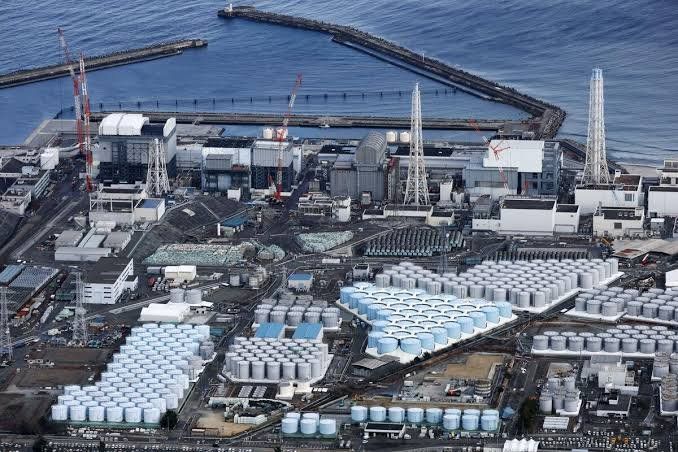
Tokyo Electric Power Company Holdings Inc. marked a significant milestone this month by completing its third consecutive year of discharging treated radioactive water from the damaged Fukushima nuclear facility into the Pacific Ocean. The utility has now expelled approximately 172,700 tonnes of processed water through 22 separate operational rounds, representing a deliberate and methodical approach to managing the plant's ongoing decommissioning challenges. This lengthy operation, set to extend until 2051, underscores both the magnitude of Japan's nuclear cleanup effort and the profound complexities surrounding the restoration of a site devastated by the catastrophic 2011 earthquake and tsunami.
The discharge programme has yielded tangible progress in reducing the facility's storage burden. The volume of treated water held in temporary tanks has contracted by 7.6 per cent to approximately 1.24 million tonnes, and seventeen of roughly one thousand storage tanks have already been dismantled after being completely emptied. These figures demonstrate that the release strategy, while controversial, is accomplishing its primary objective of freeing up physical space at the plant. This spatial recovery is critical because TEPCO requires room to construct and operate specialized equipment designed to extract molten fuel debris from the reactor cores—a more technically demanding phase of decommissioning that lies ahead.
The operational rhythm of the releases has evolved since the programme commenced in August 2023. During fiscal year 2023, TEPCO conducted four discharge events, followed by seven each in the subsequent two years. The company has now reconfigured its transfer infrastructure to allow continuous movement of water between tanks, enabling a planned acceleration to eight releases scheduled for fiscal 2026, with four already completed. These batches typically contain approximately 7,800 tonnes of treated water, reflecting a carefully calibrated approach to managing public perception and environmental monitoring alongside operational efficiency.
Japan's decision to pursue this discharge strategy emerged from deliberations dating back to April 2021, when government officials and TEPCO leadership concluded that releasing processed water represented the most viable path forward for plant decommissioning. The Fukushima facility generates roughly sixty tonnes of radioactive wastewater daily as a byproduct of cooling molten reactor fuel, a production rate that had rendered indefinite tank storage untenable. The advanced liquid processing system purifies this water, stripping out most radioactive elements before technicians dilute the final product with seawater to achieve concentrations less than one-fortieth of Japan's own stringent safety standards. Discharge points are deliberately positioned one kilometre offshore to maximise dispersal and dilution.
International oversight has been integral to establishing confidence in the programme's safety record. The International Atomic Energy Agency, alongside Japanese regulatory authorities and TEPCO itself, continuously monitors the released water for radioactive signatures. Significantly, no abnormal tritium levels—the isotope most difficult to remove during purification—have been detected in surrounding waters or in seafood samples from the region. This absence of contamination evidence has validated the technical approach among international nuclear regulators and scientific bodies, though it has failed to persuade several trading partners.
China's response reveals how nuclear incidents transcend technical and scientific dimensions to acquire profound diplomatic weight. Though China was once Japan's largest seafood export market, it imposed a blanket import prohibition on the very day TEPCO commenced releases in August 2023. While Beijing announced in June 2024 that it would selectively lift restrictions on nine prefectures, it has maintained an effective embargo on Japanese seafood imports, particularly from Fukushima itself. This ongoing ban coincides with escalating tensions between the two nations, including friction over Prime Minister Sanae Takaichi's November remarks suggesting Japan might intervene in a potential Taiwan crisis. The import restrictions thus appear substantially motivated by geopolitical considerations rather than genuine food safety concerns, a calculus that underscores how environmental and trade issues become entangled with great power competition in the Indo-Pacific region.
Other trading partners have adopted similarly restrictive stances. Russia maintains import prohibitions, as do numerous other countries and territories, though most have not articulated their reasoning with China's explicitness. For Malaysian consumers and businesses, this pattern carries implications for regional supply chains. Should Japanese seafood remain unavailable from these major markets, alternative sourcing could theoretically flow toward Southeast Asia, potentially affecting local pricing and availability. Additionally, Southeast Asian nations purchasing Japanese fish products face reputational pressure and consumer hesitation that reflects broader anxiety about nuclear safety standards, even where scientific evidence demonstrates safety compliance.
The economic toll on Japanese fisheries and related industries has been substantial. TEPCO has processed approximately 1,100 compensation claims totalling around 92.8 billion yen, equivalent to roughly 585 million US dollars as of early August. A significant proportion of these claims originate from exporters unable to move premium seafood products such as scallops and sea cucumbers to Chinese and Hong Kong markets. Fishing communities that depend on these export revenues have endured genuine hardship, bearing the costs of decisions made decades earlier by previous generations of policymakers and utility executives. This burden-sharing remains deeply contentious within Japanese society.
Akira Ono, TEPCO's chief decommissioning officer, articulated the company's position during recent media engagements, emphasising that all releases have proceeded safely while pledging intensified efforts toward transparent communication and fair compensation. This messaging strategy reflects an implicit acknowledgment that technical safety, however robust, does not automatically resolve public anxiety or international diplomatic friction. For Southeast Asian observers, TEPCO's experience offers cautionary lessons about managing stakeholder expectations in large-scale industrial and environmental remediation projects.
The Fukushima discharge programme encapsulates broader tensions within the post-nuclear-accident era. Japan's technical approach aligns with international best practice and regulatory frameworks, yet faces persistent international scepticism rooted partly in legitimate concerns about nuclear safety and partly in geopolitical manoeuvring. The thirteen-year extension between now and 2051 suggests this controversy will persist as a fixture of Japan-China relations and as a touchstone for broader debates about nuclear energy's role in addressing climate change. For Malaysia and other Southeast Asian nations evaluating their own energy futures, Fukushima represents both a cautionary narrative about accident consequences and a case study in international coordination, scientific oversight, and the stubborn persistence of public doubt.

