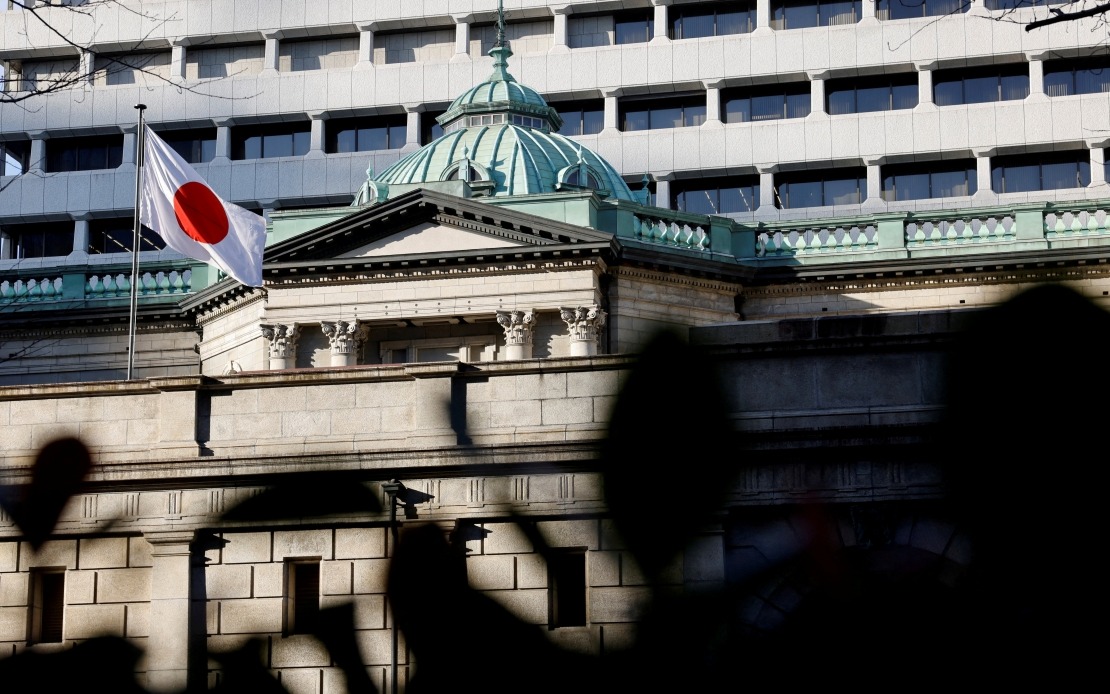
Japan's recent enactment of legislation prohibiting the desecration of its national flag has reopened a contentious debate about the proper boundaries between defending state symbols and preserving individual liberties. The law, implemented in Tokyo on July 17, has drawn criticism from observers who worry it may accelerate a drift towards right-wing ideological dominance. Prime Minister Sanae Takaichi has faced accusations on social media platforms of attempting to foster what critics describe as supremacist thinking and an atmosphere conducive to extreme nationalist sentiment in a nation still wrestling with its modern political identity.
The tension between national symbolism and civil freedoms is hardly unique to Japan. Nations around the world have adopted starkly different legal frameworks for addressing flag desecration, revealing profound differences in how societies balance patriotic reverence with democratic values. These divergent approaches offer instructive case studies for policymakers in Southeast Asia contemplating similar questions about national identity, particularly as regional powers increasingly grapple with rising populism and shifting notions of citizenship.
Germany maintains one of the Western world's most stringent protections for national symbols. Beyond the flag itself, German law extends protection to the national anthem and other emblems of state, with violators facing sentences ranging from three years imprisonment to a maximum of five years when the desecration is motivated by intent to undermine constitutional principles. This comprehensive legal framework reflects Germany's particular historical anxieties stemming from its post-war experience. Following the nation's partition after World War II, especially in West Germany, national symbols were employed cautiously and with considerable restraint, reflecting deep societal ambivalence about nationalism itself.
The trajectory of flag symbolism in Germany itself illustrates how national symbols can become contested terrain. Following the country's successful hosting of the 2006 FIFA World Cup, flag usage became increasingly prevalent in mainstream German culture. However, in subsequent years, the flag has been progressively appropriated by anti-immigration movements and right-wing political organisations, which now employ it in ways many perceive as exclusionary and inherently negative. This appropriation has complicated the relationship between patriotic expression and problematic nationalism for many Germans.
France's approach similarly demonstrates legal protections rooted in national philosophy. The tricolour flag—blue, white, and red—carries profound significance as a representation of national unity alongside the foundational revolutionary ideals of liberty, equality, and fraternity. Consequently, French law prohibits both the destruction of the flag and its use in manners deemed disrespectful or degrading, reflecting a legal consensus that the symbol merits substantial protection as an expression of core republican values.
In Asia, the picture becomes more complicated. China enforces laws against flag desecration with considerable severity, imposing penalties of up to three years imprisonment for offences involving damage to the national flag. The state apparatus reinforces patriotic sentiment through institutionalised mechanisms including daily flag-raising ceremonies at Beijing's Tiananmen Square honouring the Five-star Red Flag at sunrise. Instances of flag desecration have attracted harsh judicial responses; a man who slashed 66 flags at a Tianjin residential complex received a two-year prison sentence, while another individual in Qinghai Province faced administrative detention merely for repurposing a national flag as domestic drapery.
South Korea presents a different context where legislators have proposed establishing a dedicated flag day, with existing statutes imposing sentences of up to five years imprisonment for those who damage the flag with deliberate intent to insult the state. Local civil liberties advocates contend these provisions constitute unjustifiable constraints on freedom of expression, creating an ongoing policy disagreement about where the line between legitimate national protection and overreach should be drawn.
Iran's legal landscape reveals yet another dimension to this question. Although the nation lacks explicit legislation criminalising flag desecration, the government has signalled intentions to strengthen penalties following anti-government demonstrations in recent months. The Iranian flag, inscribed with the word "Allah," occupies a position where damage is culturally and religiously interpreted as blasphemy against Islam. Paradoxically, Iran's leadership has generally refrained from implementing severe crackdowns, ostensibly to maintain national cohesion during geopolitical tensions, suggesting that even in contexts with strong protective impulses, pragmatic governance occasionally moderates enforcement.
The United States presents perhaps the most distinctive model, reflecting its historical character as an immigration nation with heterogeneous populations. The stars and stripes have functioned instrumentally in fostering national integration across diverse communities. Flag burning emerged as a protest tactic during the Vietnam War era, and in a landmark 1989 decision, the United States Supreme Court determined that such destruction constitutes constitutionally protected expression under the First Amendment. This judicial determination positioned America as an outlier globally, prioritising symbolic speech over national symbol protection. However, the Trump administration disrupted this consensus by signing an executive order in August directing the Justice Department to prosecute flag desecration incidents, demonstrating that even in America, the foundational consensus protecting flag destruction remains contestable.
For Malaysia and Southeast Asia, Japan's legislative move carries particular resonance. As the region experiences accelerating economic integration, changing demographics, and evolving political movements, questions about national identity and symbol protection are becoming increasingly salient. The varying international approaches illustrate that there exists no universal solution satisfying both nationalist sentiment and democratic principles simultaneously. Each nation must negotiate this tension according to its particular historical experience, constitutional traditions, and conception of citizenship. Japan's experience suggests that even mature democracies struggle to achieve stable equilibrium between these competing values, with risk that legislative responses can inadvertently catalyse precisely the nationalist backlash they purport to channel productively.

