A Japanese retail company has accepted responsibility for instructing two of its workers to return inside an Aeon shopping mall immediately after a powerful earthquake, a decision that proved fatal when an explosion tore through the building shortly afterwards. The admission by Habita, operator of an in-mall variety store, has reignited discussion across East Asia about workplace safety protocols and the pressure employees face to prioritise business assets over personal security during natural disasters.
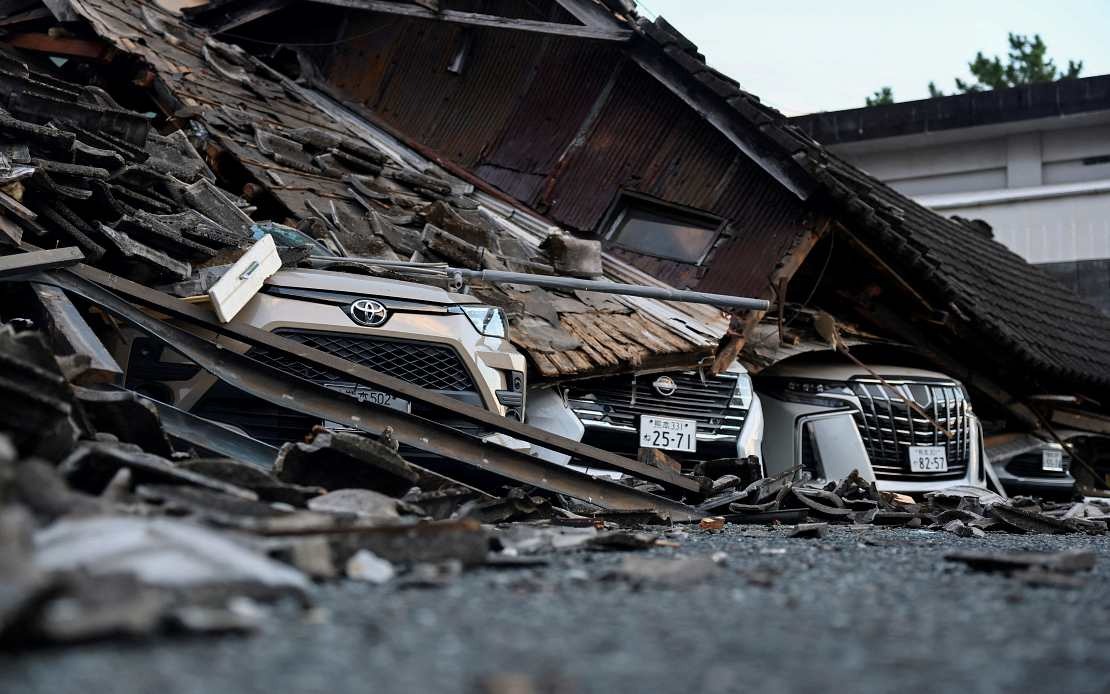
The tragedy unfolded in Kumamoto Prefecture's Kashima Town following a magnitude 7.1 earthquake that struck on Tuesday, registering the maximum 7 rating on Japan's seismic intensity scale. The two victims, including a 22-year-old woman, had properly evacuated the Aeon Mall Kumamoto facility in the immediate aftermath of the quake. However, rather than remain in the safety zone outside the building, they were summoned back inside by management with instructions to transfer that day's sales revenue from their second-floor store location to a secure safe situated one floor below.
Koji Yuse, a 64-year-old sales manager employed by Habita's Kumamoto headquarters, publicly acknowledged on Monday afternoon that he had personally issued the directive requiring the store manager to send the two employees back into the mall. The massive explosion that subsequently consumed the building killed a total of seven people, among them the two retail workers who had been sent to handle the cash. The scale of destruction and loss of life has cast into sharp relief the question of whether corporate risk assessment adequately weighs employee safety against financial considerations.
Yuse's statement to media outlets reflected a degree of remorse, with the manager characterising his own instruction as inappropriate and expressing deep regret for the consequences. The company subsequently made formal contact with the families of the deceased employees, offering both apologies and a written documentation of the events leading to the tragedy. This gesture, while acknowledging culpability, cannot restore the lives lost or undo the trauma experienced by families and colleagues.
The incident highlights a cultural and institutional tension within Japanese workplace environments, where hierarchical structures and deference to managerial authority can sometimes override individual safety considerations. Employees facing direct orders from superiors often feel constrained in their ability to refuse instructions, even when circumstances suggest elevated risk. In this case, the employees would have had little practical capacity to decline returning to the building when explicitly directed to do so by their employer.
The broader context of the Kumamoto earthquake's devastation compounds the tragedy. Prefectural government authorities confirmed that at least 36 deaths could be directly attributed to the seismic event itself, with an additional two fatalities still under investigation. The explosion at the Aeon Mall represented one of the deadliest secondary incidents triggered by the initial earthquake, suggesting the building may have harboured gas leaks or other hazardous conditions that employees returning to the structure would have encountered without warning.
For Malaysian readers, this incident carries particular relevance given the region's own exposure to both seismic activity and the prevalence of major shopping mall developments. The case illustrates how emergency response protocols at large retail facilities need to extend beyond the initial evacuation phase to consider whether any circumstances justify re-entry during the critical period immediately following earthquake activity. Many Southeast Asian nations share similar retail culture and employment dynamics, meaning comparable vulnerabilities could exist locally.
The incident also raises questions about insurance and liability frameworks governing retail operations across Asia. Where financial assets are deemed sufficiently valuable to warrant human re-entry into structures of uncertain structural integrity, this suggests that insurance and risk management procedures may inadequately account for the true cost of asset loss relative to human life. Companies might benefit from reviewing whether cash handling protocols during emergencies reflect appropriate balance between commercial and humanitarian priorities.
Japan's rigorous building standards and seismic engineering practices, while among the world's most advanced, cannot prevent all secondary disasters following major earthquakes. The Aeon Mall explosion may have resulted from pipeline ruptures, gas accumulation, or electrical faults triggered by structural stress. This underscores how even well-engineered facilities remain vulnerable during the chaotic period immediately following significant seismic events, reinforcing the principle that evacuation decisions should be essentially permanent once triggered, absent clear all-clear signals from structural engineers.
Habita's public acknowledgment of responsibility, though welcome, occurs after the harm has already been irreversibly inflicted. The statement serves as a cautionary example for employers across the region, suggesting that documented emergency protocols should explicitly prohibit re-entry to buildings during the vulnerable period immediately following major earthquakes, regardless of financial considerations. Training systems should also emphasise that employee safety supersedes asset preservation in all circumstances.
The Kumamoto explosion will likely influence workplace safety discussions throughout Japan and potentially across the broader East Asian business community. Regulatory bodies may examine whether existing occupational safety standards adequately address the particular vulnerabilities created when employees face conflicting pressures between following managerial directives and protecting themselves during natural disasters. For retail chains operating across multiple jurisdictions, standardised policies that prioritise safety regardless of local cultural norms may become increasingly important.

