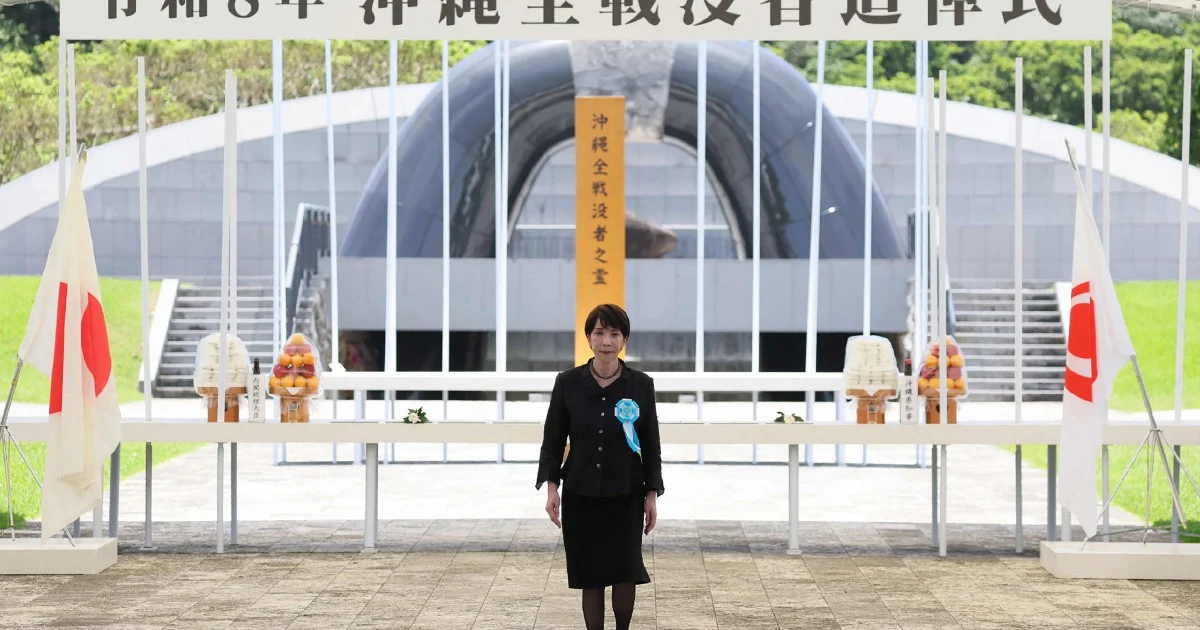
Japan's Prime Minister Sanae Takaichi encountered organised protests at a World War II commemorative event in Tokyo, with demonstrators voicing deep concerns about the nation's evolving security posture. Television coverage captured the disruption as activists expressed their opposition to what they characterise as a fundamental abandonment of the pacifist principles that have anchored Japanese foreign policy since 1945.
The incident underscores a widening generational and ideological fault line within Japanese society regarding military rearmament. For nearly eight decades, Japan's postwar constitution and public consensus reflected a commitment to non-militarism, framed around the horrors of World War II and the principle of seeking security through diplomacy rather than force projection. This philosophical orientation, while occasionally strained by regional security challenges, remained substantially intact throughout the Cold War and beyond.
Takaichi's premiership marks an acceleration of defence policy revisions initiated by her predecessors. Recent administrations have already begun dismantling longstanding constraints, including reinterpretations of constitutional pacifism and approval of weapons systems previously considered incompatible with the peace clause. The scale and pace of these changes have alarmed constituencies who view them as a dangerous rupture with postwar consensus and a betrayal of lessons learned from Japan's imperial militarism.
The protesters' presence at a World War II memorial held particular symbolic weight, suggesting they sought to invoke historical memory as a counterargument to military expansion. By disrupting proceedings at a site dedicated to remembering wartime casualties and suffering, activists made a direct rhetorical claim that contemporary rearmament contradicts the implicit promises made by Japan's postwar settlement—that such devastation would never recur because military might would be permanently constrained.
Regional security dynamics, particularly the rise of Chinese military capabilities and North Korea's weapons programmes, have provided strategic justification for Japan's defence policy shifts. The government argues that a more robust military posture is essential for protecting Japanese territory and maintaining the regional balance of power. These calculations have gained traction among policymakers and portions of the electorate who view traditional pacifism as increasingly untenable given the threat environment.
Yet the heckling incident reveals that substantial public segments remain unconvinced by security arguments. Many Japanese citizens, particularly older generations with direct or inherited memories of wartime destruction, harbour profound unease about military expansion. They fear that incrementally normalising military power could erode the safeguards built into Japan's postwar architecture and potentially restart cycles of competitive militarisation in Asia.
The controversy also reflects international sensitivities about Japan's military trajectory. Neighbouring countries, especially South Korea and China, maintain complex relationships with Japan's defence modernisation, viewing it through the prism of historical grievances and contemporary regional competition. Any appearance of Japanese militarism triggers historical anxieties that extend beyond Japan's borders, making domestic defence debates inherently international in character.
Takaichi's government has signalled its intention to pursue significant defence budget increases and authorise new weapons systems, positioning these measures as necessary responses to deteriorating security conditions. Yet the heckling demonstrates that converting strategic rationales into public acceptance remains challenging. Approval for military expenditure does not automatically translate into enthusiasm for the conceptual shift underlying these policies.
For Malaysian and Southeast Asian observers, Japan's internal debate carries direct implications. As a major regional security actor and ally of several ASEAN nations, Japan's military posture influences regional stability calculations. A Japan pursuing more assertive defence policies may reshape security partnerships and geopolitical alignments throughout Southeast Asia, with consequences for smaller nations navigating great power competition.
The tension between Tokyo's strategic assessments and domestic pacifist sentiment will likely persist as Takaichi's government pursues its military agenda. Whether public opinion can be meaningfully shifted through education initiatives and security briefings, or whether opposition will intensify as concrete policy changes take effect, remains uncertain. The outcome will influence not only Japan's trajectory but also broader regional security architecture.
Historically, successful political transitions require substantial consensus-building, particularly when overturning postwar settlements rooted in traumatic historical experience. Takaichi's government faces the challenge of legitimising military expansion while respecting the genuine pacifist convictions held by millions of Japanese citizens. How effectively it manages this domestic divide will determine whether military reforms proceed smoothly or face escalating resistance throughout its tenure.