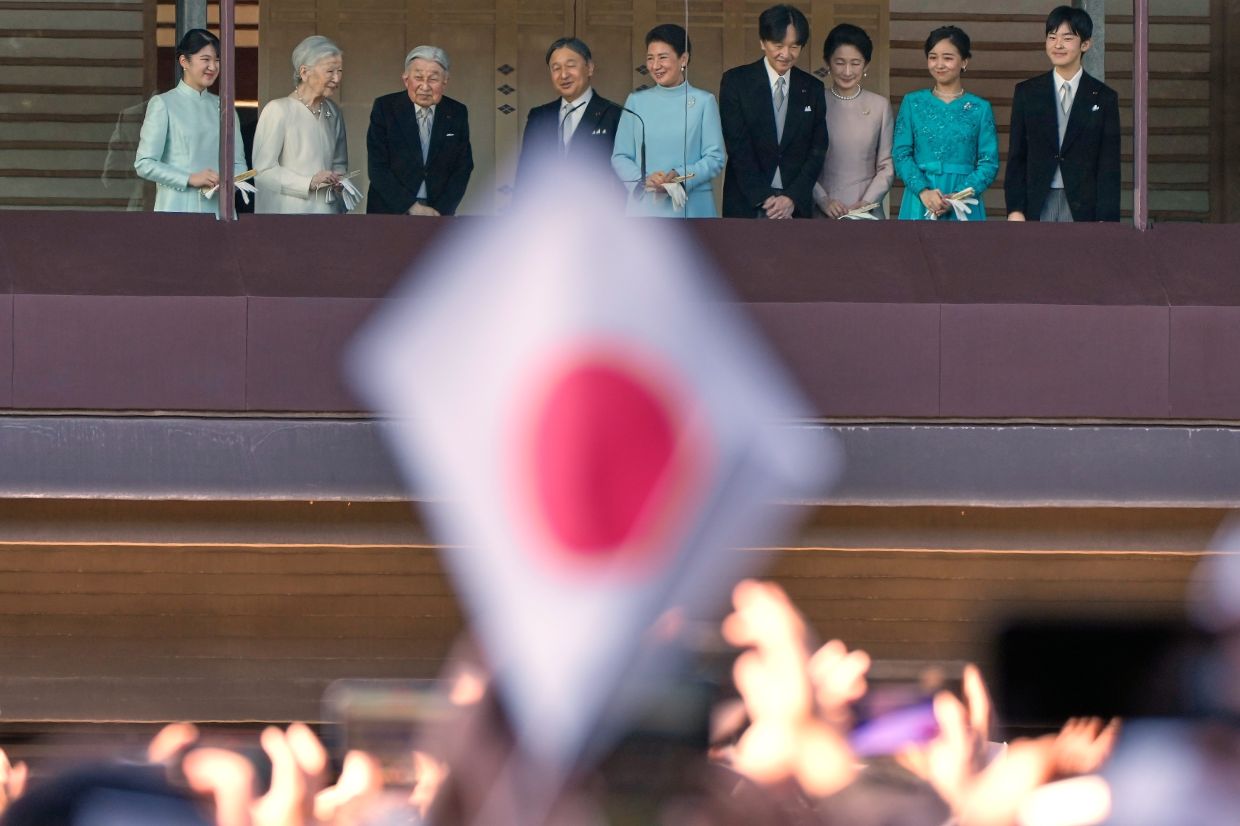
Japan's parliament has tightened regulations governing succession to the imperial throne while deliberately preserving the longstanding prohibition against a woman serving as emperor. The upper house passed the revised imperial succession legislation by a substantial majority on Friday, introducing modifications to the 1947 Imperial Household Law that address certain pressures on the monarchy's continuity without fundamentally reshaping its male-centric structure. The legislative shift comes at a moment when Japan faces genuine uncertainty about the longevity of its imperial line, which according to Shinto tradition traces its ancestry to the sun goddess Amaterasu.
The central concern animating Japan's political leadership is succession planning around Prince Hisahito, the 19-year-old nephew of current Emperor Naruhito, aged 66. As the only readily available male heir in a direct line of descent, Hisahito bears substantial weight for the institution's future. His current status—unmarried, recently completed secondary education, and focused on biological and entomological studies—means that if he does not father a son, the imperial succession would face an unprecedented crisis. Under existing law, his two older sisters and his cousin Princess Aiko, who is 24, possess no path to the throne, regardless of their capabilities or public regard. This genetic bottleneck has prompted lawmakers to consider alternatives, though their solutions remain fundamentally limited by ideological commitments to patrilineal succession.
The legislation that passed represents a compromise forged within Japan's governing Liberal Democratic Party, which has long resisted gender-based reforms to succession rules. The new framework permits the adoption of male relatives aged 15 and above into the imperial household, provided they remain unmarried at the point of adoption. This provision theoretically expands the pool of potential successors by drawing on the 11 imperial branch families that were removed from the imperial register following World War II. Additionally, the reforms grant women in the imperial family the right to retain their royal status after marrying commoners, a privilege previously extended only to male relatives. Yet these adjustments, while procedurally significant, leave untouched the fundamental barrier preventing women from occupying the throne itself.
Public sentiment stands markedly at odds with the government's legislative choices. An Asahi Shimbun survey conducted in May demonstrated that 72 percent of Japanese respondents support amending the succession law to allow women to become emperor. This substantial majority preference reflects evolving social attitudes toward gender roles and leadership capability. Princess Aiko, the daughter of the reigning emperor, enjoys considerable popularity and would represent a natural successor under succession systems practised in numerous other constitutional monarchies worldwide. Her exclusion from consideration based solely on sex has emerged as a central point of contention between public opinion and official policy, creating a disconnect that may intensify as demographic and succession pressures mount.
Opposition to reform has proven durable within conservative political circles. Sanae Takaichi, Japan's first female prime minister, has vocally opposed allowing female succession despite the apparent irony of a woman leading the government while barring women from the imperial throne. The LDP's internal wrangling over this legislation reflected genuine ideological divisions, though the party ultimately coalesced around the more restrictive outcome. Even prominent LDP figure Seiichiro Murakami broke ranks after the lower house passed the bill on July 10, describing the continued exclusion of Princess Aiko as "utterly outrageous" and signalling that pressure for further reform may persist within ruling circles.
Criticism has extended beyond political dissenters to include former members of the imperial institution itself. Asahiro Kuni, 81, a former imperial family member and one of those who left the imperial register after World War II, has raised practical objections to the adoption strategy. Speaking to the Asahi Shimbun, Kuni questioned the realism of expecting distant male relatives to abandon civilian life for imperial duties. He noted that individuals reaching 15 years of age have already become accustomed to freedom and would face genuine hardship adjusting to the constraints of imperial existence. This insider perspective suggests that the legislative solution, while theoretically expanding successor options, may face implementation challenges if proposed candidates prove unwilling to undertake such profound life changes.
Even Japan's mainstream media, typically aligned with the LDP, has registered disapproval of the government's approach. The Yomiuri Shimbun, the nation's highest-circulation daily newspaper and a customary voice supporting the ruling party, recently published an editorial criticising the government's position on female succession. This fracture in the usual coalition supporting conservative governance underscores the depth of societal sentiment favouring reform. The fact that establishment institutions are willing to publicly oppose the LDP on this matter suggests that the succession question will remain contentious in Japanese politics, potentially resurfacing as demographic realities create more acute pressures.
The imperial household currently comprises 16 members total, including just five men. This skeletal male contingent—comprising retired Emperor Akihito, aged 92; his brother, 90; Emperor Naruhito; his brother; and Prince Hisahito—represents a precarious foundation for institutional continuity. The extreme scarcity of male heirs explains the urgency driving legislative action, yet the chosen approach of adopting distant relatives rather than reconsidering female succession suggests that Japan's political establishment remains reluctant to undertake fundamental institutional restructuring. This tension between practical necessity and ideological conservatism will likely shape imperial succession debates for years to come.
For Southeast Asian observers, Japan's imperial succession predicament offers instructive parallels and contrasts to monarchical challenges elsewhere in the region. Thailand, Malaysia, and other nations with constitutional monarchies face their own succession questions and gender-related institutional questions. Japan's decision to maintain formal barriers against female succession despite overwhelming public support illustrates how institutional inertia and conservative ideology can persist even when practical necessity and democratic sentiment counsel change. The case demonstrates that institutional reform around monarchy and succession remains deeply contested terrain across Asia, reflecting broader questions about tradition, modernity, and democratic governance in societies where monarchical institutions retain substantial symbolic and constitutional significance.

