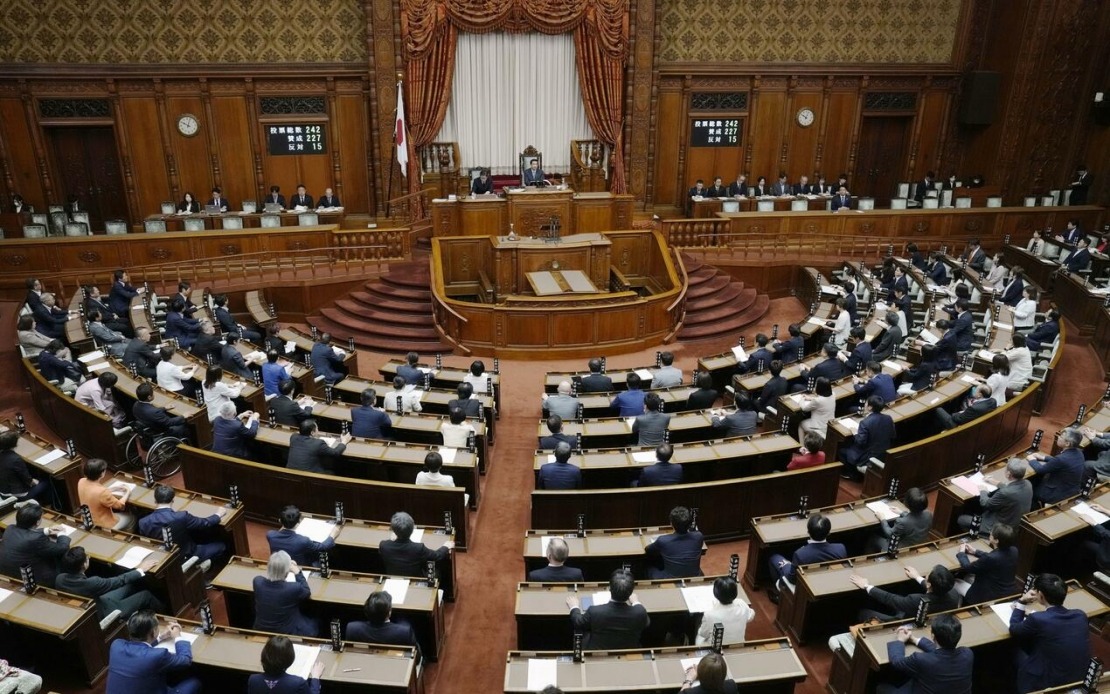
Japan has taken a significant institutional step toward modernizing its military posture in space, with parliament approving legislation on Friday to comprehensively restructure the Air Self-Defence Force. The reform represents a strategic pivot that acknowledges how contemporary security threats now extend beyond traditional air dominance into the orbital realm, a shift particularly relevant as Asian powers compete for technological and military advantage in an increasingly contested environment.
The restructured entity will formally incorporate space operations into its organizational structure and nomenclature when it becomes operational during the fiscal year ending March 2027. This timeline suggests a carefully phased implementation rather than a hasty reorganisation, allowing the Self-Defence Forces to build institutional capacity and develop appropriate doctrines. Central to this framework is the establishment of a space operations group that will operate under a lieutenant general's command, elevating space defence to a senior leadership priority level within Japan's military hierarchy.
The new space operations group will focus specifically on enhancing domain awareness across the orbital layer and strengthening Japan's satellite surveillance infrastructure. This capability matters enormously for monitoring maritime activity across the East China Sea and broader Indo-Pacific region, where Japan faces particular concerns regarding China's military expansion and the protection of its scattered southwestern island territories. Enhanced space-based surveillance would give Tokyo better real-time intelligence on naval movements and maritime activities that could threaten its strategic interests.
Defence Minister Shinjiro Koizumi framed the reorganisation within a broader context that extends beyond purely military considerations. He emphasised that space infrastructure underpins fundamental aspects of civilian life that most people take for granted. Satellite navigation systems guide millions of vehicles daily, smartphone mapping applications enable commercial and personal mobility, and weather forecasting systems protect public safety during typhoons and other natural disasters. This perspective highlights how space capabilities have become so thoroughly integrated into modern societies that their disruption would create cascading consequences across multiple sectors, not just defence.
Parallel to the space reorganisation, parliament also approved mechanisms to strengthen Japan's senior defence leadership structure. The legislation authorises the appointment of a second senior vice defence minister, a move designed to distribute workload more effectively during emergencies and major natural disasters when demand on the defence bureaucracy intensifies sharply. This appointment, expected as early as summer, signals Tokyo's intention to enhance its crisis management capacity at a time when security challenges and climate-related disasters are mounting simultaneously.
The reform package also addresses a persistent challenge facing the Self-Defence Forces: maintaining adequate personnel strength in an era of demographic decline. Japan's population is shrinking and ageing, making military recruitment increasingly competitive with civilian employment. To counter this trend, the legislation raises post-retirement benefits for SDF members, a crucial lever for improving both recruitment and retention. Since mandatory retirement ages for SDF personnel typically occur earlier than in standard civil service, enhanced retirement provisions help offset this disadvantage when competing for qualified candidates.
Simultaneously, Japan is strengthening its conventional military capacity in geographically sensitive areas. The 15th Brigade, based in Naha, Okinawa Prefecture, will be upgraded to full divisional status, representing an increase in force structure and command authority. This enhancement directly addresses Japan's vulnerability in its southwestern island chain, which sits astride major shipping lanes and forms the northern boundary of the first island chain that constrains Chinese military projection. China's increasing maritime assertiveness in this region, including repeated incursions into disputed waters and around Japanese-controlled islands, has driven Tokyo to augment its defensive posture in this crucial zone.
The comprehensive nature of these reforms—spanning space operations, senior leadership, personnel incentives, and regional military posture—reflects Japan's holistic reassessment of its security requirements. Rather than pursuing isolated upgrades, Tokyo is systematically modernizing its defence institutions to address interconnected challenges: the militarization of space, personnel shortages, leadership capacity constraints, and China's expanding military footprint in adjacent waters.
For Southeast Asian nations, Japan's emphasis on space defence carries particular significance. Many regional countries depend heavily on commercial space infrastructure for communications, navigation, and economic activity, making them vulnerable to space-based threats or infrastructure disruption. Japan's development of space surveillance and operational capabilities could eventually enhance regional security awareness if Tokyo chooses to share intelligence with partners. Conversely, the competitive dynamics around space capabilities add another dimension to great power competition already visible in the South China Sea and broader region.
The timing of this reorganisation also merits consideration alongside broader trends in Indo-Pacific strategic competition. The United States has established a Space Force as a separate military branch, while other major powers are similarly elevating space to strategic prominence. Japan's integration of space operations into its Air Self-Defence Force, while different from the American model, signals alignment with the broader principle that space has become a critical military domain requiring dedicated institutional attention and senior-level focus.
The implementation timeline extending to March 2027 provides the Self-Defence Forces approximately two years to build necessary expertise, develop operational concepts, and acquire or adapt systems for space operations. This period will be crucial for establishing effective command relationships between the new space operations group and existing air defence structures, while ensuring seamless integration with Japan's broader national security decision-making apparatus.

