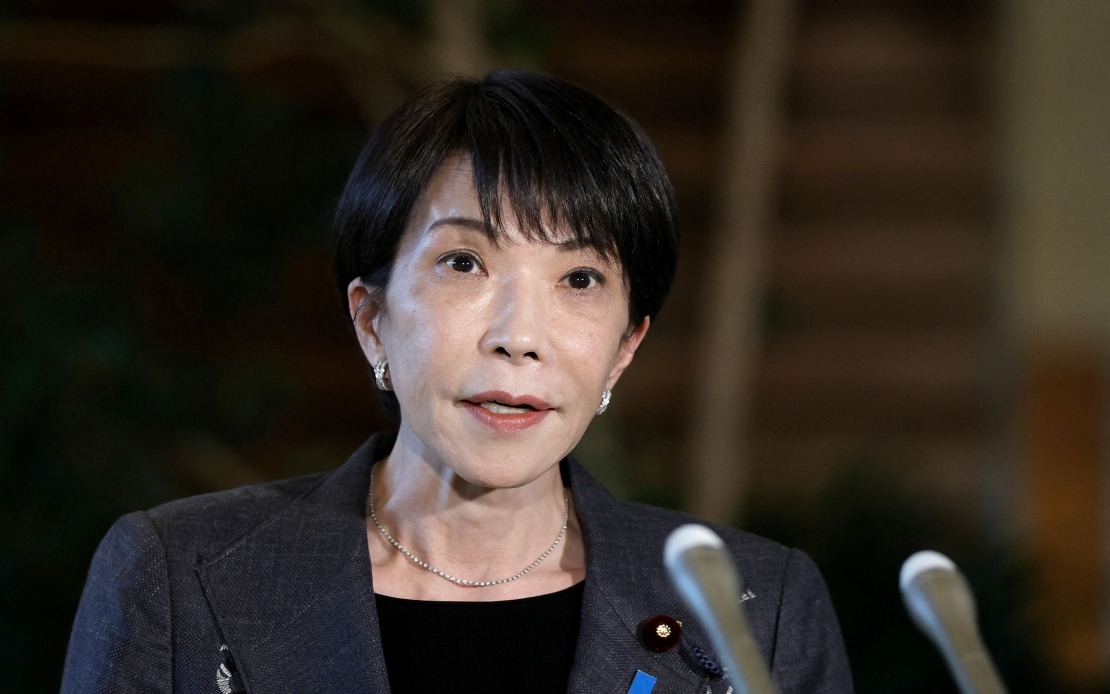
Japanese Prime Minister Sanae Takaichi marked the 81st anniversary of the end of World War II on Saturday by sending a ritual offering to the Yasukuni shrine in Tokyo, one of the most politically sensitive religious sites in East Asia. The symbolic gesture, executed through a financial contribution from her personal funds in her capacity as president of the ruling Liberal Democratic Party, underscores the ongoing tension between Japan's commemoration of the war dead and the diplomatic complications such gestures provoke across the region.
Takaichi herself refrained from making a physical visit to the Shinto shrine on the anniversary, a restraint that signals her awareness of the diplomatic minefield surrounding such actions while she holds the prime ministerial office. However, this measured approach did not prevent other senior government figures from participating in the shrine visit. Defence Minister Shinjiro Koizumi became the first sitting defence chief confirmed to have visited the location on an August 15 anniversary since Minoru Kihara made the trip in 2024; Kihara now serves as chief Cabinet secretary in Takaichi's administration, illustrating how these visits have become embedded within the highest echelons of Japanese political leadership.
Beyond the defence minister, several other Cabinet members and senior Liberal Democratic Party executives travelled to Yasukuni on Saturday. This included state minister Hitoshi Kikawada, who holds responsibility for territorial issues concerning the Northern Territories off Hokkaido—the disputed islands at the heart of Japan's long-running disagreement with Russia over post-war territorial boundaries. The participation of multiple government figures transformed the occasion into a demonstration of conservative political resolve, with party secretary-general Shunichi Suzuki, General Council head Haruko Arimura, and Election Strategy Committee chair Yasutoshi Nishimura all making the pilgrimage.
The Yasukuni shrine occupies a particularly fraught position in East Asian geopolitics because it honours individuals convicted as war criminals during World War II. In 1978, the shrine's authorities formally enshrined 14 wartime leaders as deities, a decision that has never ceased to generate diplomatic protests. Among those honoured is General Hideki Tojo, who served as Japan's wartime prime minister before his execution in 1948 following conviction for crimes against peace. This veneration of figures condemned through international justice mechanisms means that any official Japanese engagement with the shrine carries profound symbolic weight throughout the region.
China and South Korea, both nations that endured Japanese military aggression during the twentieth century, have consistently expressed strong objections to visits by Japanese prime ministers and lawmakers to Yasukuni. China experienced decades of Japanese occupation across vast territories, while the Korean Peninsula remained under Japanese colonial rule from 1910 until 1945. These historical wounds remain deeply felt, and visits to a shrine that commemorates wartime leaders are perceived by Beijing and Seoul as insufficiently acknowledging past suffering and as potentially glorifying rather than appropriately mourning Japan's military history. For Southeast Asian nations with their own experiences of Japanese occupation during the Pacific War, these symbolic actions carry relevance to broader regional understandings of historical reckoning.
Takaichi's decision to avoid a personal visit while authorising a financial offering represents a delicate balancing act between domestic conservative constituencies and international diplomatic considerations. Before assuming office in October of the previous year, she had visited the shrine during its seasonal festivals and on the August 15 anniversary without controversy. Her shift in approach since becoming prime minister reflects the additional constraints that high office imposes on such personal expressions of faith and politics. The private funding mechanism—whereby she paid for the offering using her own resources rather than official government funds—represents an attempt to maintain the gesture while creating conceptual distance from official state participation.
Japan's contemporary security posture provides broader context for understanding why conservative politicians remain motivated to visit Yasukuni despite diplomatic sensitivities. The nation has substantially increased its defence spending and capabilities in recent years, interpreting its security environment as deteriorating. While Japan's postwar constitution enshrines a commitment to peace and renounces war, the government has gradually expanded its military role and expenditures. Within this framework, conservative politicians view visits to Yasukuni as reaffirming national pride and honouring those who sacrificed for Japan, even as international observers see such actions as failing to adequately reckon with historical responsibility.
The shrine's continued significance within Japanese conservative politics reflects deeper divisions about how the nation should understand and commemorate its wartime history. Unlike Germany's approach to its Nazi past, which features explicit rejection and memorialisation centred on preventing recurrence, Japan's postwar reckoning has proceeded along more contested lines. The government has issued apologies for colonial rule and wartime aggression, yet certain conservative circles resist characterisations of Japanese actions as uniquely culpable, instead emphasising contextual factors and the universal brutality of modern warfare. Yasukuni shrine visits have become symbolic markers of these differing interpretations.
For Malaysia and other Southeast Asian nations, these Japanese political dynamics warrant attention because they affect regional stability and the quality of historical dialogue. Japan remains an important economic and security partner for nations across Southeast Asia, while China's growing assertiveness shapes the regional balance. Japanese political choices regarding historical memory and commemoration influence how neighbouring countries perceive Tokyo's reliability as a partner committed to acknowledging past wrongs and building equitable regional relationships. The continued participation of senior Japanese officials in Yasukuni visits suggests that conservative political forces remain influential in shaping official positions on historical matters.
The diplomatic challenge posed by Yasukuni reflects the broader difficulty of managing contested histories within a region still processing the legacies of twentieth-century conflict. South Korea and China have made clear that they interpret such visits as inadequate historical acknowledgement, yet Japanese conservative politicians view them as legitimate expressions of cultural and political identity. This impasse has persisted for decades without resolution, suggesting that technological solutions or bureaucratic compromises may be insufficient to bridge the underlying conceptual differences about war, responsibility, and national memory that animate these disputes.

