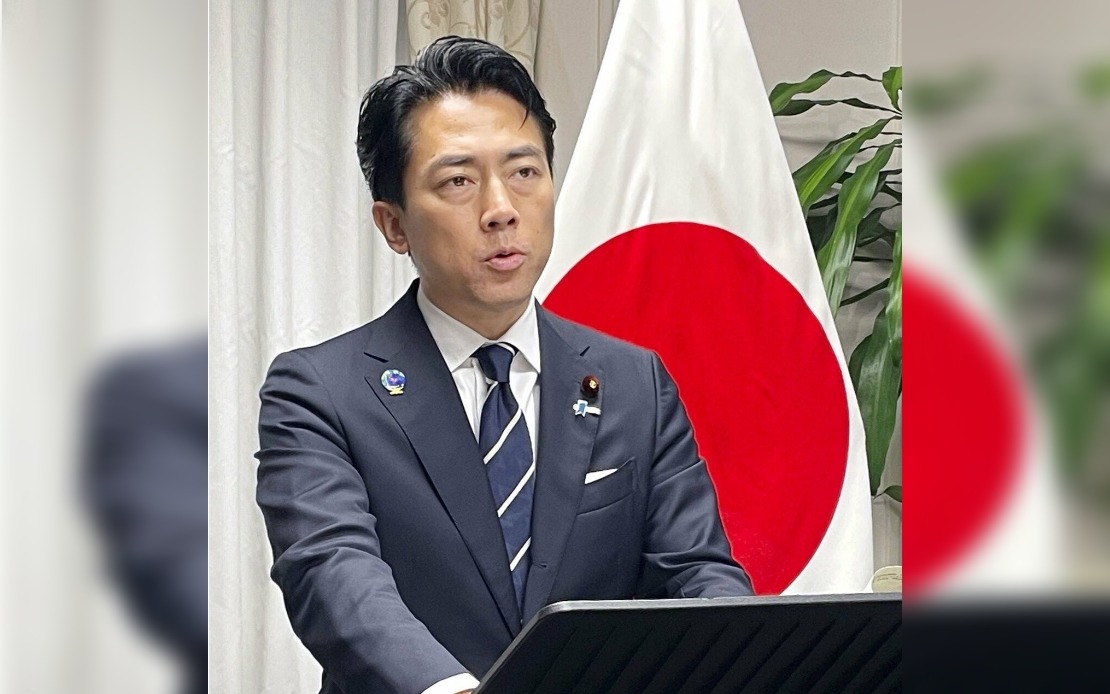
Japan's Defence Minister Shinjiro Koizumi has triggered a significant policy conversation by suggesting that his country must engage in substantive discussion about nuclear weapons, marking a notable shift in Tokyo's traditionally cautious approach to one of the world's most sensitive security questions. Speaking through an online programme released Friday, Koizumi framed the need for such dialogue within the context of a rapidly transforming geopolitical landscape, where traditional security frameworks are being reassessed across multiple continents. His remarks carry particular weight given that Japan is simultaneously undertaking a comprehensive overhaul of its three core national security documents, with revisions scheduled for completion by year-end.
The Defence Minister's intervention appears strategically timed with broader developments in Europe, where several countries are visibly strengthening their nuclear postures. Koizumi specifically highlighted France and Finland as examples of nations adopting more assertive nuclear deterrence strategies. Finland's parliament voted in June to permit nuclear weapons deployment on its territory, a momentous decision for a country that long maintained non-aligned status. Meanwhile, French President Emmanuel Macron announced in March that Paris intends to expand its nuclear warhead arsenal, signalling renewed confidence in atomic weapons as instruments of statecraft. These European developments underscore a global trend toward nuclear reassurance, particularly among NATO-aligned nations concerned about Russian aggression.
Japan's strategic position differs fundamentally from that of European nations, however. As the sole country to experience nuclear devastation, Japan has embedded profound historical trauma into its constitutional and political framework. The nation operates under three foundational principles: it will not produce nuclear weapons, will not possess them, and will not permit their deployment on Japanese soil. These commitments reflect not merely policy preferences but deeply rooted national identity and public consensus forged in the aftermath of Hiroshima and Nagasaki. Despite this principled stance, Japan has long sheltered under America's nuclear umbrella, effectively relying on Washington's atomic arsenal for extended deterrence without formally acknowledging this dependency.
Koizumi's call for debate represents an attempt to reframe what has traditionally been considered a closed question in Japanese politics. He argued that Japan's security environment has deteriorated substantially, necessitating frank conversation about topics previously treated as beyond the bounds of acceptable discussion. This framing suggests frustration with what defence hawks perceive as self-imposed intellectual constraints that prevent rigorous strategic analysis. By characterising certain security subjects as "unacceptable" for debate, Koizumi implies that Japan is handicapping itself in formulating responses to genuine threats. The minister's intervention thus functions as both a genuine policy proposal and a rhetorical device to expand the Overton window of permissible discussion within Japanese security circles.
The political context for Koizumi's remarks includes recent statements from other senior officials within the security establishment. In December of the previous year, a government source intimately involved in crafting security policy under Prime Minister Sanae Takaichi's administration suggested that Japan should acquire nuclear weapons. That proposal generated substantial controversy, drawing criticism from opposition parties and concern from international partners who view Japan's non-nuclear status as a stabilising element in East Asian security architecture. Former Defence Minister Itsunori Onodera similarly argued late last year that Japan must seriously reconsider its foundational non-nuclear principles, indicating that pressure for policy recalibration extends across segments of the defence establishment.
The timing of these pronouncements coincides with genuine shifts in the regional security environment. China's nuclear arsenal continues expanding at an accelerated pace, while North Korea's weapons programme advances despite international sanctions and diplomatic isolation. Russia's invasion of Ukraine has demonstrated the role nuclear weapons play in deterring conventional military intervention, prompting strategic reassessment among US allies worldwide. For Japan, which faces an increasingly assertive China and cannot depend entirely on American commitment to its defence, the logic of nuclear deterrence possesses apparent appeal from a narrow realist perspective. Yet such calculations must contend with Japan's pacifist constitution and the profound public antipathy toward nuclear weapons rooted in lived historical experience.
The upcoming revision of Japan's national security documents will prove critical in determining whether Koizumi's call for debate translates into actual policy change or remains confined to intellectual discussion. These documents establish Japan's strategic priorities, defence posture, and security partnerships for years ahead. Their reformulation offers opportunity for systematic consideration of nuclear deterrence options, though transforming Japan's non-nuclear status would require not merely bureaucratic decision-making but political courage to navigate public opinion and international complications. South Korea, another East Asian democracy with historical nuclear weapons programmes, has similarly grappled with questions about abandoning non-proliferation commitments in light of security threats.
For Southeast Asian nations and the broader region, Japanese nuclear weapons acquisition would represent a profound destabilisation. A nuclearly-armed Japan would trigger profound security anxiety in China and potentially cascade into renewed proliferation dynamics across Asia. The region has long benefited from Japan's status as a stabilising force that could absorb American security guarantees without independent nuclear capabilities. Yet Japan's evident frustration with constraining its strategic options reflects legitimate security concerns that regional powers must take seriously. The tension between maintaining stability through non-proliferation and accommodating genuine deterrence requirements will likely define East Asian security debates for years to come.
The international dimension of this discussion extends beyond regional powers. The United States maintains a significant security commitment to Japan and could theoretically extend nuclear capabilities if Tokyo formally requested them. However, American policymakers have historically discouraged Japanese nuclear acquisition, viewing it as destabilising and contrary to non-proliferation objectives. Any serious Japanese move toward nuclear weapons would force Washington to choose between its alliance obligation and its broader strategic preference for preventing nuclear proliferation in East Asia. Such dilemmas remain theoretical for now, but Koizumi's comments indicate they may not remain so indefinitely.
Public opinion presents perhaps the most formidable obstacle to any fundamental revision of Japan's non-nuclear principles. Surveys consistently show overwhelming majorities of Japanese citizens oppose nuclear weapons, a reflection of collective memory and moral conviction that permeates Japanese society across generational lines. Political leaders attempting to overturn these preferences would face intense domestic resistance and risk delegitimising their broader policy agenda. The gap between security establishment perspectives and public sentiment has long characterised Japanese defence policy, but attempting to bridge that gap through dramatic reversals rather than incremental evolution carries substantial political risk.
Koizumi's defence ministry role ensures his remarks receive serious attention within governmental circles, yet his call for debate rather than immediate policy change suggests awareness of political constraints. By framing the issue as one requiring national conversation rather than bureaucratic decision, he may be attempting to gradually shift public understanding without appearing to betray Japan's pacifist heritage. This gradualist approach reflects recognition that Japan cannot simply adopt the nuclear postures of European allies without grappling with its distinct historical experience and constitutional framework. Whether sustained debate ultimately produces policy change or merely satisfies elite frustrations with strategic constraints remains uncertain, but Koizumi's intervention confirms that Japan's non-nuclear status, long assumed permanent, has entered active reconsideration among those responsible for national security.

