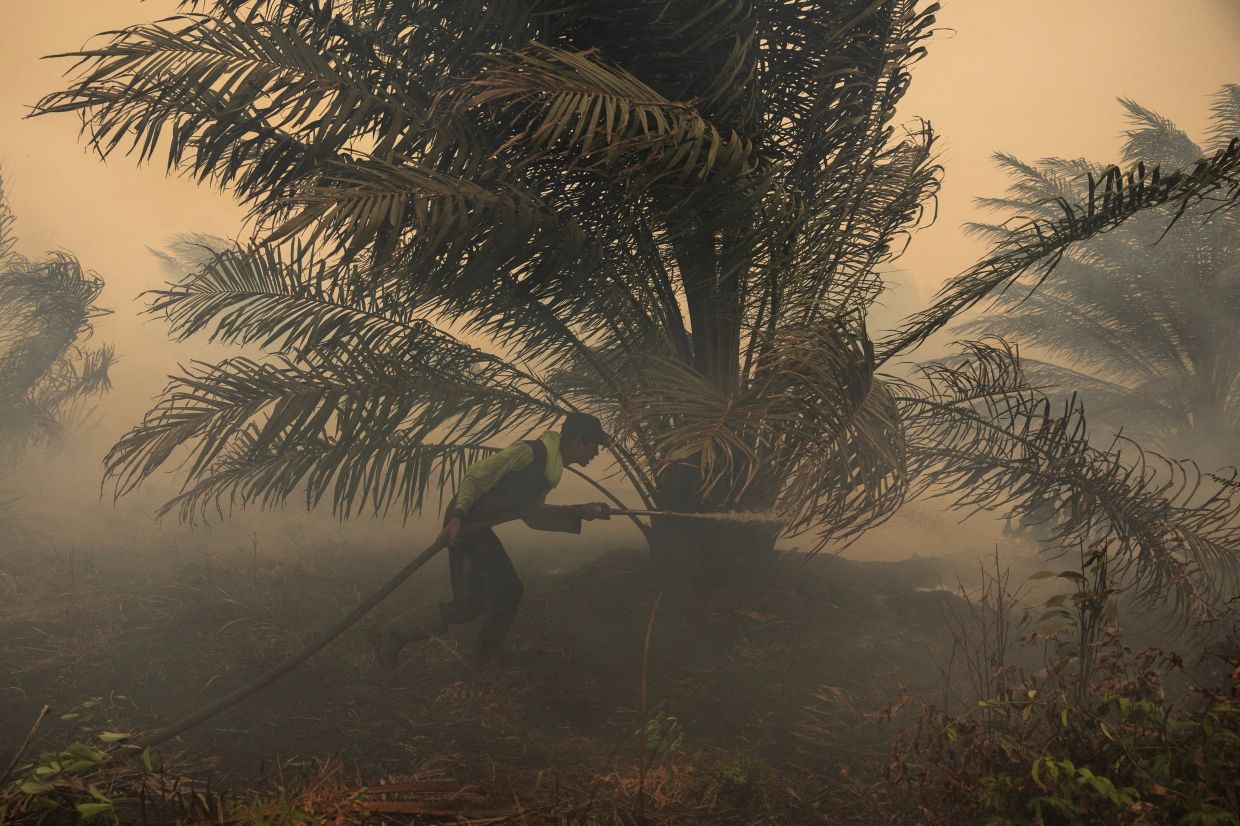
Indonesia is receiving international support in its escalating fight against forest fires ravaging Kalimantan, with Japan committing three helicopters to water-bombing operations beginning September 10. The deployment comes as air quality measurements across the region have reached critical levels, prompting alarm among health officials and environmental authorities who are struggling to contain the sprawling fires affecting millions of residents across Southeast Asia's largest island.
According to Berton Panjaitan, acting head of the Data, Information and Disaster Communication Centre at Indonesia's National Disaster Mitigation Agency (BNPB), the Japanese assistance represents a significant boost to firefighting capabilities. The contingent will include a heavy-lift Chinook helicopter alongside two additional aircraft, with preparations already underway involving site surveys and technical discussions about optimal deployment strategies for water-bombing missions specific to Kalimantan's geography and climatic conditions.
The air quality crisis has intensified markedly across central and western sections of Kalimantan. Jekan Raya in Palangka Raya, Central Kalimantan, recorded an ISPU measurement of 1,108 as of late Saturday afternoon, while the South-East Pontianak region in West Kalimantan reached 1,075—both registrations classified as hazardous under Indonesia's air quality standards. These readings represent conditions that pose serious health risks to vulnerable populations including children, elderly residents, and those with respiratory conditions.
The proliferation of fire sources across the region underscores the scale of the crisis facing Indonesian authorities. The BNPB documented 9,242 hotspots distributed across West, Central, and South Kalimantan provinces, with all three regions showing concerning upward trends. West Kalimantan experienced the most dramatic surge, with hotspot numbers climbing by 1,629 to reach 3,371 active fire locations. Ground-level fire spots across all three provinces totalled 171, indicating that despite aerial surveillance and water-bombing efforts, new fires continue to ignite faster than suppression teams can extinguish existing blazes.
Weather modification operations, which have provided temporary relief in other affected regions, face significant limitations in Kalimantan. Indonesian authorities successfully conducted cloud-seeding missions over several areas in Sumatra, including portions of Riau, South Sumatra, Jambi, and Lampung, which resulted in meaningful rainfall that helped suppress fires and temporarily improved air quality in those provinces. However, similar interventions cannot be deployed across Central and South Kalimantan due to insufficient cloud cover—a meteorological constraint that severely limits Indonesia's options for combating the fires through weather manipulation techniques.
The current firefighting infrastructure reflects both the scale of resource commitment and the magnitude of the challenge. The BNPB has mobilised 52 aircraft to support operations across priority provinces, with 38 dedicated specifically to water-bombing missions and 14 assigned to aerial reconnaissance and weather modification coordination. To date, these operations have dropped approximately 3.5 million litres of water across six key provinces, though the volume of fires continuing to spread suggests these efforts, while substantial, remain insufficient to contain the crisis completely.
Japan's intervention carries particular significance for Southeast Asia's regional response mechanisms. The commitment of advanced military helicopters, particularly the Chinook variant known for its heavy lifting capacity and extended operational range, provides Indonesia with capabilities that complement domestic assets. This cooperation demonstrates how transnational partnerships are essential when environmental crises transcend national boundaries, as haze from Kalimantan fires regularly drifts across maritime borders affecting air quality in Malaysia, Singapore, and Brunei.
For Malaysian readers, the Kalimantan fire situation warrants close monitoring as the region's geographical proximity means haze episodes are inevitable if fire suppression efforts prove inadequate. Previous years have demonstrated how Kalimantan fires can rapidly degrade air quality across the Strait of Malacca and throughout peninsular Malaysia and Sabah, prompting school closures, health advisories, and significant economic disruption. The current spike in hotspots and hazardous ISPU readings suggest conditions could deteriorate further before Japan's air support becomes fully operational.
The underlying factors driving this year's fire crisis reflect broader environmental and climatic patterns affecting the region. Kalimantan's peatland ecosystem, which stores vast quantities of carbon and moisture, becomes increasingly susceptible to wildfires during dry seasons and drought conditions. The concentration of hotspots in West Kalimantan indicates that agricultural expansion, land-clearing practices, and potentially deliberate burning for plantation development continue despite Indonesian regulations prohibiting open burning.
Authorities face a critical window to demonstrate operational effectiveness before the fire season potentially worsens. The BNPB's acknowledgement that weather modification cannot currently support Central and South Kalimantan operations indicates that water-bombing will remain the primary suppression mechanism until atmospheric conditions improve. Japan's contribution, while valuable, represents supplementary capacity rather than a comprehensive solution to the underlying drivers perpetuating fire ignition across the region.
The diplomatic dimension of accepting Japanese air support also reflects Indonesia's pragmatic approach to environmental governance, prioritising immediate crisis mitigation over nationalist considerations about accepting foreign military assets. For Southeast Asia more broadly, this cooperation model offers a template for regional response to transnational environmental emergencies that no single nation can adequately address unilaterally.
Looking forward, the effectiveness of Japan's water-bombing operations will likely influence both Indonesia's disaster response strategy and other Southeast Asian nations' willingness to request similar assistance during future fire seasons. As climate patterns shift and dry seasons potentially extend, the region may increasingly rely on rapid international mobilisation of firefighting resources to protect public health and mitigate transboundary air pollution affecting millions across one of the world's most densely populated tropical regions.

