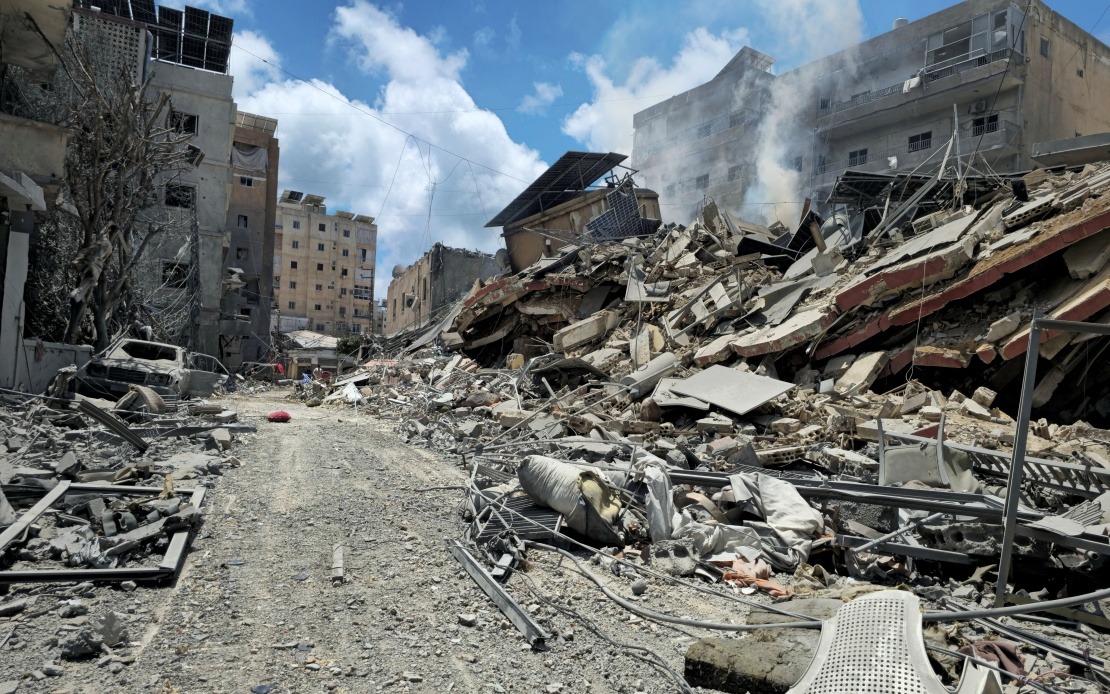
Japan has committed US$15 million in emergency humanitarian assistance to address escalating humanitarian crises across West Asia, Foreign Minister Toshimitsu Motegi announced on Friday. The multifaceted aid package reflects Tokyo's strategic interest in regional stability whilst addressing immediate needs arising from ongoing conflicts and displacement. Approximately US$10 million will be directed to Iran, making it the primary recipient, with the remainder distributed between Lebanon and the West Bank Palestinian population. All assistance will be channelled through established international organisations rather than bilateral mechanisms, a deliberate approach that ensures coordination with the United Nations and other multilateral bodies already operating in these territories.
The distribution of funds reveals Japan's assessment of humanitarian priorities across the fractured region. Iran's allocation of nearly two-thirds of the total reflects the scale of civilian hardship resulting from decades of international sanctions and regional tensions, which have severely constrained healthcare systems, food security and basic services. The Japanese government's decision to prioritise Iran demonstrates recognition that instability in the Persian Gulf directly affects global energy security and maritime trade routes critical to Japan's resource-dependent economy. Meanwhile, the US$4 million earmarked for Lebanon acknowledges the country's economic collapse and the resultant humanitarian emergency, whilst the US$1 million for West Bank Palestinians addresses the ongoing humanitarian dimensions of the Israeli-Palestinian conflict.
Motegi emphasised that peace and stability throughout the Middle East remain fundamental to Japan's national interests and regional engagement strategy. This statement carries weight beyond diplomatic courtesy, as Japan depends heavily on stable petroleum supplies and secure shipping lanes through the Persian Gulf and Strait of Hormuz. Any major disruption to regional security immediately threatens Tokyo's energy security and economic prosperity. The Foreign Minister's public commitment signals that despite geographical distance, Japan recognises the interconnected nature of modern geopolitical risks and the imperative of proactive humanitarian engagement as a stabilising force.
The specific inclusion of food and medical supplies in the assistance package targets the most acute civilian suffering across these territories. Iran faces severe shortages of essential pharmaceuticals and nutritional goods due to international sanctions, whilst Lebanon's currency collapse has rendered its healthcare system chronically underfunded and unable to procure basic medicines. Palestinian communities in the West Bank continue experiencing restricted access to resources and services due to movement restrictions and the fragmented nature of territorial administration. By channelling assistance through international organisations, Japan ensures that aid reaches vulnerable populations regardless of political complications that might otherwise impede bilateral delivery mechanisms.
For Malaysian readers, this development carries several implications. As a fellow Asian nation dependent on Middle Eastern oil and strategic trade routes, Malaysia shares Japan's fundamental interest in regional stability. The Japanese approach of deploying humanitarian assistance as a stabilising mechanism offers a model for how resource-dependent economies can contribute meaningfully to conflict mitigation without direct military involvement. Additionally, Malaysia's own significant Palestinian diaspora community and longstanding advocacy for Palestinian rights mean that Japanese support for humanitarian assistance in the West Bank aligns with values broadly shared across Southeast Asian societies.
Japan's diplomatic strategy reflects a broader pattern of sophisticated engagement with the Middle East. Unlike some major powers that approach the region primarily through military or geopolitical competition, Tokyo emphasises humanitarian channels and economic interdependence as mechanisms for maintaining constructive relationships across sectarian and political divides. This approach allows Japan to work effectively with Iran, Saudi Arabia, Israel, and the Palestinian Authority without appearing to take sides in fundamental disputes. The multilateral delivery mechanism further underscores this commitment to neutrality and impartiality.
The timing of Japan's announcement occurred amid continued international concern over humanitarian deterioration across West Asia. The Foreign Ministry's decision to publicly commit these resources at the ministerial level suggests that Tokyo views the humanitarian situation as sufficiently grave to warrant prominent diplomatic attention. This elevation of humanitarian concerns within Japan's foreign policy apparatus reflects growing recognition that civilian suffering and displacement create conditions conducive to extremism, irregular migration, and regional instability that ultimately affect global security.
Motegi's commitment that Japan will continue working with relevant governments and international organisations signals that this US$15 million represents not an isolated gesture but rather part of sustained engagement. The phrasing indicates an ongoing process of assessment and calibration, suggesting that Japan will likely announce additional assistance measures as humanitarian situations evolve. This continuity approach differs from one-off donations and reflects Japan's preference for sustained, predictable engagement that allows recipient organisations to plan programmes effectively.
The distribution mechanism through international organisations merits particular attention, as it reflects lessons Japan has learned from decades of development and humanitarian assistance. Direct bilateral aid to governments in fragile or conflict-affected states risks capture by authorities or diversion away from intended beneficiaries. International organisations operating under UN auspices benefit from neutral status and established protocols that maximise the likelihood of assistance reaching vulnerable populations. For Japan, this approach also minimises diplomatic friction, as funds directed through multilateral channels avoid the appearance of favouring particular factions or governments.
Regional observers will note that Japan's humanitarian engagement comes amid broader efforts by Tokyo to maintain economic and diplomatic influence across West Asia despite China's growing presence through Belt and Road initiatives. Humanitarian assistance serves multiple purposes simultaneously: addressing genuine civilian suffering, maintaining Japanese credibility as a constructive regional partner, and reinforcing networks with governments and institutions across the region. This multifaceted approach reflects Japan's understanding that sustainable influence depends on being perceived as a force for stability and compassion rather than merely a commercial or security actor.
The allocation amounts themselves, whilst modest in global terms, carry symbolic weight regarding Japan's prioritisation of humanitarian concerns. The decision to publicly announce these commitments through the Foreign Minister ensures maximum diplomatic visibility and reinforces Japan's positioning as a responsible global citizen concerned with universal humanitarian principles. This public diplomacy dimension enhances Japan's soft power and international standing, particularly among developing nations that often view humanitarian commitment as reflecting national values and character.

