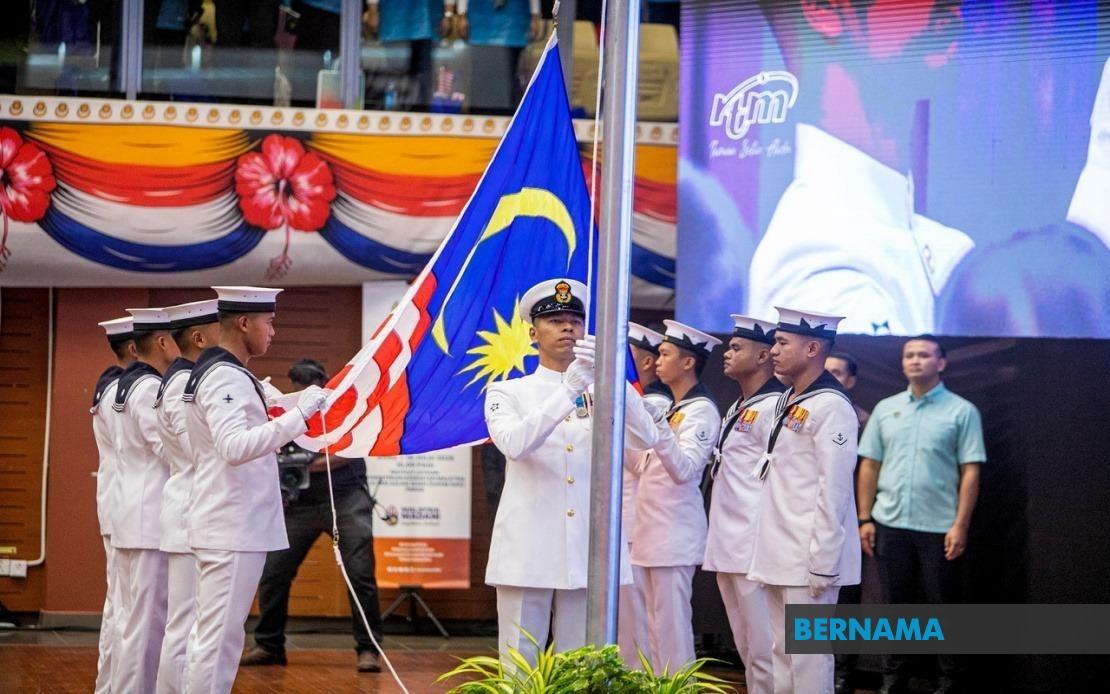
The Jalur Gemilang raising ceremony has made its triumphant return as the centrepiece of Malaysia's 2026 National Month launch, signalling the government's renewed emphasis on patriotic observances after a two-year absence from the national calendar. Prime Minister Datuk Seri Anwar Ibrahim presided over the ceremonial occasion at the Sultan Azlan Shah Ministry of Health Training Institute in Tanjung Rambutan, Ipoh, breathing fresh momentum into an event widely regarded as a cornerstone of Malaysia's identity celebrations during the latter half of each year.
The restoration of this formal flag-raising ritual carries symbolic weight beyond its immediate theatrical elements. For Malaysians accustomed to seeing the ceremony suspended, its resurrection reflects government policy shifts prioritising visible expressions of national cohesion and patriotic expression. The two-year gap, though officially unaddressed in statements, coincided with periods of political transition and constitutional deliberation, making the ceremony's return a deliberate statement about national direction and unity priorities during an election year cycle.
During the formal proceedings, Anwar handed the national flag to a nine-member contingent from the Royal Malaysian Navy's Lumut Base, led by Chief Petty Officer Mohamad Razif Aliff Md Yusof. This symbolic gesture transformed the naval personnel into official torchbearers for the nationwide campaign, tasking them with representing the military's role in fostering patriotic sentiment across Malaysian society. The deliberate involvement of armed forces personnel underscores how government institutions orchestrate national identity narratives, positioning the military as guardians of patriotic principles.
The physical hoisting of the Jalur Gemilang, measuring 1.82 metres by 3.65 metres, proceeded with ceremonial precision as attendees sang the national anthem Negaraku. This moment crystallised the event's dual purpose: creating an emotionally resonant spectacle while simultaneously instructing citizens about appropriate patriotic comportment. The requirement that guests stand respectfully during the anthem reinforced behavioural norms around national symbols, establishing the ceremony as an educational intervention in civic culture.
Following the flag-raising, trainee Muhammad Ammar Mohd Asri recited the Rukun Negara pledge, embedding the constitutional foundation of Malaysian statehood within the patriotic ceremony. This sequence deliberately connected contemporary flag-hoisting practices to the nation's foundational social contract, suggesting that displays of patriotism operate not as empty gestures but as reaffirmations of shared constitutional principles. The involvement of youth through trainee participation symbolises generational transmission of national values.
The broader Fly the Jalur Gemilang campaign, which frames household flag displays as patriotic civic participation, represents a particular approach to nationalism emphasising voluntary individual action. Rather than mandating flag displays, the campaign encourages Malaysians to self-identify as patriots through household decoration choices. This strategy distributes patriotic labour across society, transforming domestic spaces into landscapes expressing national allegiance. For Malaysia's diverse population, such inclusive patriotic frameworks offer alternatives to more coercive or exclusionary nationalism models.
Composer and performer Faizal Tahir unveiled the campaign's official theme song, titled Aku Berjanji, which became immediately accessible through the Merdeka360 portal from early afternoon. The strategic deployment of contemporary popular music to accompany patriotic campaigns demonstrates how government communicates with younger demographics through entertainment media rather than exclusively through formal institutional channels. Music's emotional resonance potentially reaches audiences unreached by traditional civic ceremonies.
The National Month celebrations throughout 2026 will culminate in two distinct commemorative dates, with National Day on August 31 and Malaysia Day on September 16. This dual-calendar approach reflects Malaysia's complex constitutional history, acknowledging both the original independence declaration date and the later Malaysia formation through Sabah and Sarawak's incorporation. Structuring celebrations across both dates ensures inclusive recognition of all component territories' historical experiences within the federation.
For Malaysian observers, the ceremony's return signals government investment in revitalising institutional patriotic practices following periods of political uncertainty. Southeast Asian analysts tracking Malaysian state-building efforts will note how Kuala Lumpur balances inclusive civic nationalism with institutional symbolism, steering between nationalist expressions and multicultural governance demands. The event demonstrates Malaysia's ongoing calibration of patriotic language suitable for its religiously and ethnically diverse population.
The ceremony's success in mobilising both military institutions and popular cultural figures reveals how contemporary Malaysian patriotism integrates formal state apparatus with entertainment sectors. This synergistic approach attempts to naturalise patriotic expression across institutional and consumer domains, making national loyalty feel simultaneously official and voluntary, structured and spontaneous. Such integrated strategies characterise modern nation-building approaches across Southeast Asia, where state capacity increasingly depends on cultural consent rather than coercive institutional weight alone.

