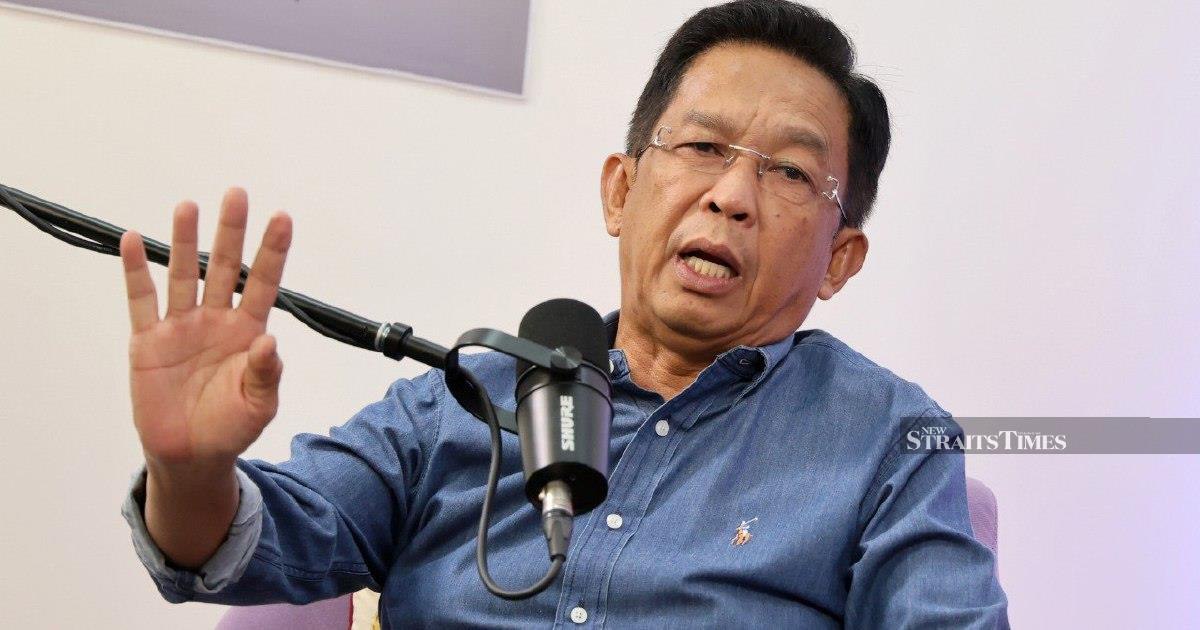
Datuk Seri Jalaluddin Alias, chairman of the Negri Sembilan Umno Liaison Committee, has moved swiftly to quash speculation that he harbours resentment over not being selected for the menteri besar position, instead framing the outcome as a strategic victory for the broader coalition. In comments made in Seremban, the senior party figure sought to redirect attention from internal party dynamics to the larger political prize that Barisan Nasional secured when it returned to control of the state.
The timing of Jalaluddin's statement reflects a delicate balancing act within Umno's Negri Sembilan structure, where leadership appointments frequently generate discussion about factional alignments and individual ambitions. By explicitly denying disappointment, he has preempted potential criticism that lingering resentment might destabilise party unity during a critical period when Barisan Nasional is consolidating its recent electoral gains. Such statements are routinely issued following contested appointments to demonstrate party loyalty and collective commitment to governance.
The menteri besar selection process in state governments under Barisan Nasional typically involves consultations across party structures, with multiple factors influencing the final decision. These considerations often extend beyond seniority or individual credentials to encompass broader coalition dynamics, representation of different party factions, and perceived electability across state constituencies. Jalaluddin's public positioning suggests an acceptance of this deliberative process, even when it does not favour his personal advancement.
Umno's dominance within Barisan Nasional means that Umno politicians typically hold the menteri besar position in states where the coalition governs, though the specific choice among eligible candidates involves negotiations at multiple levels. In Negri Sembilan, where Umno remains the leading political force, the appointment carries particular significance for how the party manages internal relations and distributes high-level positions among its senior leadership. The choice ultimately made reflects how party elders and federal-level decision-makers assessed various competing claims and considerations.
For state-level Umno politics, Jalaluddin's measured response serves an important function in maintaining stability within party ranks. Prominent figures who publicly accept their roles—even when disappointed—help prevent the kind of factional divisions that can weaken Barisan Nasional's grip on state government. This becomes especially relevant in Malaysian politics, where state-level governments provide crucial platforms for career advancement and remain important sources of patronage and resource allocation for party machinery.
The emphasis on Barisan Nasional's return to power rather than personal advancement reflects a narrative that has become standard among party officials following recent electoral cycles. Across Malaysia, senior figures from various coalitions and parties have adopted similar framing, suggesting a broader recognition that claiming personal disappointment could undermine attempts to project unified leadership and forward momentum. This approach also allows politicians to maintain their standing within party hierarchies while still acknowledging that difficult allocation decisions have been made.
Negri Sembilan's political landscape has experienced significant shifts in recent years, with control alternating between competing coalitions. The return of Barisan Nasional represents a restoration of a political order that had dominated the state for decades before recent reversals. Against this backdrop, individual appointment decisions become less significant than the larger question of which coalition controls state resources and determines policy direction. Jalaluddin's comments implicitly acknowledge this hierarchy of priorities.
The statement also carries implications for how Umno manages its internal hierarchy going forward. By accepting the outcome and publicly reframing it as a collective achievement rather than personal setback, Jalaluddin positions himself as a team player—a valuable credential when senior party positions become available or when factional conflicts need resolution. Within Umno's structure, such demonstrations of flexibility and loyalty often prove instrumental in determining future advancement opportunities.
For observers tracking Malaysian state-level politics and coalition dynamics, Jalaluddin's response offers insight into how established politicians navigate disappointment while maintaining party discipline. The Negri Sembilan scenario reflects common patterns across Malaysia's federal structure, where state-level appointments involve complex negotiations and often leave multiple qualified candidates without their preferred positions. How such individuals publicly respond to these outcomes frequently influences their subsequent influence within party structures and their prospects for future advancement.

