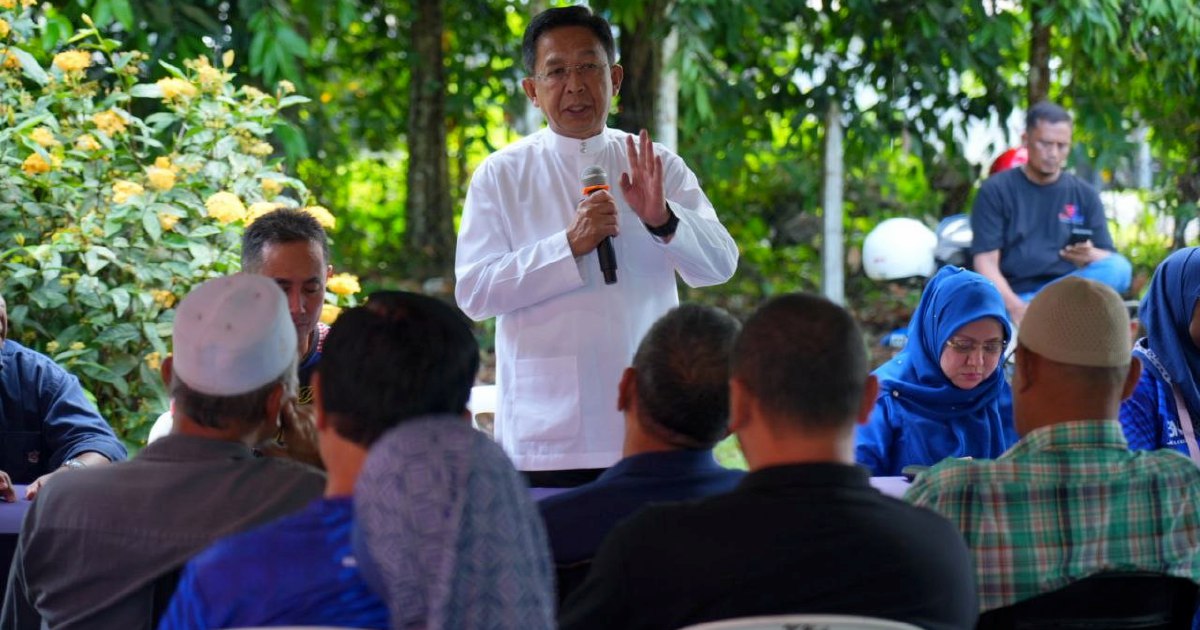
Perikatan Nasional (PN) has signalled that Datuk Seri Jalaluddin Alias, the current Umno chairman for Negri Sembilan, stands as a leading contender for the position of menteri besar if the PN-Barisan Nasional (BN) alliance secures victory in the August 1 state election. The announcement came from senior coalition representatives, underscoring the collaborative framework the two major political blocs have established ahead of the crucial ballot in the central Malaysian state.
The identification of Jalaluddin Alias reflects PN's strategy to leverage established party figures with significant local credibility and administrative experience. As head of Umno operations in Negri Sembilan, Alias brings institutional knowledge of state-level governance and an existing political foundation within one of the country's constituent member parties. His elevation as a potential chief executive of the state would represent a consolidation of power within the Umno establishment, particularly given the party's continued dominance in PN's coalition architecture.
The PN-BN understanding represents a significant realignment in Malaysian electoral politics. Rather than contesting separately and potentially fragmenting the Malay-Muslim voter base, the two coalitions have agreed to coordinate their campaign efforts and governance arrangements should they win. This pact effectively transforms the election from a three-way or multi-cornered contest into a more binary choice for voters, with clear implications for executive leadership if the alliance prevails.
Negri Sembilan's electoral dynamics carry particular weight in the broader Malaysian political context. The state has historically been a proving ground for national political trends, and its outcome often signals shifts in voter sentiment that presage developments in federal politics. An PN-BN victory would consolidate their control of multiple state governments and reinforce their position as the dominant political force outside opposition-controlled jurisdictions.
For PN specifically, success in Negri Sembilan would validate the coalition's reconstructed identity. PN emerged from the dissolution of Pakatan Harapan and has since positioned itself as a Malay-Muslim centric alternative within the non-opposition spectrum. The coalition's willingness to cooperate with BN rather than contest directly suggests both pragmatism and recognition that electoral viability depends on maintaining voter bases that might otherwise split support between competing Malay-dominant parties.
Jalaluddin Alias's potential appointment carries implications for Umno's internal faction dynamics. As Negri Sembilan Umno chief, his candidacy reflects how the party leadership intends to distribute key executive positions among its regional strongmen. The menteri besar role would position him as the primary guardian of Umno interests in state affairs, a responsibility that carries substantial influence over resource allocation, licensing decisions, and patronage networks that sustain the party's grassroots infrastructure.
The August 1 election itself represents the culmination of months of political manoeuvring and coalition-building. The decision to hold state elections during this period, rather than after the next federal polls, creates a compressed timeline for campaigning and generates momentum that the winning coalition can carry forward into subsequent electoral contests. For PN and BN, victory would establish them as the natural governing force in Negri Sembilan for the next five-year cycle, barring early dissolution or extraordinary political shifts.
The menteri besar position, while geographically limited to a single state, carries significance beyond its administrative scope. The office serves as a training ground for national-level politics, a stage for demonstrating governance competence, and a base of electoral support that strengthens a politician's standing within party hierarchies. Jalaluddin Alias, if appointed, would become one of the visible faces of PN-BN coalition governance and would influence how the alliance's policies are implemented and perceived at the state level.
Beyond the immediate electoral calculus, the PN-BN arrangement in Negri Sembilan signals how Malaysian politics continues to recalibrate around coalitional governance. Neither bloc appears capable of unilateral dominance across all electoral battlegrounds, making strategic partnerships and seat-sharing agreements essential to competitive viability. This interdependence shapes how political leaders are selected and vetted—increasingly through negotiation between coalition partners rather than through purely internal party processes.
For Negri Sembilan voters, the election offers a choice between governance continuity under an established political alignment versus alternatives represented by opposition parties. The identification of Jalaluddin Alias as a potential menteri besar gives voters clarity about who would occupy the chief executive office if PN-BN prevails, though the possibility remains that negotiated settlements between coalition partners could produce alternative candidates depending on seat distributions and post-election mathematics.
The timing and articulation of Jalaluddin Alias's potential candidacy also serves a strategic communications function. By naming a leading contender in advance, PN-BN provides voters with a recognisable face associated with their coalition and state-level programme. This approach contrasts with strategies that maintain ambiguity about leadership choices, reflecting confidence that Alias's profile and credentials will resonate positively with the electorate.
As the August 1 election approaches, the stakes for Negri Sembilan extend beyond state-level administration. A PN-BN victory would vindicate their coalition strategy and demonstrate voter acceptance of their renewed partnership. A loss would force both blocs to reassess their electoral assumptions and coalition arrangements. For Jalaluddin Alias specifically, the election outcome will determine whether his trajectory leads toward the menteri besar's office or toward reassessment of his political viability within Umno and PN structures.

