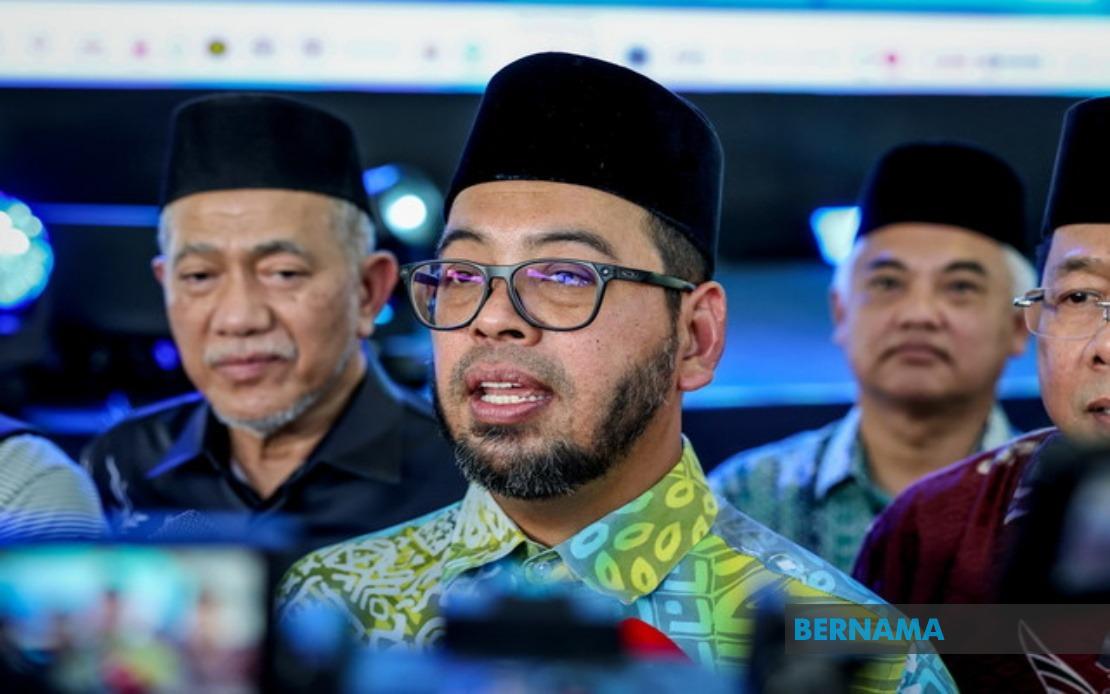
The Department of Islamic Development Malaysia (JAKIM) is moving to establish a standardised framework for funeral management across the country, prompted by a recent incident that sparked public concern and online debate. Minister in the Prime Minister's Department (Religious Affairs) Dr Zulkifli Hasan announced the initiative during an event in Bukit Mertajam, signalling that the religious affairs portfolio is taking proactive steps to prevent similar controversies from escalating in future.
The decision to develop comprehensive guidelines reflects growing recognition within Malaysia's Islamic institutional hierarchy that funeral and burial procedures require clearer, more consistent protocols. While several states have already established their own procedures, JAKIM's push for a unified reference document represents an attempt to harmonise practices whilst respecting the constitutional autonomy that state religious authorities exercise over Islamic affairs within their jurisdictions. This delicate balance between federal standardisation and state jurisdiction has long been a feature of Malaysia's religious governance structure.
Dr Zulkifli emphasised that the finalisation process would not be prolonged, given that foundational guidelines already exist within the department. The refinement effort centres on enhancing existing frameworks into a more robust and comprehensive standard that can serve as a template for states currently lacking detailed procedures. This phased approach acknowledges both the urgency of establishing clarity and the practical reality that significant institutional changes require careful coordination across multiple religious authorities.
The underlying trigger for this initiative was a contentious situation in Selangor involving alleged delays in the burial of a deceased person at Ukay Perdana Muslim Cemetery in Hulu Kelang. The incident, which involved Masjid Nurul Hidayah in Kampung Pandan Dalam, generated substantial social media attention and raised public questions about the efficiency and transparency of Malaysia's funeral management processes. Such disputes carry particular sensitivity given their intersection with grief, religious observance, and family dignity during vulnerable moments.
In response to the Selangor incident, the Selangor Islamic Religious Council (MAIS) took immediate action by convening discussions between the bereaved family, mosque management, Badan Kebajikan Salatulrahim (BKS), and the Selangor Islamic Religious Department (JAIS). MAIS chairman Datuk Salehuddin Saidin indicated that these interventions aimed not merely to resolve the immediate dispute but to establish preventive mechanisms that would protect families and institutions from similar conflicts. This multi-stakeholder approach reflects an understanding that funeral management involves numerous actors whose coordination breakdowns can create problems.
For Malaysian Muslims, funeral procedures carry both religious and personal significance. The Islamic tradition emphasises dignity, respect, and timely treatment of the deceased, meaning that delays or procedural confusion can compound the distress already experienced by grieving families. Standardised guidelines would provide clear expectations for all parties involved—from family members to mosque committees to cemetery administrators—about timelines, responsibilities, and escalation procedures when complications arise.
The nationwide standardisation effort also addresses a practical challenge inherent in Malaysia's federal structure. With thirteen states and three federal territories, each possessing distinct Islamic administrative bodies, the absence of unified procedures has historically created pockets of inconsistency. A bereaved family relocating across state borders, or facing circumstances that intersect multiple jurisdictions, might encounter different protocols and timelines. Establishing a baseline standard would reduce this fragmentation without necessarily eliminating state-level variations that reflect local circumstances or enactments.
Dr Zulkifli's call for calm and unity during the implementation process signals awareness that any perceived changes to funeral procedures might trigger sensitivities among religious communities. Malaysia's Islamic affairs landscape involves complex relationships between federal bodies like JAKIM, state religious councils, mosque committees, and community organisations. New guidelines require buy-in and cooperation from these distributed networks, necessitating communication that emphasises collaborative problem-solving rather than bureaucratic imposition.
The timing of this initiative reflects broader questions about institutional responsiveness within Malaysia's religious governance. As social media amplifies controversies that previously might have remained localised, religious authorities face pressure to demonstrate that they can address genuine operational challenges. JAKIM's proactive stance suggests recognition that waiting for further incidents to accumulate is untenable, and that preventive standardisation serves both institutional credibility and public interest.
Implementation of new guidelines will require coordination across multiple levels. State religious departments must adapt their internal procedures, mosque committees require training and clarification, cemetery administrators need explicit protocols, and Islamic burial societies must align their practices with standardised timelines. This multi-institutional change management challenge explains why Dr Zulkifli emphasised that whilst the process should not be prolonged, it requires ensuring that improvements respect existing state laws and enactments rather than attempting to impose uniform structures that might conflict with localised Islamic jurisprudence or administrative frameworks.
The guidelines are likely to address several operational areas: clear definitions of timelines for different stages of the burial process; protocols for managing complications or disputes; documentation and notification procedures; roles and responsibilities of different actors; and escalation mechanisms when delays occur. Transparency about expected timelines would particularly benefit bereaved families, who often face uncertainty during emotionally demanding periods.
Regional implications of Malaysia's approach extend beyond national borders. As a significant Muslim-majority nation, Malaysia's institutional practices often influence religious administration in neighbouring countries within ASEAN. Should JAKIM's standardisation effort prove successful in reducing funeral-related disputes whilst maintaining Islamic standards, it could offer a model for other jurisdictions grappling with similar coordination challenges between federal and state religious authorities.
Looking forward, JAKIM's initiative represents an inflection point in how Malaysia's religious institutions respond to public concerns amplified through digital platforms. The department's willingness to use a controversial incident as a catalyst for systemic improvement, rather than merely managing the immediate crisis, suggests a longer-term commitment to modernising funeral management practices. Success will depend on genuine coordination across state bodies, community stakeholders, and affected families—not merely the issuance of guidelines from federal authorities.

