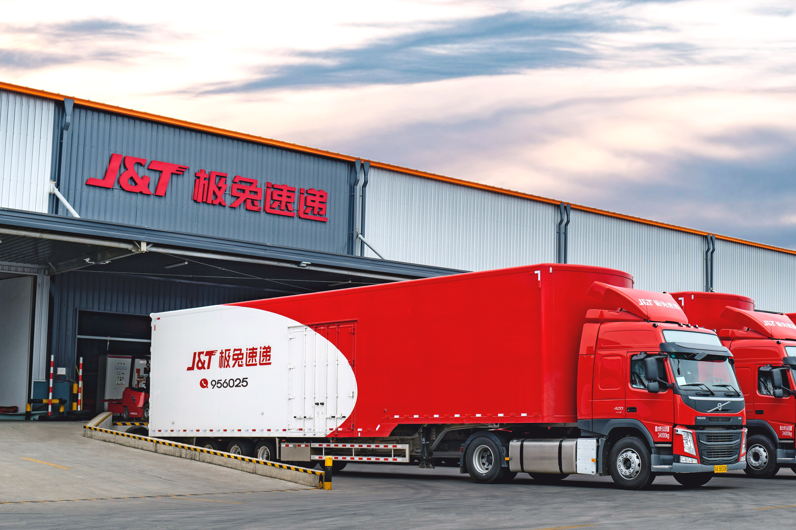
J&T Global Express Ltd, the Hong Kong-listed logistics operator, has crossed a significant threshold in its operational capacity, reporting that average daily parcel volumes surpassed the 100 million mark during the second quarter of 2026. This milestone reflects the company's expanding footprint across multiple continents, particularly within Southeast Asia, where e-commerce expansion and rising cross-border trade have created unprecedented demand for rapid parcel delivery services.
The company's second-quarter performance demonstrated broad-based growth across its operational geography. During the three-month period from April through June, J&T Express processed approximately 9.18 billion parcels globally, representing a 24.2 percent increase compared to the same quarter in the previous year. More significantly, international markets outside China contributed 2.97 billion parcels to this total, a remarkable 66.9 percent surge that underscores the strategic importance of geographic diversification to the company's long-term growth model.
Southeast Asia has emerged as the primary engine driving J&T Express's international expansion. Throughout the second quarter, the region generated 2.76 billion parcels, equating to an average daily throughput of 30.3 million items. This represents 63.2 percent growth on a year-on-year basis, substantially outpacing the company's overall expansion rate. For Malaysian stakeholders monitoring regional logistics infrastructure, these figures illustrate the accelerating digitalization and e-commerce penetration across Southeast Asian economies, where consumers increasingly adopt online shopping for everything from fast-moving consumer goods to electronics and apparel.
By mid-2026, J&T Express had accumulated 5.52 billion parcels across Southeast Asia during the first six months of the year, reflecting 71.2 percent growth compared to the corresponding period in 2025. This trajectory suggests that the region's parcel volumes have roughly doubled year-on-year, a pace that outstrips demographic growth and inflation combined. For regional policymakers and competing logistics providers, this data signals that Southeast Asian e-commerce markets are maturing rapidly and consolidating around efficient last-mile delivery networks.
To support this explosive demand, J&T Express has substantially expanded its physical infrastructure throughout Southeast Asia. Between the end of 2025 and June 30, 2026, the company added six new sorting centres to its regional network, bringing the total to 127 facilities. Simultaneously, automated sorting lines increased by eleven units to reach seventy-five systems across the region. This infrastructure investment demonstrates management's confidence that Southeast Asian parcel volumes will continue accelerating, requiring predictable capacity additions rather than ad-hoc expansions. For Malaysian operations specifically, such facility expansions typically generate employment and support the development of specialized logistics expertise within the workforce.
Meanwhile, J&T Express's domestic Chinese operations, while growing more modestly, remain the largest component of its business. During the second quarter, China generated 6.21 billion parcels, reflecting 10.6 percent year-on-year growth with average daily volumes of 68.2 million. The company has deliberately adjusted its operational approach in China by refining network configurations, rebalancing its customer portfolio, and enhancing overall efficiency rather than pursuing aggressive volume expansion in an increasingly competitive market. This strategic recalibration suggests mature market dynamics within China, where incumbents and new entrants have compressed margins and forced logistics operators to emphasize operational excellence over growth-at-any-cost strategies.
Investments in automation within China have also accelerated, with the number of automated sorting lines increasing by eight units during the first half of 2026 to reach 346 total systems. These capital expenditures address labour cost inflation and support the consistent service standards expected by major e-commerce platforms and enterprise customers. Such automation investments provide competitive moats that smaller, less-capitalized competitors cannot easily replicate, particularly in handling peak-season volumes.
Beyond Asia, J&T Express is cultivating emerging logistics markets in Latin America and the Middle East. During the second quarter, these regions collectively generated 211 million parcels, representing extraordinary 136.5 percent year-on-year growth. Though currently modest in absolute terms compared to Asian operations, the velocity of this expansion indicates that J&T Express is successfully transferring operational competencies developed in Southeast Asia to other geographies with rapidly growing e-commerce ecosystems and underdeveloped last-mile delivery infrastructure.
Financial analysts have begun recognizing the strategic value of J&T Express's geographic diversification strategy. Morgan Stanley recently upgraded the company to overweight rating, explicitly citing superior growth prospects relative to regional competitors. The investment bank highlighted the company's meaningful exposure to Southeast Asia and South America as sources of above-market e-commerce expansion potential. This analyst endorsement validates management's international expansion thesis and may attract growth-oriented institutional capital, potentially supporting the company's ability to fund future infrastructure investments and technological upgrades.
For Malaysian observers, J&T Express's trajectory reflects broader trends reshaping Southeast Asia's logistics landscape. As consumer purchasing power rises and digital payment infrastructure matures across the region, parcel volumes will likely sustain double-digit growth rates for several years. Companies controlling efficient last-mile networks will capture disproportionate value creation, particularly as cross-border e-commerce normalizes. Malaysia's position as a regional financial and logistics hub means that such infrastructure developments carry direct relevance to employment creation, tax revenues, and the competitiveness of Malaysian-based e-commerce enterprises operating within regional markets.
The competitive dynamics within Southeast Asian logistics are also shifting. Foreign logistics operators like J&T Express are deploying sophisticated technology and substantial capital to establish dominant positions before markets fully consolidate. Local operators face pressure to either partner with international firms, merge with competitors, or identify niche segments where they can compete without matching global-scale investment. Understanding these structural changes matters for Malaysian supply chain professionals evaluating logistics partnerships and for policymakers considering how to support competitive local operators.
Looking ahead, J&T Express's operational footprint and capital intensity suggest that the company is transitioning from a primarily Chinese domestic logistics provider to a genuinely global player. This transformation, while still incomplete, fundamentally alters competitive dynamics across Southeast Asia and positions the company to capture significant value as e-commerce penetration deepens throughout the region and emerging markets beyond.

