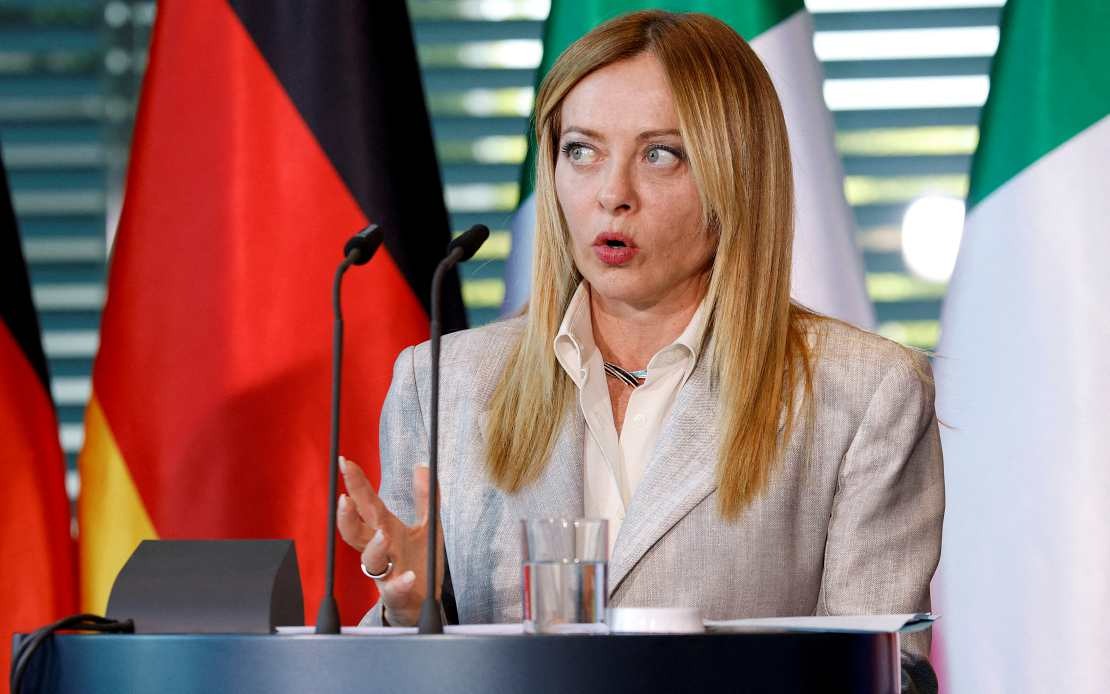
Italy's approach to managing irregular migration is entering a new phase with Prime Minister Giorgia Meloni championing a regional strategy that would relocate processing operations beyond the European Union's borders. Under the proposal, the first of these external migrant return centres could become operational by 2027, marking a significant shift in how EU member states handle asylum seekers and undocumented immigrants. The initiative will feature prominently during an informal online meeting of EU home affairs ministers on Tuesday, where Italy's Interior Minister Matteo Piantedosi is expected to outline the proposal's details and seek broader backing from fellow member states.
The broader political landscape reveals considerable support for Italy's approach within the bloc. A coalition of 22 EU countries has already submitted a formal letter to both European Commission President Ursula von der Leyen and European Council President Antonio Costa, calling for consideration of enhanced protection mechanisms targeting illegal migration. Denmark's Prime Minister Mette Frederiksen has emerged as a particularly vocal supporter, while countries including Austria, the Netherlands, and Germany are actively driving the initiative forward. This alliance suggests that Rome's vision taps into widespread frustration among EU governments struggling with migration pressures at their external borders.
Rome's diplomatic strategy involves concluding bilateral agreements with third countries modelled on its existing arrangement with Albania, with the ambition of finalising these deals by year's end. The proposed funding structure would rely on EU resources rather than placing the burden entirely on individual member states, a compromise designed to ensure broader participation and sustainability. Greece, already planning to commence similar operations by 2027, has aligned with Italy's position, reinforcing the momentum behind the proposal. Rwanda and Uganda have progressed furthest among African nations in these negotiations, indicating that sub-Saharan African states may play a pivotal role in hosting these facilities.
Italy's existing experience with external processing operations provides both a blueprint and cautionary lessons for the expanded proposal. Currently, Italy manages migrant centres abroad under its own jurisdiction and expense, processing asylum applications while detaining and facilitating the expulsion of undocumented individuals. However, this framework has encountered significant legal obstacles within the Italian system. Between May 2025 and mid-July 2026, only 685 migrants were transferred to Albania's facility, with fewer than 15 per cent ultimately repatriated, revealing the substantial gap between policy intent and practical outcomes. Italian courts have repeatedly intervened to halt migrant detentions, ordering returns to Italian territory, while simultaneously challenging government efforts to expedite border procedures for nationals of countries deemed safe.
The financial dimensions of these operations underscore why European governments seek burden-sharing mechanisms. Italy's costs for maintaining a single centre in Gjader during 2025 reached approximately €50 million, equivalent to US$57.67 million, a staggering expense for processing a relatively small number of individuals. Scaling such operations across multiple locations within and beyond the EU would require substantial investment, explaining why securing EU funding commitments has become central to negotiating this initiative. The economic calculations suggest that third-country locations might offer cost advantages, potentially reducing per-capita expenses and improving operational efficiency compared to infrastructure within high-cost European territories.
Recent events in Spain have intensified pressure for decisive action on migration management. In late July, the Spanish autonomous city of Ceuta experienced an unprecedented surge in irregular crossings from neighbouring Morocco. Within a single 24-hour period, approximately 60,000 individuals entered the city, a figure representing roughly 71 per cent of Ceuta's entire resident population of around 85,000. The Spanish authorities responded by deploying significant security reinforcements, including additional police units, Civil Guard personnel, and military troops to the coastal enclave. This surge epitomises the acute challenges facing European border regions and lends credence to Italy's argument that conventional border management approaches are inadequate for containing migration flows of this magnitude.
The implications for Southeast Asian nations warrant careful consideration despite geographical distance. The proposed model of offshoring asylum processing fundamentally alters the international migration governance framework and may establish precedents affecting global migration policy. As migration pressures intensify worldwide due to climate change, conflict, and economic disparities, middle-income countries across Asia may face analogous pressures to participate in similar arrangements with developed nations. Malaysia's existing role as a significant transit and host country for irregular migrants positions it as a potential stakeholder in evolving European migration strategies, particularly if EU governments seek to establish processing centres in Southeast Asia.
The tension between legal constraints and policy objectives represents a critical challenge for Italy's proposal. Italian courts have demonstrated independence from the executive branch in migration matters, ordering individual migrants returned from Albania and restricting the implementation of fast-track border procedures. Scaling operations to third countries may not circumvent these legal obstacles, particularly if European human rights frameworks and international conventions continue to apply to processed individuals. The question of whether external centres would fall outside the jurisdictional reach of domestic courts remains unresolved and likely to become contentious as implementation proceeds.
The African nations currently engaged in negotiations occupy a strategic position in these discussions. Rwanda and Uganda's advanced progress in negotiations suggests they have secured terms sufficiently advantageous to pursue agreements despite the contentious nature of hosting foreign migrant detention facilities. Understanding their motivations—whether financial compensation, international legitimacy, or capacity-building objectives drive their participation—could illuminate how future bilateral arrangements might develop. These partnerships may establish templates for expanding the approach to additional countries, potentially involving Southeast Asian governments.
The timeline for implementation reflects the political urgency driving this initiative. Planning for 2027 commencement suggests that proponents expect negotiation, legislative, and infrastructure development to proceed swiftly over the next two years. This compressed schedule indicates genuine determination to operationalise the concept rather than pursuing exploratory discussions likely to conclude inconclusively. The convergence of support from multiple member states and backing from key political figures suggests that substantive progress remains probable despite inevitable implementation challenges.
For Malaysia and other Southeast Asian nations, monitoring this European initiative merits attention as institutional and legal precedents develop. Should the EU successfully establish third-country processing centres, this model could influence how other wealthy nations approach migration management, potentially affecting regional dynamics. Malaysia's geographical position as a migration hub intersecting Middle Eastern, South Asian, and regional populations means that evolving European approaches to offshoring asylum processing may eventually intersect with Southeast Asian interests and obligations under international conventions. Policymakers should track the legal frameworks, financial mechanisms, and bilateral agreements emerging from Europe's experiment with extraterritorial migration governance.

