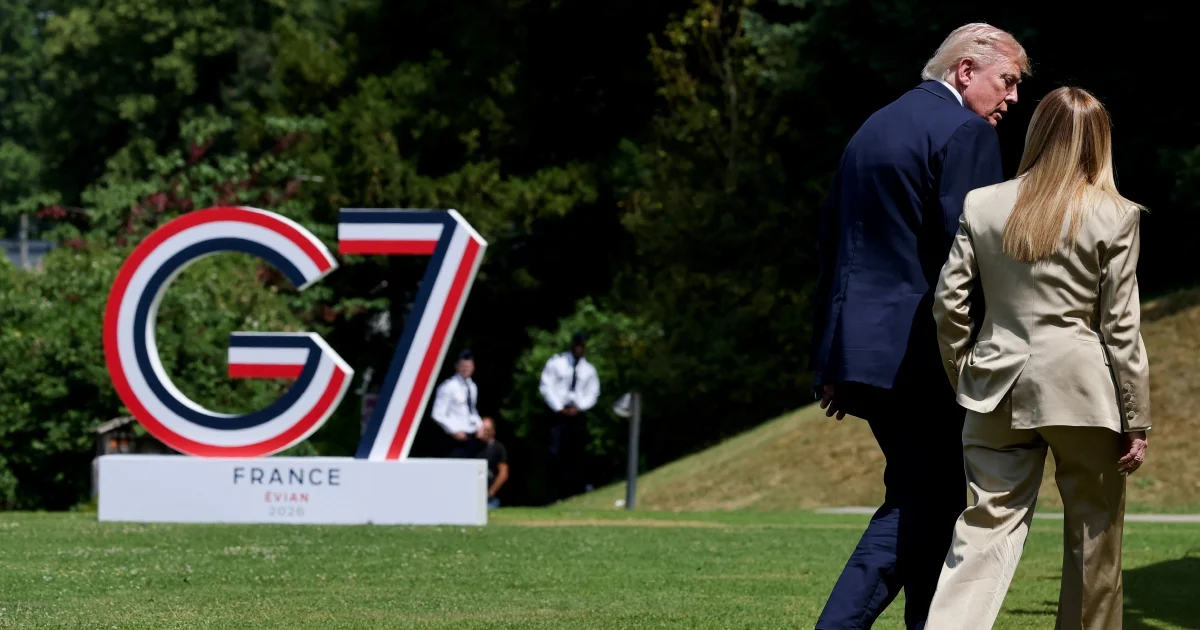
Italy found itself at the centre of an unusual diplomatic spat on Friday following reports that US President Donald Trump had made dismissive remarks about Prime Minister Giorgia Meloni, specifically suggesting she had requested a photograph opportunity with him. The comments, which portrayed the Italian leader in an unflattering light, triggered swift and visible irritation within Rome's government circles, with officials responding through concrete diplomatic action.
The most tangible manifestation of Italian displeasure came through the Foreign Minister's decision to postpone a planned journey to the United States. This cancellation represented more than a symbolic gesture—it underscored the depth of sentiment in Rome and signalled that the relationship between the two countries had encountered genuine friction over the remarks. Such moves by senior officials typically reflect broader institutional concerns rather than isolated moments of pique.
The timing of these comments proved particularly notable given the intricate balancing act that Italy, as a fellow right-wing led government, has attempted to maintain. Meloni's administration has positioned itself as aligned with conservative principles while simultaneously seeking to maintain stable transatlantic relations. Trump's remarks appeared to disrupt this carefully calibrated approach, forcing Italy's hand in responding visibly to the slight.
Meloni has cultivated a leadership image focused on strength and national sovereignty during her tenure as Prime Minister. Any suggestion that she might have supplicantly sought approval or recognition from foreign leaders—particularly through the informal medium of a photograph—cut directly against this constructed political persona. The comments struck at both her personal standing and her government's broader project of asserting Italian independence on the world stage.
The photograph dynamic itself deserves closer examination, as it reflects broader patterns in contemporary political culture. In an age where visual imagery carries enormous diplomatic weight and social media amplifies symbolic gestures, a photograph with the American president represents genuine political currency. Trump's characterisation of Meloni as desperate for such an opportunity was designed, whether intentionally or not, to invert this hierarchy and position her as the supplicant rather than an equal partner.
Italy's response reflects a calculation that the reputational cost of remaining silent outweighed the diplomatic inconvenience of a visible protest. By cancelling the Foreign Minister's visit, Rome sent a clear message that such treatment of its head of government would not pass without consequence. This escalation also served to amplify the story beyond Trump's original remarks, ensuring wider international attention to what might otherwise have been dismissed as typical campaign rhetoric.
For Malaysia and other Southeast Asian nations observing this interaction, the episode offers instructive lessons about managing relationships with powerful international actors. Italy's willingness to respond firmly despite its NATO membership and Western alignment suggests that even close allies maintain boundaries around dignity and mutual respect. The incident demonstrates that strategic partnerships need not translate into unlimited tolerance for public dismissal.
The broader context of Trump's communications style also frames this episode. Throughout his political career, Trump has employed personalised mockery as a negotiating tactic and rhetorical tool, particularly directed toward foreign leaders. That Meloni, a fellow conservative, faced such treatment suggests that ideological alignment offers limited protection from his tendency toward denigrating public commentary about international counterparts.
The economic and security dimensions of Italian-American relations remain intact despite this diplomatic flare-up. Italy's participation in NATO, its role as a major European economy, and its strategic Mediterranean location ensure that underlying structural interests continue binding the two countries together. However, this episode illustrates that even relationships grounded in institutional frameworks and shared interests can experience surface turbulence when personal respect appears to erode.
Looking forward, how this situation resolves will depend partly on whether Trump offers clarification or the administration attempts to smooth relations through direct communication. Italy's firmness in responding through the Foreign Minister's cancellation indicates that passive acceptance is off the table. The Italian government has essentially raised the diplomatic cost of dismissive rhetoric about its leadership, establishing a marker for future interactions.
This incident also reflects broader questions about how middle-power nations navigate relationships with more dominant international actors. While Italy possesses substantial weight as a G7 member and European leader, it nonetheless operates within a system where American power looms large. Its decision to respond visibly rather than quietly accommodate Trump's comments suggests a recalibration of how Italian leadership perceives the trade-offs between strategic deference and national dignity.
For regional observers, the episode underscores that international relations retain an irreducibly personal dimension even in our highly institutionalised modern system. Leadership credibility, national pride, and questions of respect matter alongside treaties, trade flows, and security arrangements. Italy's response indicates that countries continue to defend these intangible but crucial elements of their standing, even when the costs of doing so carry diplomatic inconvenience.

%22%2F%3E%3C%2Fpattern%3E%3C%2Fdefs%3E%3Crect%20width%3D%22100%25%22%20height%3D%22100%25%22%20fill%3D%22url(%23ph1hl50g)%22%2F%3E%3Crect%20width%3D%22100%25%22%20height%3D%22100%25%22%20fill%3D%22url(%23ph1hl50p)%22%2F%3E%3Ctext%20x%3D%2250%25%22%20y%3D%2250%25%22%20text-anchor%3D%22middle%22%20dominant-baseline%3D%22central%22%20fill%3D%22rgba(255%2C255%2C255%2C0.95)%22%20font-family%3D%22Georgia%2C%20'Times%20New%20Roman'%2C%20serif%22%20font-weight%3D%22700%22%20font-size%3D%22320%22%20letter-spacing%3D%22-0.02em%22%3ERM9%3C%2Ftext%3E%3C%2Fsvg%3E)