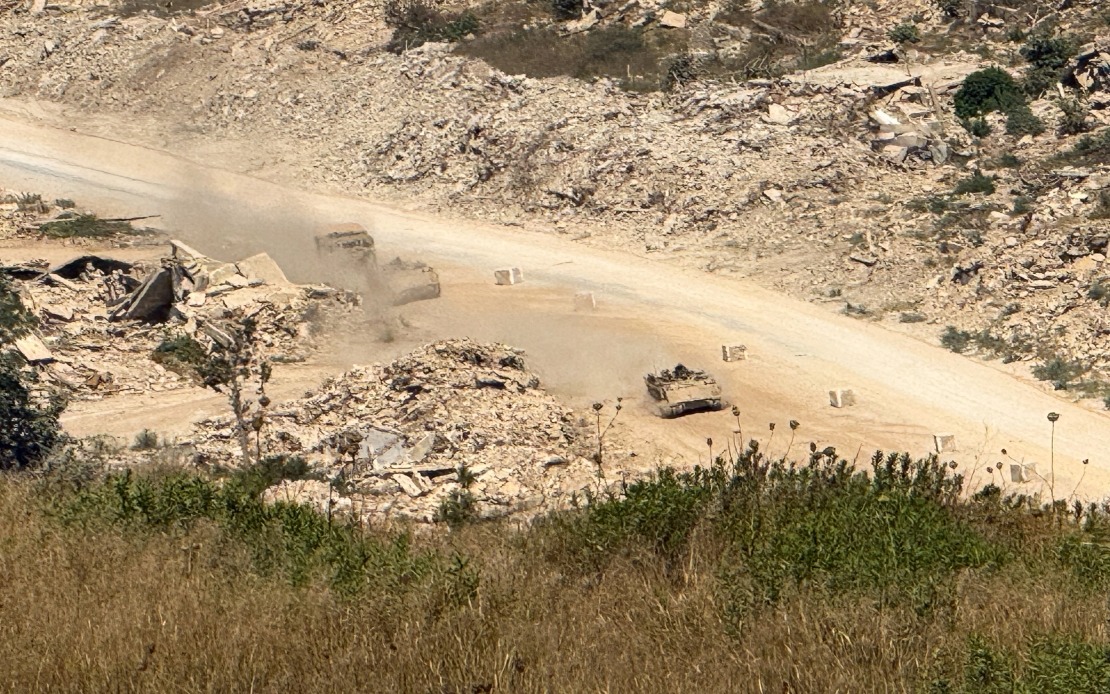
Fresh military operations by Israeli forces in southern Lebanon underscore the fragility of diplomatic efforts to stabilise the volatile border region, even as negotiations between Lebanon and Israel resumed recently in Rome. Over the course of Monday, the Israeli army executed a coordinated series of strikes involving artillery bombardment, machine gun fire, explosive detonations, and incursions into civilian areas across multiple towns and villages, according to accounts relayed by Lebanon's National News Agency.
The scale and nature of the operations suggest a pattern of escalation rather than de-escalation. Israeli forces targeted Wadi al-Salouqi in Nabatieh governorate with sustained machine gun fire, whilst simultaneously subjecting the town of Mansouri to overnight artillery shelling punctuated by two significant explosions. In the Nabatieh area itself, the town of Kfar Tebnit experienced what the Lebanese agency characterised as a major detonation, whilst the outlying districts of Nabatieh al-Fawqa endured intermittent yet intense bombardment from Israeli positions positioned across the border.
The operational tempo extended beyond conventional military strikes into actions against civilian infrastructure. Israeli ground forces moved through the village of Khiam, systematically setting fire to residential houses. Meanwhile, western sections of Mays al-Jabal witnessed Israeli military advancement accompanied by artillery fire concentrated on individual structures. The breadth of these simultaneous actions across geographically dispersed locations indicates a coordinated campaign rather than isolated incidents. Additionally, Israeli drones conducted low-altitude reconnaissance flights over the Zahrani region, suggesting ongoing surveillance and tactical planning.
These military operations arrive at a particularly sensitive moment diplomatically. The seventh round of Lebanese-Israeli negotiations had concluded just days prior in Rome, facilitated by United States mediation. Those discussions centred on the practical implementation of a framework agreement originally negotiated on June 26, with particular emphasis on demarcation disputes and the status of detained persons held by both parties. Lebanese President Joseph Aoun subsequently addressed his Cabinet on Friday, characterising the Rome negotiations as having generated "positive progress" on the contentious matters of border definition and prisoner exchanges.
The framework agreement itself envisions a structured Israeli withdrawal from Lebanese territory occupied since the current campaign commenced. The proposed mechanism involves an initial phase utilising "pilot zones" in carefully selected areas, coupled with concurrent deployment of Lebanese military forces into those regions and the dismantling of armed group capabilities, a euphemistic reference to Hezbollah. This arrangement reflects compromises from both sides, yet the continued military operations suggest these agreements remain more aspirational than binding in practice.
The humanitarian toll from the broader Israeli military campaign provides crucial context for understanding the stakes of these negotiations. Since operations began on March 2, Lebanese authorities document 4,335 fatalities and 12,277 wounded, with the displacement crisis affecting more than one million people who have fled their homes. These figures represent one of the most severe humanitarian emergencies in the eastern Mediterranean region in recent years, creating immense pressure on Lebanon's already fragile institutions and economy.
Israeli territorial claims and occupation patterns demonstrate a longstanding approach to border management that extends well beyond Lebanon. Israeli forces currently control portions of southern Lebanon that predate the current conflict, with some areas under Israeli control since the early 1980s. The 2023-2024 military campaign expanded this footprint dramatically, with Israeli forces now positioned more than ten kilometres into Lebanese territory. This occupation exists alongside Israeli control of Palestinian territories and portions of Syrian land, all maintained despite international legal frameworks calling for withdrawal and Palestinian statehood.
The disconnect between negotiating tables and military operations raises fundamental questions about the credibility of diplomatic processes in the region. From a Southeast Asian perspective, such patterns illustrate how regional powers sometimes utilise negotiations as a parallel track to military operations rather than as substitutes for them. Malaysian policymakers observing the Lebanon situation witness how international mediation, whilst necessary, cannot substitute for genuine commitment from all parties to observe agreed frameworks.
The United States role as mediator places Washington in a delicate position, particularly given its alliance with Israel and its stated interest in regional stability. American diplomatic efforts to broker Lebanese-Israeli arrangements must contend with Israeli military commanders operating with apparent independence from negotiating positions established by civilian leadership. This civil-military coordination challenge complicates prospects for sustainable agreements.
For Southeast Asian nations prioritising stable international law and respect for territorial integrity, developments in Lebanon carry cautionary implications. The case demonstrates how protracted occupations normalise territorial violations and how ceasefire frameworks can coexist indefinitely with active military operations. Malaysia and other regional partners invested in supporting international legal order face difficult questions about when diplomatic engagement should yield to other policy instruments.
The continuation of military operations despite ongoing negotiations suggests that Israeli military planners perceive sufficient latitude to maintain operational pressure whilst diplomatic processes proceed. Whether this reflects calculation that negotiators require military incentives to compromise, or whether military and political leadership harbour fundamentally divergent objectives regarding Lebanese territory, remains unclear from public statements. Either scenario presents obstacles to achieving durable peace.
Moving forward, the test of the June 26 framework agreement and subsequent negotiating rounds will hinge upon whether military operations genuinely cease and territorial withdrawal commences on an observable timeline. The Monday incursions and bombardments illustrate that current arrangements lack enforcement mechanisms sufficient to prevent their violation. Lebanese authorities face mounting pressure to demonstrate to their population that negotiated settlements produce tangible improvements in security and living conditions. Without credible progress on implementation, the diplomatic process risks becoming merely theatre obscuring continued conflict.

