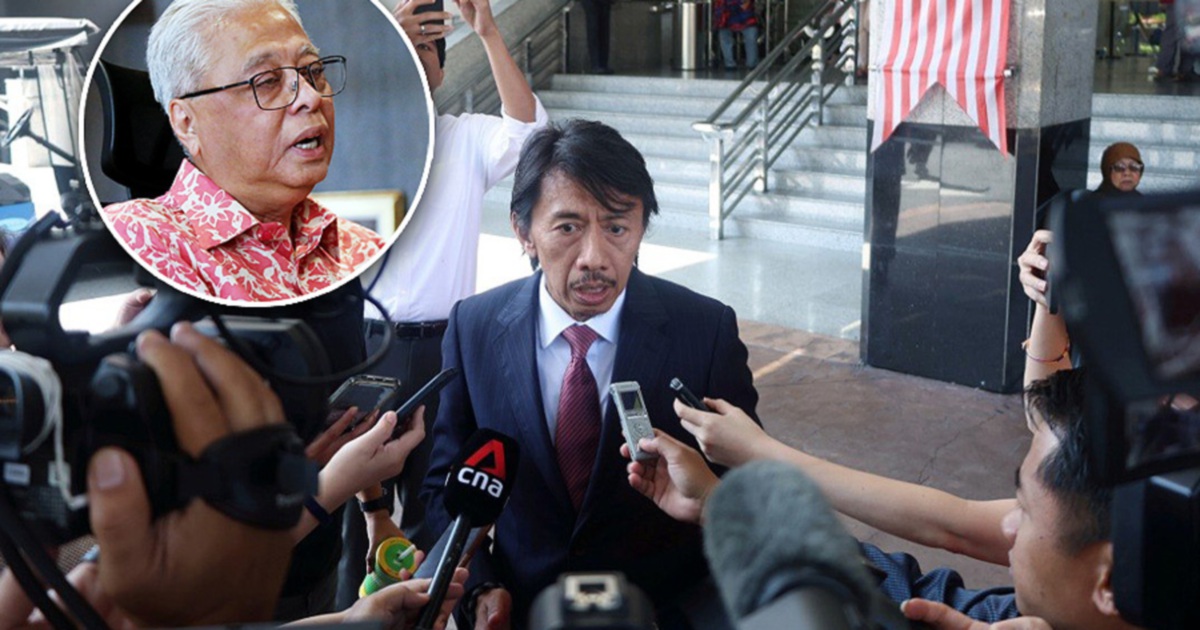
Former Prime Minister Datuk Seri Ismail Sabri Yaakob has signalled his unwavering determination to vindicate himself through the legal process, even as he contends with a recent bout of ill health. The veteran politician is bracing for a crucial round of proceedings under the Malaysian Anti-Corruption Commission (MACC) Act scheduled for later this month, marking a significant juncture in what has become an extended legal battle.
The case represents one of the most high-profile corruption investigations involving a former head of government in Malaysia's recent history. Such matters carry profound implications not only for the individual concerned but also for public confidence in the nation's institutions and the rule of law. Ismail Sabri's willingness to confront the charges directly—rather than seek delays or adjournments based on his health condition—underscores the gravity with which he regards the accusations and his conviction that the facts will ultimately support his position.
The MACC has been intensifying its enforcement actions across the board in recent years, reflecting broader efforts to combat graft and strengthen governance standards. High-profile cases involving former office-holders have become increasingly common, though they remain contentious and draw intense public scrutiny. The agency's pursuit of former senior leaders sends a message about institutional independence and the expectation that no one is beyond accountability, a principle that resonates differently across Malaysia's fractious political landscape.
Ismail Sabri's tenure as Prime Minister between August 2021 and November 2022 was notably turbulent, marked by razor-thin parliamentary majorities and persistent internal party tensions. His administration navigated the immediate aftermath of the Sheraton Move political upheaval and struggled with governance challenges compounded by the pandemic's lingering effects. The political context surrounding his departure from office remains relevant to understanding current developments, as various quarters continue to interpret events through different lenses.
Managing serious legal proceedings whilst dealing with concurrent health issues presents formidable practical and psychological pressures. The former premier's assertion that he intends to proceed with his case despite medical complications demonstrates either considerable personal resolve or perhaps an assessment that withdrawal would amplify rather than diminish the reputational damage he seeks to avoid. For a politician of his stature, the court of public opinion remains nearly as consequential as the actual courtroom.
The upcoming hearing will likely attract considerable media attention and political commentary. Opposition figures may use proceedings as ammunition in ongoing political contests, whilst allies in his own party face the delicate task of maintaining party unity whilst navigating the optics of a former leader facing corruption allegations. The trajectory of this case could influence broader perceptions of institutional integrity and selective prosecution—concerns that have periodically surfaced in Malaysian political discourse.
Malaysia's MACC, established through legislative reform initiatives, has sought to enhance its investigative capacity and operational independence compared to its predecessor agency. However, the body remains subject to periodic criticism regarding the perceived political timing of cases and allegations of selective enforcement. Scrutiny intensifies when high-profile targets are involved, and observers across the political spectrum often interpret outcomes through partisan lenses, complicating the agency's efforts to project neutrality.
The forthcoming proceedings will test not only Ismail Sabri's legal defences but also the strength of whatever evidence the MACC has assembled. The former Prime Minister's decision to face charges rather than exhaust procedural delay tactics suggests either confidence in his position or recognition that prolonging proceedings would damage his public standing further. Either way, the resolution of this case carries implications extending beyond the individual defendant to encompass broader questions about governance standards and institutional credibility.
For Malaysia's business community and international observers, the trajectory of high-profile corruption cases matters significantly. The outcomes help shape perceptions of Malaysia's commitment to anti-corruption enforcement and the robustness of institutional mechanisms. Ismail Sabri's willingness to engage with the legal process directly, despite complications, may ultimately influence how the public interprets both the allegations and the resolution, regardless of outcome.
The former Prime Minister's statement reflects the calculated positioning typical of political actors navigating existential crises. By emphasizing determination to clear his name whilst acknowledging personal health challenges, he maintains stoic dignity whilst inviting sympathy. This messaging strategy serves dual purposes: demonstrating confidence whilst establishing context for potential courtroom appearances that might be curtailed by medical considerations. Political observers will continue monitoring both the legal proceedings and the former leader's broader rehabilitation efforts in the months ahead.

