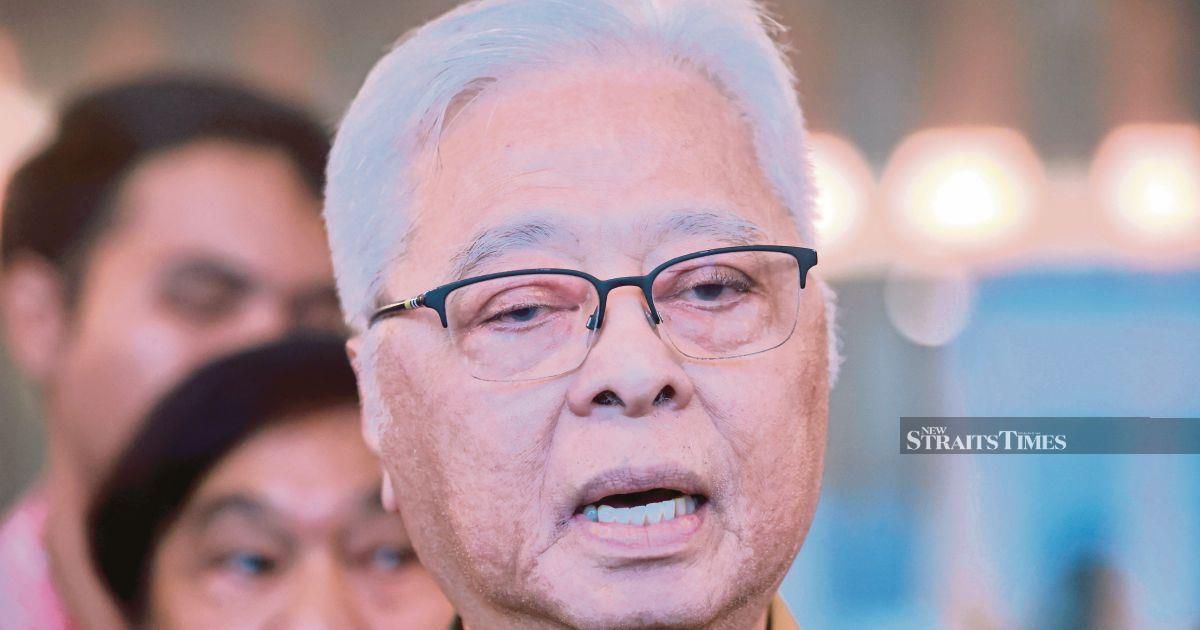
Datuk Seri Ismail Sabri Yaakob appears destined to enter a regrettable historical milestone, joining a small but growing contingent of former Malaysian prime ministers to face criminal prosecution. The ex-premier's impending charges mark a striking departure from the nation's political traditions, where sitting and former heads of government typically enjoyed considerable insulation from the criminal justice system. His situation mirrors that of Datuk Seri Najib Razak and Tan Sri Muhyiddin Yassin, who have already traversed this legal landscape, creating an unprecedented pattern of accountability at the highest echelons of Malaysian leadership.
The convergence of these three cases within a relatively compressed timeframe reflects broader transformations in Malaysia's institutional architecture and judicial independence since the 2018 general election. Where previous administrations often seemed untouchable due to political patronage and selective prosecutorial discretion, the last six years have witnessed mounting pressure on law enforcement and the judiciary to apply legal standards equitably across party lines and social hierarchies. This shift carries significant implications for how Malaysians perceive the rule of law and whether democratic institutions can function as genuine checks on executive power.
Ismail Sabri's tenure as prime minister, which lasted from August 2021 to November 2022, coincided with tumultuous political circumstances that saw Malaysia cycle through multiple premiers in rapid succession. His eighteen-month stewardship followed his predecessor Muhyiddin's resignation and preceded the return of Anwar Ibrahim, creating a period characterised by considerable instability at the executive level. The brevity and turbulence of his premiership stand in sharp contrast to the decades-long dominance that previous prime ministers enjoyed, yet this shorter tenure has not insulated him from legal exposure.
Najib Razak's legal ordeal, stemming primarily from charges connected to the 1Malaysia Development Berhad scandal, set the template for subsequent prosecutions of former leaders. His conviction, though subject to ongoing appeals, established that former prime ministers are not exempt from judicial proceedings regardless of their previous stature or the delicate political questions their trials might raise. The evidence and testimony presented during his numerous court appearances provided a public education in the mechanics of high-level financial misconduct and the potential vulnerabilities of oversight institutions.
Muhyiddin Yassin's subsequent indictment expanded this precedent, demonstrating that the legal vulnerability applied to leaders from different political coalitions and backgrounds. His charges, centred on alleged abuses of power and financial impropriety, further normalised the concept that holding the premiership carries no inherent immunity from criminal accountability. The legal establishment's willingness to pursue multiple former premiers has gradually transformed what once seemed politically unthinkable into judicial routine, though each case continues to generate substantial public debate.
The implications for Malaysian governance extend beyond individual accountability to encompass broader questions about institutional checks and balances. When former prime ministers face criminal charges, it signals that no position, however elevated, places an individual beyond the reach of the law. Simultaneously, it raises complex questions about whether justice is being pursued consistently or whether selective prosecution based on political affiliation remains a concern. These questions resonate particularly acutely in a nation where trust in institutional impartiality remains fragile and where alternations of power could theoretically expose opposition leaders to retaliatory prosecutions.
Regional observers view Malaysia's treatment of former leaders with considerable interest, particularly given Southeast Asia's varied approaches to post-tenure accountability. Some neighbouring nations have pursued truth commissions or pardons, while others have ignored alleged misconduct entirely. Malaysia's prosecutorial route represents a distinctive path that prioritises legal mechanisms over political reconciliation, with uncertain long-term consequences for social cohesion and political stability.
The timing and pattern of these prosecutions merit scrutiny. The initiation of charges against multiple former premiers within a six-year window, while democratic institutions became more assertive, invites examination of whether genuine criminality is finally being addressed or whether political factors remain influential in prosecutorial decision-making. For Malaysian citizens and international observers, distinguishing between principled institutional reform and tactical political weaponisation of the justice system remains challenging without access to comprehensive evidentiary records and internal prosecutorial decision-making processes.
For Ismail Sabri personally, joining this cohort carries significant consequences. Beyond the immediate legal exposure and potential penalties, his reputation in Malaysian political circles undergoes fundamental alteration. A former premier becomes definitively categorised as someone who faced criminal justice procedures, a designation that shapes legacy and historical memory in ways that transcend the actual trial outcomes.
The broader trajectory suggests that Malaysia's political class has entered a new era where former occupants of the highest office cannot assume automatic immunity from legal consequences. Whether this transformation ultimately strengthens democratic accountability or destabilises political competition by introducing fears of retaliatory prosecution remains an open question that will shape Malaysian politics for years ahead.

