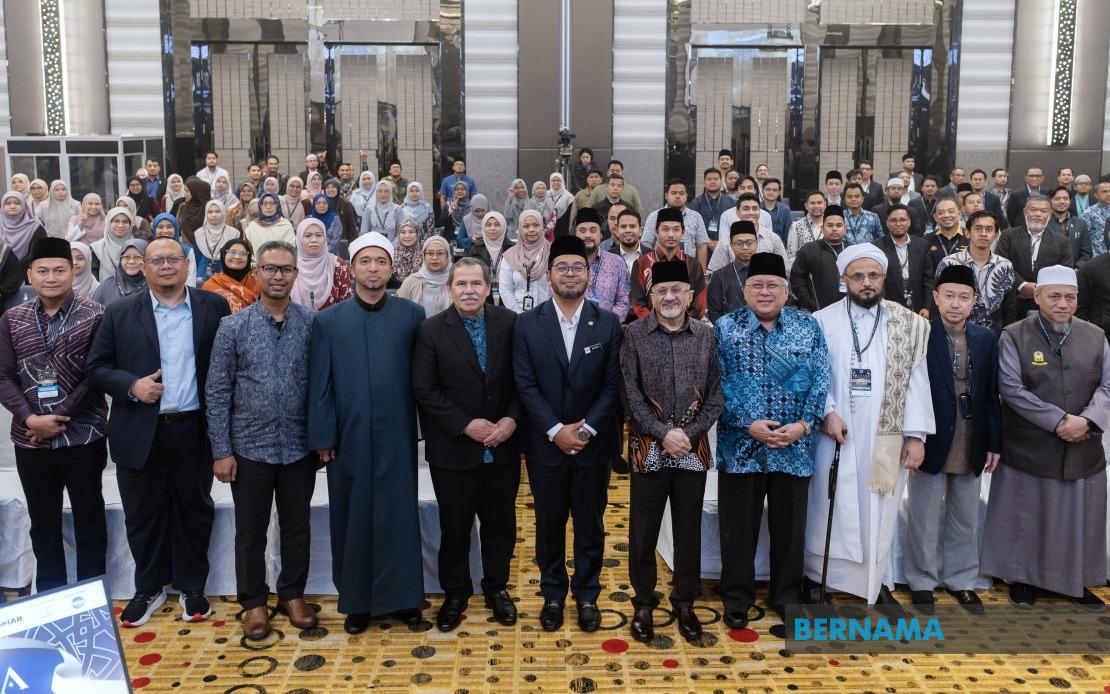
Islamic social finance represents a largely untapped resource for tackling poverty and supporting Malaysia's broader economic agenda, according to Minister in the Prime Minister's Department (Religious Affairs) Dr Zulkifli Hasan. Speaking at the MULTAQA SIDR Islamic Social Finance Conference in Kuala Lumpur, Zulkifli outlined his vision for repositioning this financial sector as a mainline economic tool rather than a peripheral charitable mechanism. The comments come as Malaysia intensifies efforts to harness religious and social institutions in pursuit of inclusive development objectives.
The minister indicated that realising this potential will require a coordinated approach spanning multiple institutional actors. His remarks suggest the government recognises that piecemeal initiatives within the Islamic finance ecosystem have limited impact without systemic alignment and strategic direction. Rather than relying on ad-hoc charitable interventions, the proposed framework envisions Islamic social finance functioning as an integrated component of the national financial architecture, comparable in scope and sophistication to conventional banking and investment sectors.
Central to this strategy is the elevation of JAWHAR, the Department of Waqf, Zakat and Haj, to a leadership position overseeing governance improvements across Islamic organisations. The appointment reflects official acknowledgement that many Islamic non-governmental organisations currently operate with inconsistent management standards and administrative practices. By positioning JAWHAR as the coordinating authority, the government aims to establish uniform benchmarks for transparency, accountability and operational efficiency across the sector.
Zulkifli emphasised that strengthening institutional partnerships will be essential for this transformation. Universities and higher education institutions are expected to contribute research capacity and training programmes, while the private sector should participate in innovation and operational scaling. This tripartite model—government, academia, and commerce—reflects international best practices in developing emerging financial sectors. Malaysia's universities, particularly those with Islamic finance expertise, could become regional hubs for expertise development and thought leadership.
The sector's credibility challenge cannot be overlooked. Zulkifli's pointed reference to governance weaknesses affecting institutional integrity addresses a genuine concern within Malaysia's Islamic financial ecosystem. Recent parliamentary scrutiny of Tabung Haji's investment losses has raised public questions about oversight mechanisms and professional standards within major Islamic institutions. The minister's warning that governance failures could damage Islam's broader reputation signals that institutional reform carries symbolic weight beyond purely financial metrics. Public confidence in Islamic social finance depends fundamentally on demonstrable integrity and transparent operations.
The concept of Islamic social finance operating as a 'Third Force' represents a conceptual shift with practical implications. Rather than positioning such finance as charitable hand-outs or welfare supplements, this framework repositions it as a mechanism for productive empowerment. Microfinance for small business development, skills training funded through waqf endowments, and community investment initiatives exemplify this productive orientation. For Malaysian workers and entrepreneurs, particularly in underserved communities, this distinction carries real meaning—the difference between temporary relief and sustainable economic participation.
The launch of Malaysia's Islamic Social Finance Report 2026 at the conference provides documentary evidence of sector developments and establishes benchmarks for measuring progress. Such reports serve multiple functions: they establish baseline data for assessing policy effectiveness, create a common reference point for stakeholders, and generate regional interest in Malaysia's experiences. Neighbouring Southeast Asian economies with significant Muslim populations watch closely as Malaysia experiments with integrating Islamic social finance into national development strategies. Successful implementation could position Malaysia as a model for regional peers.
The institutional landscape for delivering this strategy is already taking shape. The Federal Territories Islamic Religious Council (MAIWP) and its Zakat Collection Centre represent established infrastructure through which collection and distribution mechanisms operate. INCEIF University brings academic credibility and research capacity to the conversation. This combination of traditional religious authority, modern administrative capacity, and academic rigour creates a foundation upon which sector-wide improvements can be built. However, similar institutional capacity must be developed in other states and regions for national-scale implementation.
For Malaysian policymakers, positioning Islamic social finance as a poverty reduction tool addresses both practical development needs and ideological considerations. Malaysia's commitment to reducing income inequality and supporting vulnerable populations finds expression through multiple policy channels. Islamic social finance offers a culturally resonant avenue aligned with religious principles that motivate widespread participation and community trust. When charitable giving becomes systematised and professionally managed, modest individual contributions aggregate into substantial community resources.
The timing of this initiative reflects broader regional and global trends. International development institutions increasingly recognise faith-based finance as a legitimate and effective development channel. The World Bank and Islamic Development Bank have invested in capacity-building for Islamic social finance ecosystems across the Muslim world. Malaysia's repositioning of this sector positions the country within this emerging consensus about finance's role in addressing inequality and exclusion.
Regional competitiveness adds urgency to Malaysia's strategy. Singapore and Indonesia have pursued their own Islamic finance initiatives, though with different emphases. Malaysia's advantage lies in combining established institutional infrastructure with strong regulatory frameworks and academic expertise. However, maintaining this advantage requires continuous innovation and demonstrated results. The next phase will determine whether the announced strategy translates into measurable poverty reduction and tangible improvements in community welfare across Malaysia's diverse neighbourhoods and rural areas.

