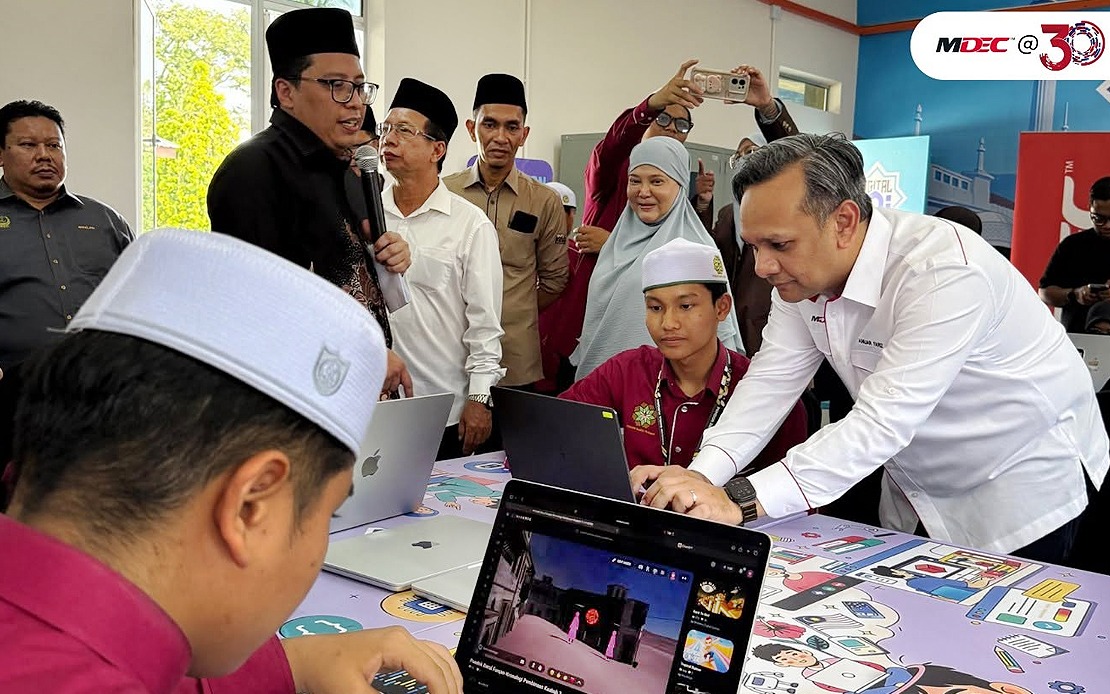
Malaysia's push to develop digital talent across all educational sectors has taken a concrete step forward with the Malaysia Digital Economy Corporation handing over a Digital Maker Hub to Pondok Darul Furqan in Tambun, Ipoh. The facility aims to democratise access to emerging technologies and digital skills among students and educators in Islamic education institutions, a segment that has historically received less emphasis in the country's broader digital transformation agenda.
The hub represents a significant physical investment in technological infrastructure for religious schools. It contains laptops, broadband connectivity, interactive smartboards, robotics equipment and microcontroller kits—the type of hardware typically found in advanced educational facilities in developed nations. Rather than treating these tools as novelties, MDEC positions them as essential infrastructure for preparing the next generation of Islamic scholars and leaders to participate meaningfully in a technology-driven economy. This framing reflects a deliberate policy choice to reject any false dichotomy between religious education and digital innovation.
MDEC chief executive officer Anuar Fariz Fadzil articulated the strategic thinking underlying the initiative, emphasising that Malaysia's ambition to establish itself as an Artificial Intelligence Nation by 2030 requires talent development across geographic regions and institutional types. Concentrating digital skills training solely in secular schools or urban areas would leave untapped human potential and create vulnerable populations unprepared for employment in knowledge-based industries. By extending these opportunities to Islamic education institutions, the corporation implicitly acknowledges that religious schools educate a substantial portion of Malaysian youth and that their students deserve equal access to preparation for the digital economy.
The Digital Maker Hub sits within the broader Islamic Education Institution Digital Transformation Programme, known locally as Digital IPI, which operates as a collaborative venture between MDEC and the Department of Islamic Development Malaysia. Launched by Prime Minister Datuk Seri Anwar Ibrahim in March, this nationwide initiative represents the kind of whole-of-government approach increasingly favoured in Southeast Asian digital policy. Rather than siloing digital development within education or technology ministries, the programme coordinates across religious and economic portfolios, suggesting that policymakers recognise digital transformation as a multidimensional challenge requiring institutional coordination.
At Pondok Darul Furqan itself, the arrival of the hub triggered an immediate educational response. Thirty students and five teachers participated in a two-day MetaSkool Metaverse Programme, which exposed participants to immersive virtual environments and demonstrated practical applications of metaverse technology. This experiential learning approach differs markedly from traditional lecture-based instruction; rather than passively receiving information about how metaverse technology functions, participants engaged directly with the tools, experienced their capabilities firsthand, and explored creative possibilities within virtual spaces. For students in Ipoh whose prior exposure to cutting-edge technologies may have been limited, this represents a substantial broadening of educational horizons.
The pilot phase of Digital IPI extends beyond Ipoh, with five other carefully selected Islamic education institutions across Malaysia scheduled to receive similar hubs. These institutions are located in Kedah, Kelantan, Negeri Sembilan, Pahang and Penang, a geographic distribution that suggests deliberate efforts to reach different regions and ensure that digital opportunity is not concentrated in or around Kuala Lumpur and the Klang Valley. This dispersed approach recognises that talent development must occur at the state level and that Islamic education institutions in less urbanised areas face particular barriers to accessing technology and specialist expertise.
The scale of the intended impact becomes apparent when examining the full scope of the Digital IPI rollout. The programme targets benefiting more than 3,000 students and 50 teachers across participating institutions through structured training modules addressing multiple technological domains. The curriculum spans digital literacy and artificial intelligence fundamentals, digital creativity and content production, immersive and metaverse technologies, and digital content development. This breadth indicates recognition that digital economy participation requires not just technical competency but also creative skills and the ability to generate original content and ideas.
Integrating religious and ethical values into digital education represents a distinctive feature of the Digital IPI approach. Rather than presenting technology as value-neutral and assuming that technical skills can be developed independently of ethical frameworks, the programme explicitly attempts to embed virtues like trustworthiness into its digital curriculum. This reflects a philosophical position that technology education in Islamic contexts should reinforce rather than contradict religious principles, and that digital natives educated within faith-based institutions can simultaneously develop technical mastery and moral grounding.
For Malaysian policymakers, this initiative signals an important recalibration of assumptions about where digital talent development should occur. Conventional approaches have often concentrated resources on government schools, private institutions and universities in major urban centres, accepting that religious schools would remain peripheral to digital transformation agendas. By contrast, MDEC and JAKIM's collaboration suggests a more inclusive vision in which the country's diverse educational ecosystem—including boarding schools like Pondok Darul Furqan—becomes sites of digital capability building. This approach potentially enlarges the talent pool available to employers and entrepreneurs whilst simultaneously providing Islamic education students with genuine competitive advantages in job markets that increasingly value technological fluency.
The implications extend beyond Malaysia's borders. Regional peers in Southeast Asia managing their own digital transitions whilst grappling with the need to preserve educational traditions will watch how this model develops. If Pondok Darul Furqan and its sister institutions successfully produce graduates who demonstrate both technological competence and strong ethical grounding, the model could inspire similar initiatives elsewhere in the region, potentially influencing how countries like Indonesia, Thailand and the Philippines approach digital skills development in faith-based educational contexts. Conversely, if implementation stumbles or outcomes disappoint, it may reinforce scepticism about whether religious and secular education can meaningfully integrate.
Sustainability presents the next critical question facing Digital IPI. Handing over physical infrastructure represents only the initial investment; maintaining equipment, updating software, providing ongoing teacher training and ensuring that the hub remains relevant as technologies evolve demands sustained commitment and funding beyond the launch phase. Islamic schools typically operate with more constrained budgets than their government or private counterparts, raising legitimate questions about whether institutions like Pondok Darul Furqan will be able to independently sustain these facilities once MDEC's attention shifts to other priorities. Success ultimately depends on whether the corporation and JAKIM establish durable institutional arrangements for ongoing support rather than treating Digital IPI as a one-time intervention.

