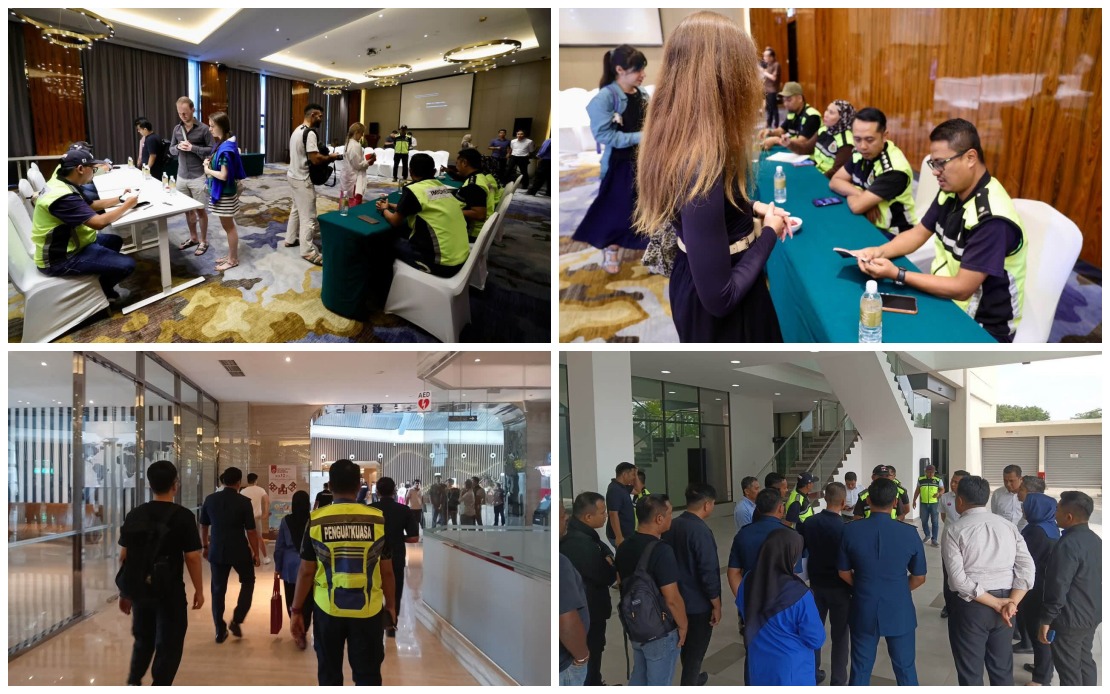
The Iskandar Puteri City Council (MBIP) has taken enforcement action against Network School, a private educational institution operating in Forest City, after investigators discovered substantial breaches of business licensing requirements and approved premises use. The local authority issued a formal Stop-Business Notice following comprehensive inspections that revealed the school was conducting unauthorised classroom and promotional activities from premises not appropriately licensed for such operations. Johor Menteri Besar Datuk Onn Hafiz Ghazi announced the regulatory decision on Wednesday, underscoring the state government's commitment to ensuring compliance with local authority regulations across the commercial and educational sectors.
The investigation uncovered a complex operational structure with the company utilising two separate locations within Forest City. Whilst one premises maintained a valid office business licence, the second location operated entirely without any MBIP business licence authorisation, despite being registered to a Malaysian citizen. This dual-premises arrangement appears to have been designed to facilitate educational services whilst circumventing the formal approval processes required for schools and training centres operating within the city council's jurisdiction.
Beyond the licensing deficiencies, MBIP determined that Network School had fundamentally misclassified its operational activities to exploit less stringent office licensing categories. The council found the company had converted premises officially licensed for general business office functions into active classroom spaces without submitting the required detailed application for category reclassification and approval. Additionally, the school deployed promotional signboards and advertisements without securing the necessary advertising permits, representing a secondary layer of regulatory non-compliance that compounded the primary licensing violations.
In response to these findings, MBIP formally issued Stop-Business Notice IP012N260714001 targeting the unlicensed premises. The council simultaneously served an Advertisement Licence Notice under Section 107(2) of the Local Government Act 1976, addressing the improper display of signboards that failed to meet the technical specifications outlined in the original premises licence. These enforcement instruments represent MBIP's standard regulatory response to documented breaches, designed to halt unauthorised operations whilst providing structured pathways for lawful compliance if the operator chooses to pursue proper licensing channels.
Onn Hafiz made clear that the Johor state government takes such enforcement matters with considerable seriousness, particularly given the proliferation of unregulated educational operations that may pose quality and safety risks to students and families. He committed MBIP to continuing comprehensive investigations into all aspects falling within the local authority's regulatory remit, signalling that additional enforcement actions may follow if further violations emerge. The menteri besar emphasised that systematic breaches of licensing conditions and applicable regulations would trigger progressively stringent enforcement mechanisms consistent with the legal framework governing local authorities in Johor.
A notable dimension of the case involves the status and background of foreign nationals associated with Network School's management and operations. Onn Hafiz clarified that questions regarding the visa status, work permits, and regulatory standing of international individuals fall entirely within the exclusive jurisdiction of the Ministry of Home Affairs. The Johor state government has formally requested the federal ministry to reach a prompt and definitive determination concerning the affected individuals and the school's broader operational authority, acknowledging the distinction between local licensing enforcement and immigration-related oversight.
This enforcement action gained significant public attention following viral social media allegations concerning Network School's purported connections and agenda. Unverified claims circulated online suggested links to an Israeli institutional presence seeking to establish Malaysian operations through educational and currency investment activities. Whilst such allegations remain unsubstantiated and lack official confirmation, they catalysed scrutiny of the school's licensing status and operational transparency, ultimately prompting or accelerating MBIP's enforcement investigation and subsequent action.
The Network School case reflects broader challenges confronting Malaysian local authorities in monitoring educational institutions operating within their jurisdictions, particularly private schools and training centres that may exploit regulatory gaps or operate in grey areas between different legal frameworks. Forest City, as a major mixed-use development in Iskandar Puteri, has attracted numerous commercial and educational operators, some of whom may lack familiarity with Malaysian licensing requirements or attempt deliberate circumvention of proper approval processes to reduce operational costs and bureaucratic burden.
For Malaysian parents and families evaluating private educational options, the enforcement action underscores the importance of verifying that institutions maintain valid, current licenses from relevant local authorities and operate from appropriately approved premises. Unregulated schools operating without proper oversight may lack accountability mechanisms, insurance coverage, and quality assurance standards that protect student welfare and educational outcomes. MBIP's intervention provides a concrete example of local government capacity to identify and address such operational deficiencies when they come to official attention.
The case also illustrates the coordination challenges between different government agencies responsible for various compliance dimensions. Whilst MBIP focused on licensing and premises authorisation, the Home Ministry's involvement in immigration and foreign national status represents a parallel investigative track that requires careful institutional coordination to ensure comprehensive regulatory resolution. The menteri besar's explicit request for federal ministry action suggests potential frustration with processing timelines for such cases, particularly when local enforcement measures may be ineffective if foreign nationals can simply depart Malaysia without facing consequences.
Moving forward, the enforcement action may encourage other educational operators within Forest City and wider Iskandar Puteri to conduct internal compliance audits, verifying that their licensed premises categories match actual operational activities and that all signage and advertising materials comply with MBIP requirements. Local authorities across Selangor and other states may similarly use this case as a reference point for enforcement priorities, particularly regarding education sector oversight and the proliferation of unregulated training institutions targeting international students or expatriate communities seeking alternatives to conventional schooling systems.
The broader implications extend beyond immediate regulatory compliance to encompass questions about educational quality, consumer protection, and the adequacy of existing frameworks for overseeing non-traditional educational models that may operate at the intersection of business, education, and international engagement. As Malaysia continues attracting foreign investment and diverse expatriate populations, local authorities and federal agencies must develop more sophisticated mechanisms for identifying and addressing illicit or improperly regulated educational ventures before they accumulate significant student numbers and financial obligations from families trusting in their legitimacy.

