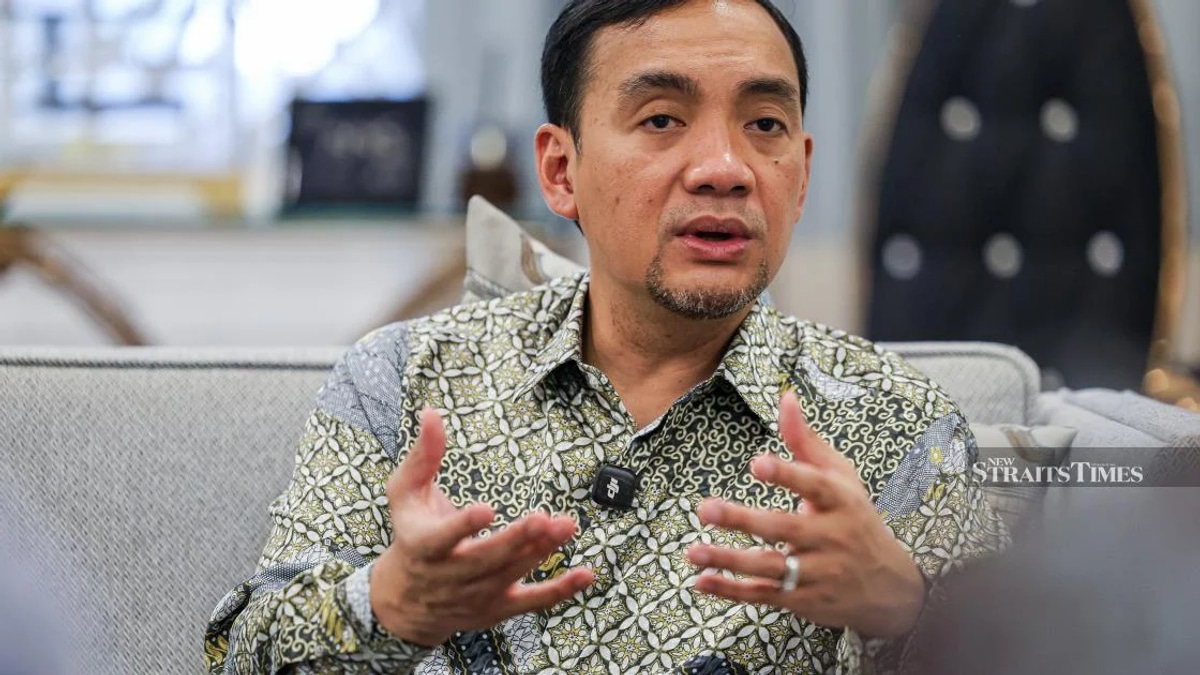
A two-week detention under the Internal Security Act in 1974 fundamentally altered the trajectory of Dr Shukri Abdullah's life, transforming what could have been a defining moment of despair into the springboard for decades of achievement. Now 76, the Kedah Tokoh Maal Hijrah recipient attributes his subsequent rise from dismissed university scholarship holder to accomplished academic and motivational speaker to the clarity that incarceration provided about his priorities. Speaking at the Kedah State-Level Maal Hijrah Celebration in Alor Setar, Dr Shukri reflected on how his involvement in the Baling Demonstrations as a student leader at Universiti Sains Malaysia forced a reckoning with the direction of his young life and instilled within him an unshakeable conviction that personal reinvention is possible for anyone willing to embrace discipline and purpose.
The withdrawal of his scholarship following his release might have crushed many, yet Dr Shukri frames this setback as precisely the crucible in which his determination was forged. Rather than succumbing to bitterness or resignation, he channelled his energies into academic pursuits with singular focus. His philosophy—that individuals possess the capacity to effect meaningful change in themselves if they cultivate awareness and nurture the desire for self-improvement—has since become the cornerstone of his life's work. This conviction is not merely theoretical; it is grounded in his own lived experience of overcoming institutional rejection and social stigma to achieve what institutional gatekeepers had deemed unlikely.
The fruits of this determination manifested strikingly in his university performance. Dr Shukri emerged as USM's top-ranked graduate, an honour that permitted him to deliver the valedictory address at his graduation—a symbolic capstone to a journey that had begun in the unpromising terrain of average school marks and initial university rejection. What renders this achievement particularly remarkable is that he had not been a naturally gifted student in his secondary years. His mediocre academic foundation meant that his first application to USM was rejected, a conventional endpoint for many aspirants. Instead, he chose to work as a journalist with Utusan Melayu for a year, a deliberate interlude that strengthened rather than weakened his resolve to pursue higher education.
Once admitted to USM on his second attempt, Dr Shukri's transformation accelerated. His academic momentum carried him through to postgraduate studies in the United Kingdom, where he completed a doctorate from the University of Essex in just two years and two months—a compressed timeline that underscores the intensity of his intellectual commitment and capacity for sustained focus. This educational odyssey from scholarship rejection to PhD completion within a single decade exemplifies the power of resilience and disciplined effort to overcome initial barriers and institutional judgments about ability and potential.
Following his return to Malaysia, Dr Shukri served in academia as a lecturer at USM, positions from which most would have sought career advancement and institutional prestige. Yet he made a deliberate choice to leave the comfortable confines of university employment to dedicate himself to motivational and educational guidance work. For more than three decades, he has worked directly with students and parents, sharing his personal narrative and offering evidence-based strategies for transformation. This career shift reveals a fundamental orientation toward public service and the practical application of his hard-won insights rather than the accumulation of institutional credentials or prestige.
His recognition as Kedah's 2024 Tokoh Maal Hijrah came accompanied by a certificate of appreciation and RM15,000 in cash, presented by the Raja Muda of Kedah, Tengku Sarafudin Badlishah Sultan Sallehuddin, at the state-level celebration. This official acknowledgment reflects the value society places on individuals who have translated personal hardship into constructive service. The award itself symbolises not merely Dr Shukri's individual accomplishments but the broader message his life exemplifies: that adversity, when met with intention and discipline, can become a foundation for meaningful contribution to others.
Dr Shukri's philosophy emphasises that excellence emerges from three interconnected elements: discipline, self-awareness, and the determination to change. These are not innate gifts but cultivated practices, capabilities that any individual can develop through conscious effort. His repeated insistence on this point carries particular weight in a context where Malaysian society often privileges natural talent or family background as determinants of success. By centering discipline and self-directed transformation, Dr Shukri offers a more democratising vision of achievement, one accessible to those who begin from humble or disadvantaged positions.
His guidance to young people underscores the necessity of formulating clear life goals as a preventive measure against drifting into unproductive or destructive activities. This emphasis resonates within the Malaysian context, where concerns about youth unemployment, social media addiction, and lack of direction periodically surface in public discourse. Dr Shukri's message suggests that purposelessness is not inevitable but preventable through deliberate planning and goal-setting conducted early in one's educational journey. His own experience validates this proposition: without the specific objective of academic redemption, his post-detention years might have produced very different outcomes.
Equally significant in his message is the elevated role he assigns to parental guidance. Dr Shukri stresses that parents bear substantial responsibility in helping their children establish direction from childhood onward, preventing the drift toward wasted years or regrettable choices. This intergenerational perspective reflects his own experience as a father of ten and grandfather of twenty-two, positions from which he has presumably witnessed both the benefits of purposeful parenting and the costs of its absence. His advocacy for parental involvement addresses a gap in discussions of youth development that sometimes focus excessively on institutional solutions while minimising the foundational influence of family.
The trajectory of Dr Shukri's life also illuminates the particular vulnerabilities of gifted working-class and lower-middle-class Malaysians whose talents might go unrecognised within rigid institutional structures. His initial school performance and university rejection suggest a system that, at that time, perhaps failed to recognise potential or provide pathways for students whose abilities manifested differently than conventional measures predicted. His eventual dominance at USM indicates that the problem was not his capacity but the initial assessment mechanisms. This historical observation carries contemporary relevance for Malaysian educational planners contemplating how to identify and nurture talent beyond traditional markers.
Dr Shukri's enduring activism in motivational speaking and educational guidance over three decades represents a form of social investment that compounds across time. Each student or parent he has influenced carries forward the lessons and inspiration, multiplying the reach of his work exponentially. His message—that circumstances of birth or initial failure need not determine ultimate trajectory—offers particular hope within Southeast Asia, where rigid social hierarchies and limited educational mobility remain challenges in numerous contexts. Malaysia, with its expanding middle class and increasingly competitive economy, stands to benefit from widespread internalisation of the values Dr Shukri embodies and promotes.
The arc of Dr Shukri's narrative from detained student activist to honoured elder and society guide also addresses questions about rehabilitation and second chances within authoritarian contexts. His ISA detention, rather than rendering him permanently marginalised, became the pivot point toward constructive engagement. This outcome was not inevitable; it required both institutional willingness to permit his continuation of education and his own fierce determination to seize opportunity. The contrast between his experience and the experiences of others detained under similar provisions underscores the contingency of outcomes and the importance of supporting individuals' capacity to transform adversity into purpose.