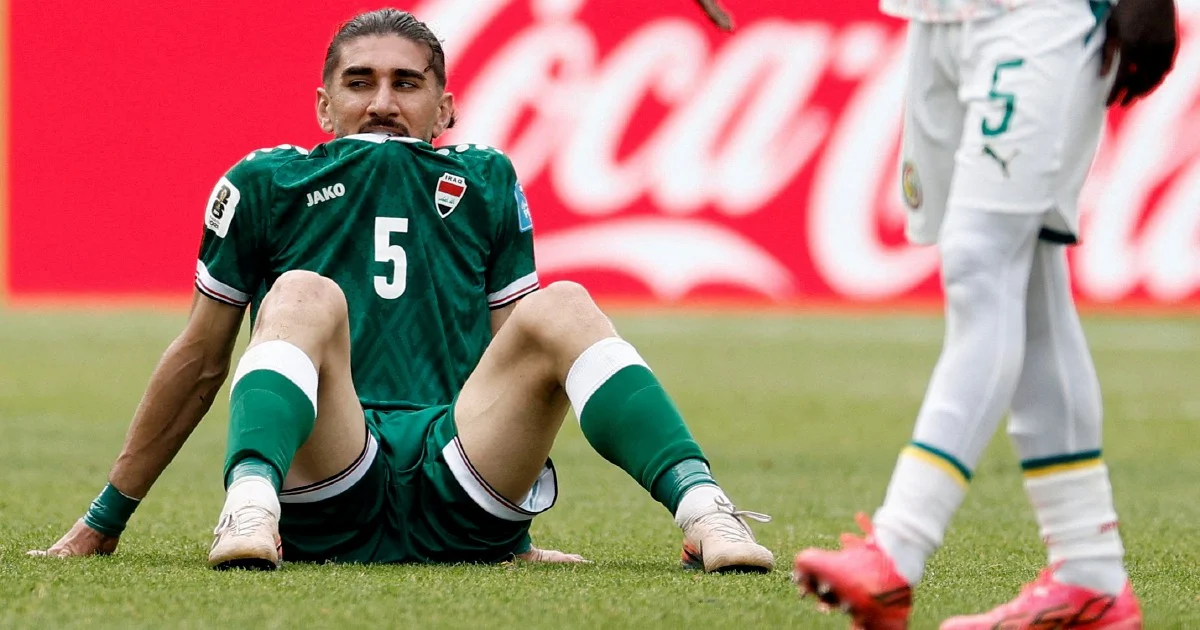
Iraq's Olympic Committee announced Monday that it intends to conduct a thorough examination of the national football team's underwhelming World Cup campaign, with a commitment to introducing remedial measures aimed at preventing similar disappointments in international tournaments ahead. The decision signals a significant pivot towards accountability and systematic reform within Iraqi football's administrative hierarchy, reflecting growing frustration with recent performance trajectories at the sport's highest competitive level.
The investigation will likely scrutinize multiple dimensions of the team's preparation and execution during the World Cup qualification process and tournament proper, examining everything from coaching decisions and player selection protocols to training methodologies and squad management. Such investigations, increasingly common among national football federations following tournament disappointments, serve to identify systemic weaknesses that may have contributed to the team's inability to achieve competitive objectives. For a nation with Iraq's football heritage, where the sport carries significant cultural weight and serves as a unifying national symbol, such underperformance carries repercussions extending well beyond the sporting arena.
The Iraqi Olympic Committee's proactive stance reflects a broader regional trend among Middle Eastern football associations to professionalize their governance structures. Countries throughout the Gulf region and wider Asia have increasingly adopted formal inquiry mechanisms following competitive shortfalls, recognizing that systematic analysis often yields actionable insights regarding infrastructure, talent development, and international competitiveness. Iraq's commitment to this approach suggests a willingness to learn from established best practices employed by more successful national programmes.
One critical area the investigation will almost certainly examine involves the football development pipeline. Building sustainable international competitiveness requires strong youth programmes, domestic league quality, and effective pathways from grassroots participation through to professional and international-level competition. Many nations in the region struggle with balancing immediate competitive pressures against long-term structural development, and Iraq faces particular challenges given the country's recent history and ongoing security concerns that have periodically disrupted normal sporting activities and infrastructure investment.
The committee's commitment to outlining preventative measures suggests a forward-looking strategy extending beyond the investigation itself. Such measures might encompass coaching staff reforms, enhanced technical training facilities, improved scouting and player identification systems, or modifications to the domestic league structure designed to elevate overall playing standards. Implementation of such reforms typically requires coordination across multiple stakeholders, including the Iraq Football Association, club administrators, and international partners who may provide technical assistance and expertise.
International context matters considerably here. The broader Asian football landscape has witnessed significant competitive shifts in recent years, with some traditionally stronger nations facing challenges while others have invested substantially in development programmes and emerged as serious regional contenders. Iraq, despite possessing considerable footballing tradition and a large population base from which to draw talent, has struggled to maintain consistent international competitiveness relative to regional peers. Understanding these competitive dynamics forms an essential component of any comprehensive reform strategy.
The investigation's conclusions will likely influence broader conversations within Iraq regarding investment priorities in sports infrastructure and administration. Football commands considerable popular enthusiasm domestically, and successful national team performance carries political implications for government officials and national institutions. This intersection of sport, national pride, and institutional credibility means that the Olympic Committee's investigation and subsequent recommendations will receive attention from stakeholders across multiple sectors beyond sport itself.
Regional observers will watch closely to determine whether Iraq's investigative process yields substantive reforms or represents a more superficial response to pressure. The credibility of the findings will depend significantly on the investigation's independence, the expertise of those conducting it, and the genuine commitment of relevant institutions to implement recommendations even when doing so proves politically or financially challenging. Previous investigations in the region have sometimes faltered when implementation required difficult decisions or resource allocation changes affecting entrenched interests.
The timeline for both the investigation and implementation of reforms remains unclear, though meaningful structural change in football administration typically extends across several years rather than weeks or months. For Iraqi football, this represents a critical juncture where decisions made now will shape the competitive trajectory for the next Olympic cycle and World Cup qualification period. Success will ultimately be measured not by the investigation's comprehensiveness but by whether Iraqi football delivers improved international results and demonstrates sustainable competitive development across multiple tournaments and tournaments to come.

