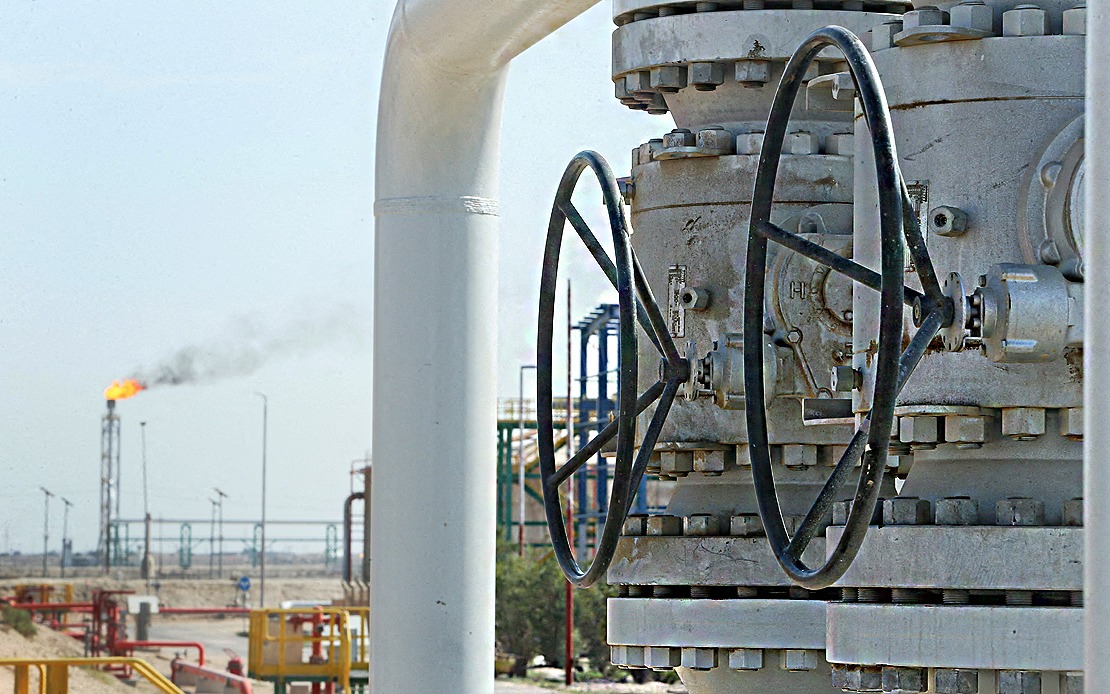
Iraq's energy sector is undergoing a strategic reorientation as the government pursues an ambitious pipeline infrastructure project designed to insulate the nation's critical oil export revenues from the geopolitical instability plaguing the Strait of Hormuz. Oil Minister Bassim Khudair disclosed that Baghdad is actively advancing feasibility studies for a major pipeline corridor that would link Iraq's principal oil-producing regions directly to Mediterranean shipping terminals, fundamentally altering the country's export architecture and reducing vulnerability to maritime disruptions in one of the world's most strategically sensitive waterways.
The proposed pipeline system would integrate Iraq's two primary oil-producing zones—the prolific Basra fields in the southern reaches of the country and the substantial Kirkuk reserves in the northern territories—into a unified export network terminating at Turkish and Syrian Mediterranean ports. The Ceyhan facility in Turkey and the Baniyas terminal in Syria represent the initial endpoints envisioned for this infrastructure development, though Iraqi planners have indicated that future extensions toward the Jordanian Red Sea port of Aqaba remain under consideration. This multipoint design reflects Baghdad's determination to establish genuine export diversification rather than simply shifting dependency from one chokepoint to another.
The urgency driving these infrastructure plans stems from the severe disruptions affecting Iraq's traditional export pathway through the Strait of Hormuz. The waterway, through which roughly one-third of global seaborne oil passes, has experienced prolonged operational constraints resulting from escalating tensions between Iran and the United States. For Iraq, which derives over 90 percent of state revenues from petroleum sales during normal circumstances, any sustained interruption to export capacity poses an existential threat to government finances and social stability. The current conflict environment has already forced production reductions, compounding the economic pressure on Baghdad.
Iraq's fiscal dependence on oil revenue extends far beyond macroeconomic indicators. More than 10 million Iraqi citizens rely directly on monthly government disbursements comprising wages for civil service employees, pension payments to retirees, and welfare support for vulnerable populations. A prolonged collapse in export revenues would precipitate a humanitarian crisis of staggering proportions, as the government lacks alternative funding mechanisms to sustain these essential social payments. This humanitarian dimension explains why Iraqi officials have elevated infrastructure diversification to strategic priority status.
Despite the compelling logic driving the Mediterranean pipeline initiative, significant practical and economic obstacles remain. Overland transportation of crude oil through pipeline infrastructure inherently incurs higher operational costs and introduces efficiency losses compared to maritime shipping. The continental routing would necessitate substantially greater capital investment in construction and maintenance while delivering lower throughput efficiency than conventional tanker transport. Additionally, the per-barrel economics become progressively less favorable as pipeline distances extend, potentially constraining the financial viability of export operations conducted through this channel.
A second layer of vulnerability concerns Iraqi officials as well. While the proposed Mediterranean pipeline would physically circumvent the Strait of Hormuz chokepoint, the new infrastructure would traverse regions where Iranian military capability could still pose threats. The Kurdish autonomous region through which existing Turkish pipelines transit has already demonstrated susceptibility to external pressures and security incidents. Similarly, Syria's fragmented security environment and Iranian military presence in the country create scenarios where new pipeline infrastructure could become targets during regional conflicts. Officials privately acknowledge that geographic rerouting alone cannot provide ironclad protection against determined adversaries.
Iraq has already begun partial implementation of export route diversification. An operational pipeline system currently conveys Iraqi crude through Kurdish territories toward Turkish Mediterranean outlets, providing a functioning albeit constrained alternative to Hormuz-dependent exports. Minister Khudair highlighted that a second pipeline project designed to bypass the Kurdish autonomous region entirely is completing final testing phases and anticipates operational deployment within days. This secondary route represents a near-term solution while the longer Mediterranean pipeline infrastructure undergoes engineering development and financial structuring.
The strategic implications of Iraq's pipeline initiative extend throughout the regional energy architecture. Successful development would demonstrate to other Gulf petroleum producers that viable alternatives to Hormuz exist, potentially emboldening resistance to Iranian pressure and reassuring international oil markets that supply vulnerabilities can be mitigated. Conversely, the project's complexity and the security challenges inherent in maintaining infrastructure across politically volatile terrain suggest that complete Hormuz independence remains aspirational rather than immediately achievable.
Baghdad's development of this diversification strategy reflects the broader Middle Eastern pattern of states attempting to reduce exposure to Hormuz blockade risks. The Strait's significance as a strategic chokepoint has intensified regional rivalries and incentivized infrastructure investments designed to circumvent it. However, Iraq's particular vulnerability—combining extreme fiscal dependence on oil revenues with severe security challenges in maintaining domestic stability—makes pipeline diversification especially critical to national interests. The feasibility study process now underway will determine whether this ambitious vision can transition from strategic aspiration to operational reality within a timeframe that addresses Iraq's pressing export requirements.

