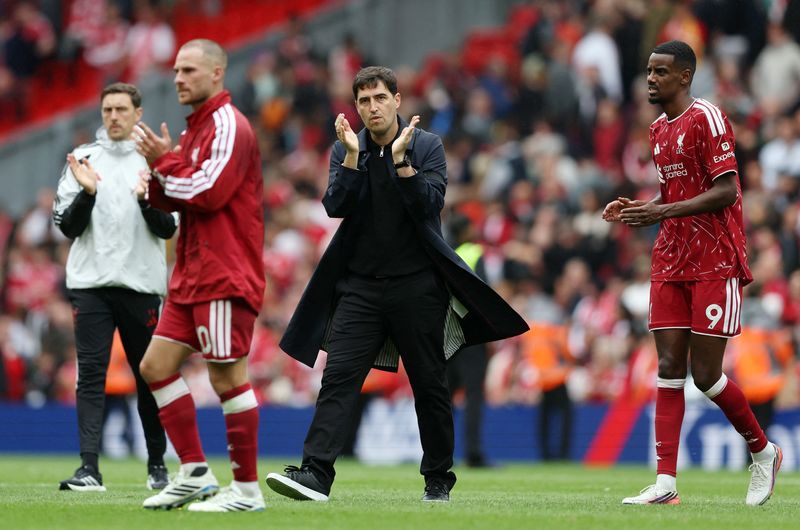
Andoni Iraola has yet to claim a Premier League victory since taking over as Liverpool manager this summer, but the Spaniard found sufficient evidence in Saturday's 2-2 draw against Nottingham Forest to reinforce his conviction that his reconstructed squad is beginning to establish the structural framework necessary for success. The former Bournemouth tactician inherited a team attempting to recover from a dispiriting campaign that saw the Reds collapse from defending champions in 2025 to fifth place, despite investing a Premier League record £446 million in new talent.
Iraola's appointment marks a dramatic philosophical shift for the club. Where his immediate predecessor Arne Slot favoured measured, controlled approaches over two seasons, the new manager has introduced a starkly contrasting methodology centred on aggressive pressing, direct attacking play, and relentless tempo. This intensity-based system harkens back to the high-octane football supporters witnessed during Juergen Klopp's reign and represents the kind of commanding Anfield atmosphere that once made visiting teams deeply uncomfortable. The transition to this demanding style naturally requires adjustment time, though early inconsistency has frustrated both Iraola and the fanbase.
The Forest match illustrated both the progress being made and the persistent vulnerabilities plaguing Liverpool's start. Nottingham's opening goal through Dan Ndoye emerged directly from a counter-attacking situation, stemming partly from Liverpool's sluggish first-half execution. During extended passages in the opening forty-five minutes, Liverpool appeared lethargic and disconnected, prompting visible irritation from their manager on the touchline. This pattern of slow starts has proved troublesome, carrying over problematic habits from last season's disappointing campaign.
What genuinely encouraged Iraola was the dramatic second-half transformation. The team's intensity levels noticeably elevated after the interval, with noticeably crisper ball circulation and heightened urgency permeating their play. Alexander Isak restored parity shortly after the hour mark, before summer signing Victor Munoz delivered an important late equaliser. This represented Liverpool's second successive match where they recovered from losing positions, demonstrating resilience and character that Iraola clearly values despite the failure to secure maximum points.
Munoz, a winger signed during the summer recruitment drive, drew particular praise from Iraola following his contributions across both opening fixtures. The manager highlighted the player's persistent attacking threat and improved defensive contributions, viewing these qualities as essential components of the pressing system he wishes to implement. The 23-year-old's pace and direct running style align perfectly with the high-tempo football Iraola envisions, offering genuine promise for the season ahead despite the early mixed results.
The fundamental issue preoccupying Iraola centres on Liverpool's defensive intensity without possession. During the first half, his side appeared passive and overly accommodating in their positioning, allowing opponents excessive space and enabling dangerous transitional opportunities. When Liverpool adjusted their approach and increased pressing intensity in the second period, they regained control of loose ball situations and initiated attacks with greater velocity and precision. This diagnostic analysis suggests that Liverpool's early struggles stem not from tactical unsuitability but from inconsistent application of the demanding physical and mental requirements Iraola's system demands.
Despite the absence of victories, anxiety levels around Anfield remain remarkably muted. Iraola has consistently communicated that implementing such a significant tactical overhaul requires meaningful time, and nobody genuinely anticipated the squad would execute this complex pressing system flawlessly during opening-week encounters. The manager's explicit messaging about the developmental journey ahead has tempered unrealistic expectations, allowing patience to prevail among supporters who understand that building something sustainable requires patience.
Additional reinforcements are arriving to strengthen Iraola's hand in implementing his vision. Liverpool have reportedly agreed terms with Paris Saint-Germain regarding the acquisition of France international Bradley Barcola, with the 23-year-old winger representing precisely the profile of player suited to the manager's attacking requirements. Barcola's explosive pace and direct running threat should seamlessly integrate into a system prioritising speed transitions and progressive forward movement through wide areas, potentially providing the supplementary attacking thrust necessary for Liverpool to compete consistently at the highest levels.
Currently, Liverpool occupy an uncomfortable space between demonstrable promise and actual progress. The football has become significantly more entertaining and cognitively demanding than the measured approach of recent seasons, yet the scoreboard remains frustratingly unforgiving. Iraola acknowledged the encouraging signs of character development evident in consecutive match recoveries, whilst simultaneously recognising that professional football ultimately judges managers and teams on victories and accumulated points. The tantalising nature of Liverpool's trajectory—improved intensity, better second-half execution, emerging talent integration—must soon translate into tangible results or questions will inevitably intensify regarding whether this tactical revolution represents genuine transformation or merely entertaining failure.

