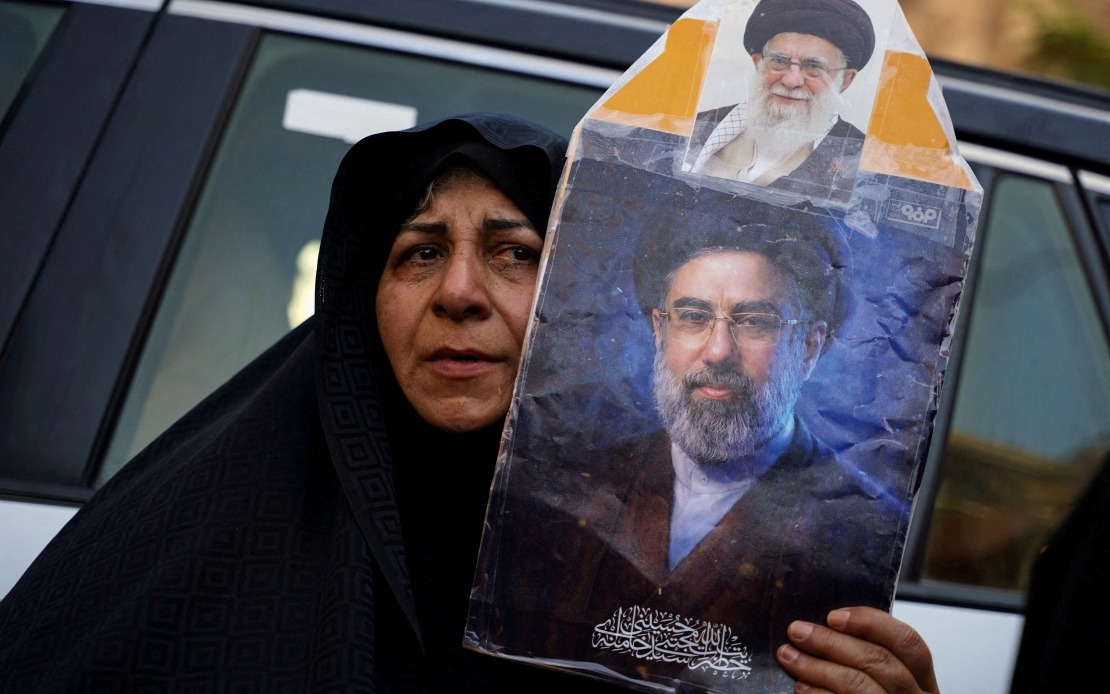
Iran's Supreme Leader Mojtaba Khamenei has delivered a scathing assessment of Washington's adherence to a recently negotiated peace agreement, asserting that repeated American violations demonstrate the fundamental unreliability of US President Donald Trump's word. In a statement disseminated through Iranian media outlets on Saturday, Khamenei characterised the Trump administration's conduct as confirmation of longstanding Iranian concerns about American trustworthiness in diplomatic arrangements, pointing to what Tehran views as systematic breaches of the memorandum of understanding signed between Iran's President Masoud Pezeshkian and Trump on June 18.
The underlying discord centres on a framework intended to facilitate substantive negotiations within a 60-day timeframe leading toward a comprehensive settlement. Rather than establishing a period of relative calm, however, the intervening weeks have witnessed an intensification of military posturing and tactical strikes that have fundamentally undermined the accord's stated objectives. Khamenei's remarks reflect deepening frustration within Iran's leadership circles regarding what they perceive as Washington's orchestrated campaign to undermine the agreement through military provocations and policy reversals, despite the ink barely dry on the formal arrangement.
In his address to the Iranian populace, Khamenei invoked language designed to galvanise domestic support whilst simultaneously projecting strength internationally. He contended that the US had "once again revealed its true and unmasked face," framing American actions as evidence of inherent deceitfulness rather than tactical adjustments or interpretive disputes. This rhetorical positioning serves to inoculate Iran's government against domestic criticism that might otherwise attach to the initial decision to engage diplomatically with an administration that previous Iranian leaders had deemed fundamentally hostile to Iranian interests.
The Supreme Leader's statement carried an implicit warning that further escalation carried serious consequences. He declared that should the United States persist in what he characterised as warmongering and attempts to impose increasingly severe economic or military costs upon Iran, the response would constitute "unforgettable lessons" delivered through Iran's armed forces and allied resistance movements operating throughout the broader Middle Eastern region. This language, though carefully calibrated to avoid explicit military threats, signalised Iran's unwillingness to absorb unlimited American pressure without responding in kind.
The deteriorating situation reflects a broader pattern of American military activity against Iranian targets that has occurred despite—or arguably because of—the MoU. The US has launched multiple rounds of strikes against Iranian positions and infrastructure in recent days, escalating beyond the posturing that had characterised the preceding period. Iran has responded with retaliatory attacks targeting American military installations and facilities throughout the region, creating a tit-for-tat cycle that threatens to spiral into broader regional conflict.
Diplomatically, Iran has now moved toward repudiation of its own obligations under the framework. Deputy Foreign Minister for Legal and International Affairs Kazem Gharibabadi announced Saturday that Iran has discontinued compliance with the MoU's requirements, directly attributing this decision to what Tehran views as fundamental American violations of Washington's commitments. This represents a significant escalatory step, as it formally dissolves the institutional mechanisms through which both parties had agreed to manage their differences and pursue negotiated solutions.
For Malaysia and other Southeast Asian nations, this escalation carries concerning implications. Regional stability is predicated partly upon predictability in great power behaviour and the maintenance of international agreements as functional instruments of statecraft. When major powers demonstrate willingness to breach or disregard recently negotiated frameworks, it undermines confidence in the broader rules-based international order upon which smaller nations depend for their security and prosperity. Malaysia, as a maritime trading nation dependent upon freedom of navigation and regional stability, has particular interest in the maintenance of functional diplomatic channels rather than militarised confrontation.
The specific charges exchanged between Washington and Tehran reveal fundamental incompatibilities in how each side interprets the agreement's substantive provisions. What the US may characterise as necessary defensive measures or responses to Iranian provocations, Tehran views as unilateral violations that nullify the foundation upon which negotiations were meant to proceed. This interpretive divide suggests that even had both parties initially negotiated in good faith, the framework lacked sufficient specificity to prevent precisely the disputes now generating escalatory consequences.
The broader significance extends beyond immediate Iranian-American relations to encompass global perceptions of American credibility in international commitments. If a memorandum signed at the presidential level cannot survive weeks without allegations of systematic violation, this raises fundamental questions about the reliability of American treaty commitments more generally—a concern that resonates beyond Iran and carries implications for allied nations, partners, and adversaries attempting to calibrate their own strategic decisions.
For analysts and policymakers in Southeast Asia, these developments underscore the risks attending upon regional engagement with major powers whose domestic political divisions or strategic reassessments might render agreements concluded with one administration vulnerable to repudiation or reinterpretation by successors. The Iran case demonstrates that diplomatic agreements, regardless of the level at which they are concluded, require robust institutional frameworks, clear verification mechanisms, and alignment of underlying strategic interests to survive periods of heightened tension.

