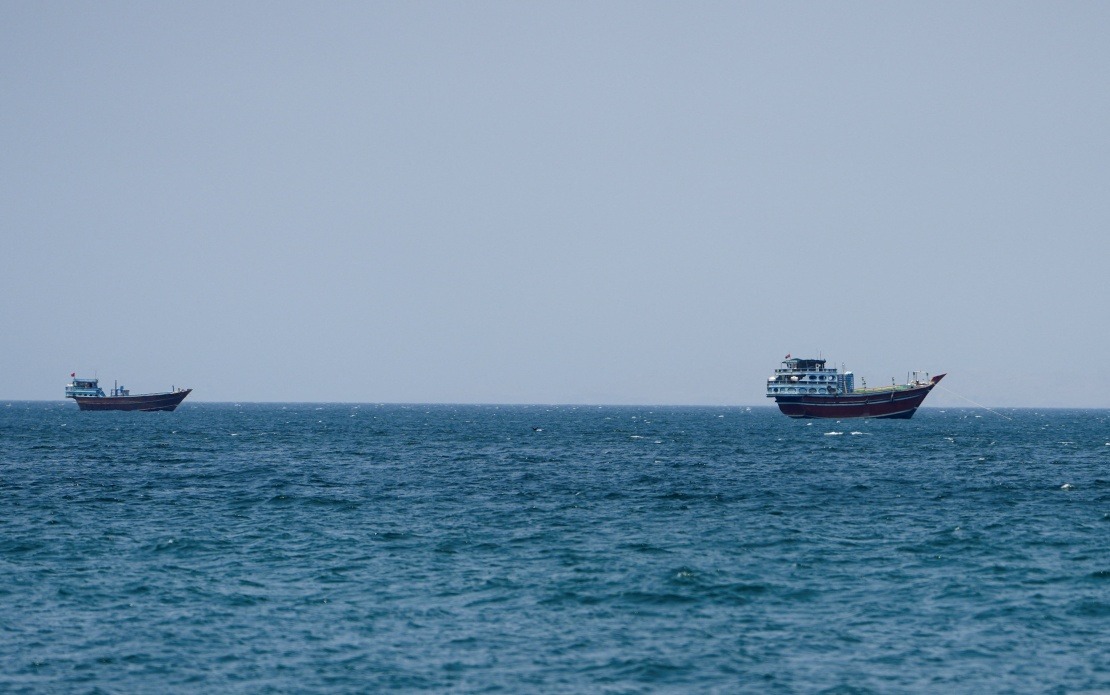
Iran's newly appointed Supreme National Security Council chief Mohsen Rezaei has declared that the strategically critical Strait of Hormuz will remain partially closed until the United States meets a set of specific conditions, signalling a hardening of Tehran's negotiating stance in the escalating regional standoff. During a meeting with Chinese Ambassador to Tehran Zong Piyu, Rezaei laid out what amounts to a formal demand structure: Washington must cease military operations against Iran and its regional partners, and it must unfreeze Iranian assets currently held abroad. The statement underscores how deeply the March crisis—which saw US-Israeli military operations against Iranian targets—has entrenced opposing positions on both sides.
The significance of Rezaei's pronouncement extends well beyond diplomatic rhetoric. The Strait of Hormuz, a waterway separating Iran from Oman, serves as one of the world's most critical chokepoints for energy transport, with roughly one-third of all seaborne traded crude oil passing through its waters. Iran's decision to impose transit restrictions beginning in March was framed by Tehran as a proportional response to what it characterizes as external military aggression. By making reopening conditional rather than automatic, the Iranian leadership has transformed a practical navigation issue into a tool of geopolitical leverage, one that directly impacts global energy markets and affects nations far beyond the Middle East, including Malaysia and other Asian economies heavily dependent on Gulf oil supplies.
Rezaei disclosed that Iran has conveyed additional unstated conditions to the United States through intermediary channels, though he did not specify their nature or the identities of the mediators involved. This reference to behind-the-scenes diplomacy suggests that formal negotiations, while absent from public view, have continued through back channels. The involvement of unnamed intermediaries in what Rezaei describes as "indirect negotiations" hints at the delicate nature of US-Iran engagement, where both sides maintain public hardlines while exploring potential pathways forward through trusted third parties. Such covert diplomatic efforts are common when official relations are frozen, allowing negotiators to test proposals without committing their governments to public positions.
Crucially, Rezaei clarified that even if Iran and Oman—the only other littoral state bordering the Strait of Hormuz—were to reach a separate bilateral agreement on transit routes through the waterway, such an arrangement would not alter Iran's unilateral authority to restrict or permit passage. This statement establishes that Iran views the strait through a lens of national sovereignty rather than as a shared international commons. It also signals that Oman, a traditionally neutral Gulf state known for mediation efforts, cannot serve as a backdoor mechanism to circumvent Iranian control. For Malaysia and other Southeast Asian nations reliant on stable Hormuz transits, this assertion suggests that any resolution to the standoff must involve direct negotiations with Tehran rather than arrangements brokered through third parties, however diplomatically skilled.
In his engagement with the Chinese ambassador, Rezaei took the opportunity to praise Beijing's diplomatic posture, specifically commending China's opposition to what Iran characterizes as an "anti-Iranian and illegal" draft resolution at the United Nations Security Council during the March crisis. This articulation reveals Iran's appreciation for China's geopolitical positioning and suggests an alignment of interests on key international issues. China's willingness to oppose measures critical of Iran at the UN reinforces the strategic partnership between the two nations and reflects broader great-power competition in the Middle East, where Beijing seeks to maintain influence and economic interests independent of American influence.
Rezaei also emphasised the depth of the Iranian-Chinese relationship, highlighting their mutual membership in organisations such as the Shanghai Cooperation Organisation and BRICS. These institutional connections represent more than ceremonial ties; they signal economic and security cooperation that extends across multiple domains. For Malaysia, which maintains a careful balancing act between regional powers, the strengthening of the Iran-China axis has implications for regional stability and economic relationships. A closer Tehran-Beijing partnership could reshape trade patterns and geopolitical alignments across Asia, potentially offering alternative markets and partnerships for nations seeking to diversify their international engagements beyond traditional Western-led frameworks.
The appointment of Rezaei to lead the SNSC signals a shift in Iran's security decision-making structure. His statements carry institutional weight, suggesting that Iran's negotiating position on the Strait of Hormuz reflects broader consensus within the country's security establishment rather than the views of a single faction. This institutional backing makes Iran's conditions more difficult to dismiss as merely rhetorical posturing and increases the likelihood that Tehran will maintain its stance unless Washington makes demonstrable moves to address Iranian grievances. The continuity and firmness of his messaging across different audiences and forums indicates that Iran is unlikely to unilaterally ease restrictions without tangible reciprocal gestures from the United States.
For Malaysia and other Southeast Asian economies, the implications are significant and multifaceted. Energy security concerns dominate the regional agenda, and any prolonged disruption to Hormuz transit would raise oil prices, increase shipping insurance costs, and create supply vulnerabilities. Malaysian businesses dependent on stable energy imports and companies operating in maritime industries face elevated risks so long as the Iranian-American confrontation remains unresolved. Additionally, the broader geopolitical realignment suggested by Iran's deepening engagement with China and other non-Western powers may influence Malaysia's own foreign policy calculations as it navigates the complex landscape of great-power competition in Asia.
The absence of immediate diplomatic breakthroughs and the hardening of Iran's public position suggest that any resolution to the Strait of Hormuz situation will require sustained international engagement and possibly mediation from neutral parties respected by both Tehran and Washington. Malaysia, given its own experience navigating between major powers and its stake in maritime stability, could potentially contribute to such mediating efforts, though such involvement would require delicate diplomacy. In the near term, however, the reality is that the Strait of Hormuz is likely to remain a flashpoint of geopolitical tension, with significant ramifications for global energy markets and regional security in the Indo-Pacific.

