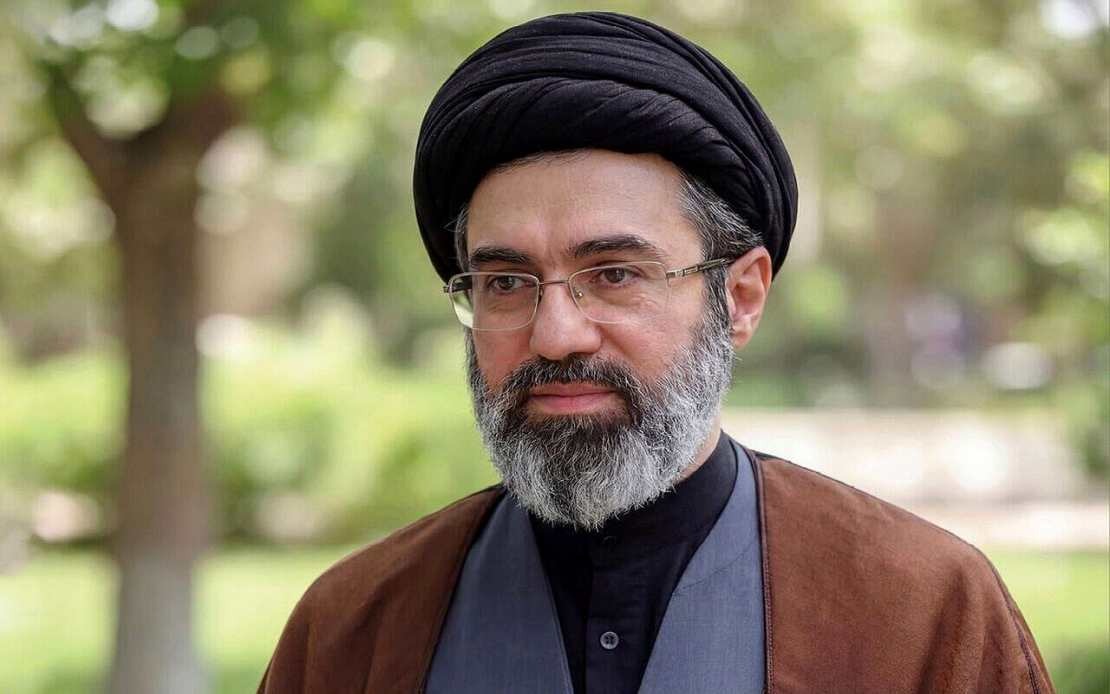
Iranian President Masoud Pezeshkian has moved to reassure the nation about the wellbeing of Supreme Leader Mojtaba Khamenei, declaring him to be in perfect health during a television interview with state broadcaster IRIB TV. The statement comes as the country navigates a significant leadership transition and seeks to project stability domestically and internationally following recent regional tensions. Pezeshkian's public affirmation, delivered during his third year in office, represents an important signal of institutional continuity at a time when questions about succession and governance have taken on heightened significance.
The presidential remarks emerged from a substantial seven-hour consultation between Pezeshkian and Khamenei, an extended engagement that underscores the depth of coordination required at Iran's highest levels of governance. Such lengthy sessions between these two critical figures typically address the full spectrum of national challenges and strategic direction. The duration of the meeting itself suggests serious deliberation on matters of considerable complexity and importance to the Iranian state.
During their extensive discussion, the two leaders prioritized the preservation of national unity and social cohesion as paramount concerns, according to Pezeshkian's account. This emphasis reflects an underlying awareness within Iran's leadership that economic pressures and international isolation have strained public sentiment. The focus on unity signals recognition that maintaining internal consensus remains essential for the regime's resilience, particularly as the country grapples with multiple concurrent crises.
The agenda encompassed bread-and-butter issues that directly affect ordinary Iranians' daily existence. Employment opportunities, housing availability, and the material conditions of daily life featured prominently in their discussions, indicating that policymakers are attuned to widespread frustration over economic hardship. These concerns transcend ideological considerations and touch on fundamental needs that determine public satisfaction with governance. The inclusion of such practical matters in high-level deliberations suggests an attempt to address grievances that might otherwise accumulate and destabilize social order.
International sanctions remained a significant theme within their conversation. Pezeshkian specifically mentioned that he and Khamenei discussed the cascading problems arising from the multilayered sanctions regime that has constrained Iran's economy for years. These restrictions, imposed by the United States and others, continue to limit Iran's access to global markets, financial systems, and critical technologies. The ongoing impact of these measures represents a pervasive challenge that permeates nearly every aspect of Iranian economic planning and policy formulation.
Khamenei's ascension to the position of supreme leader marks a watershed moment in Iranian politics. He assumed leadership following a dramatic February incident in which his father, former Supreme Leader Ali Khamenei, was killed in military strikes attributed to joint United States and Israeli operations. This succession, formalized through the selection process conducted by Iran's Assembly of Experts in March, represents only the second transition of supreme leadership since the 1979 Islamic Revolution, making it a historically significant moment for the Islamic Republic.
The appointment process itself reflected the constitutional mechanisms through which Iran's highest authority transfers between individuals. The Assembly of Experts, the body charged with selecting and theoretically overseeing the supreme leader, acted decisively to confirm Mojtaba Khamenei's elevation. This transition was relatively swift and orderly by historical standards, suggesting that elite consensus coalesced quickly around his candidacy, though the underlying reasons for such rapid institutional acceptance warrant scrutiny.
Notably, the new supreme leader has maintained a notably low public profile since his appointment. Mojtaba Khamenei has refrained from public appearances during the months following his elevation to the position, a marked divergence from customary practice for Iran's highest authority. This apparent reclusiveness raises questions about his health, capacity, or strategic preference for operating behind the scenes. Pezeshkian's public health affirmation can be interpreted as a deliberate effort to counter any speculation or rumor regarding Khamenei's physical condition or ability to discharge his duties.
For Malaysia and Southeast Asia, Iran's internal stability matters considerably. As a significant regional power with strategic interests extending throughout the Middle East and into Asia, Iran's governance transitions reverberate across international relations. Any perception of weakness or instability within Tehran's leadership circles could reshape calculations regarding Iran's military posture, its nuclear programme, and its various proxy relationships across the region. Malaysian policymakers monitoring developments in Iran must weigh questions about the durability of the new leadership structure against the backdrop of economic crisis and external pressure.
The strategic communication evident in Pezeshkian's television statement serves multiple audiences simultaneously. Domestically, the message reassures Iranians that their leadership remains intact and capable. Regionally and globally, it projects an image of institutional normalcy and continuity. However, the very fact that such assurances were deemed necessary suggests that concerns about Khamenei's health or capacity do exist within political circles or among the general public, otherwise such a declaration would be superfluous. The timing and platform of this announcement indicate careful management of the narrative surrounding Iran's transition period.
Looking forward, the dynamics between Pezeshkian and Khamenei will shape Iran's policy trajectory for years to come. Their demonstrated commitment to discussing practical economic matters alongside strategic concerns suggests that immediate priorities center on alleviating public hardship while maintaining the regime's security apparatus and international standing. The next several years will reveal whether this leadership combination can navigate the intersection of domestic demands and external constraints that currently define Iran's operating environment. For observers in Southeast Asia, tracking this relationship's evolution provides essential insight into Iranian decision-making processes that could affect regional stability and international commerce.

