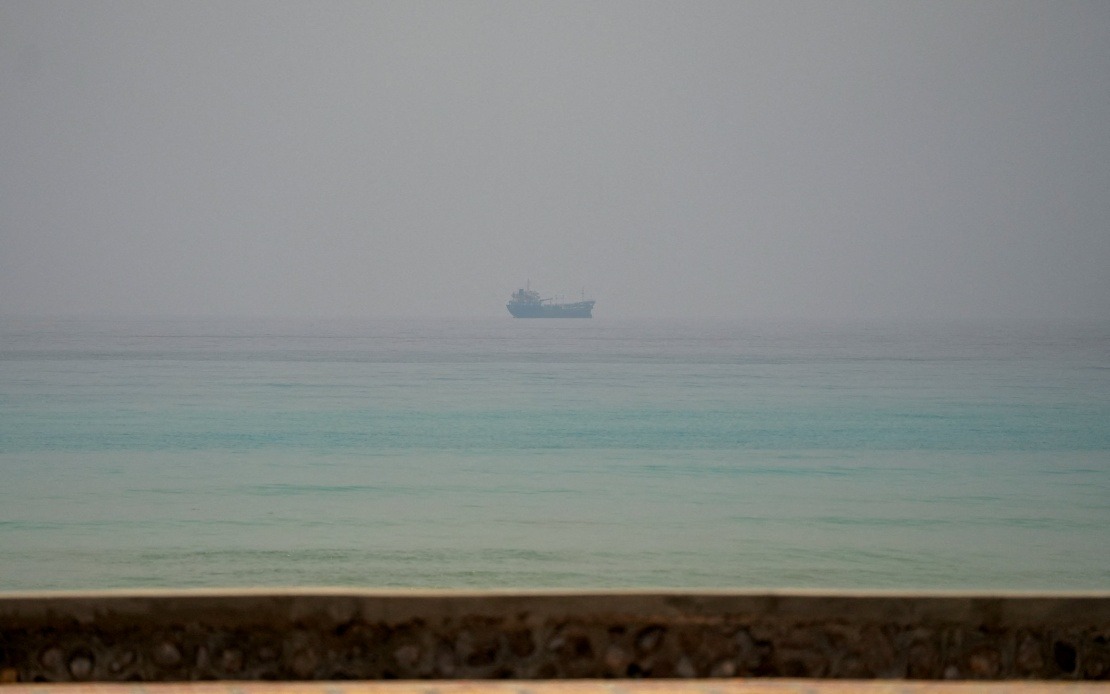
Iran's Parliament Speaker Mohammad Bagher Qalibaf has escalated rhetorical tensions with Washington by insisting that the strategically vital Strait of Hormuz will only open under conditions set by Tehran, not through US military coercion. The declaration came in the aftermath of fresh American strikes targeting multiple Iranian locations in the country's southern and southeastern regions, underscoring the deepening military brinkmanship between the two nations over one of the world's most crucial maritime chokepoints.
Qalibaf's comments, posted on the social media platform X, carried unmistakable defiance toward American policy. He asserted that the United States has not yet comprehended that bullying tactics and broken promises now carry consequences, signalling Iran's refusal to capitulate to military pressure. The tone of his statement reflected a hardening position within Iran's political establishment, suggesting internal consensus that accommodating American demands would constitute weakness inconsistent with national interests.
The specific threat embedded in Qalibaf's remarks—"If you strike, you will be struck"—represents more than symbolic posturing. It signals Iranian readiness to escalate military responses proportionally to further American action, establishing a framework for tit-for-tat exchanges that could spiral beyond current levels. This reciprocal logic, while serving to deter American escalation, simultaneously creates pathways for unintended escalation if either side miscalculates or if third parties become embroiled in the conflict.
The US Central Command subsequently confirmed that American forces had conducted the strikes Qalibaf referenced, framing them as operations designed to degrade Iran's capacity to threaten maritime navigation through the Strait of Hormuz. This justification—protecting freedom of navigation—represents a central point of contention in the broader dispute, with Iran viewing American military presence in the region as itself threatening to legitimate commerce and regional stability.
For Malaysian readers and Southeast Asian observers, the implications of this standoff carry significant weight. The Strait of Hormuz constitutes the world's most important oil transit corridor, with approximately one-third of all globally traded petroleum passing through its narrow waters annually. Malaysia, as a major oil importer and energy-dependent economy, faces direct exposure to any prolonged disruption of traffic through the strait. Supply shocks originating from Iranian-American confrontation could reverberate through regional energy markets, affecting fuel prices and inflation across Southeast Asia.
The strategic dimension of Iran's position deserves careful analysis. By asserting that Hormuz access depends on Iranian arrangements, Tehran attempts to position itself as the primary authority over the waterway's operations, effectively claiming stewardship over a passage that borders multiple countries and serves global commerce. This assertion contradicts established international maritime law, which designates the strait as an international waterway subject to the UN Convention on the Law of the Sea. Iran's framing thus represents a more expansive claim to regional influence than its formal legal standing would support.
American military operations in the region reflect Washington's commitment to maintaining what it characterizes as freedom of navigation. However, this commitment exists in tension with Iran's security concerns regarding military vessels operating near its borders. The fundamental disagreement about what constitutes legitimate maritime activity—and who holds authority to determine it—remains unresolved beneath the current cycle of tit-for-tat strikes.
The timing of these exchanges also matters geopolitically. Qalibaf's statement and the surrounding military activity occur amid broader regional realignments, including shifting alignments in the Gulf and evolving relationships between traditional Middle Eastern rivals. Saudi Arabia's rapprochement with Iran, brokered by China in March 2023, created theoretical space for reduced tensions, yet operational military confrontation between Iranian and American forces continues unabated, suggesting that diplomatic progress at the state level has not translated into reduced military competition on the ground.
For Malaysia's foreign policy establishment, these developments warrant close monitoring. As a major trading nation dependent on stable maritime routes, Malaysia has institutional interest in de-escalation and restoration of predictable conditions in the Strait of Hormuz. Malaysia's position as a moderate Muslim-majority nation and its relationships across the Gulf region provide potential diplomatic capital that could theoretically contribute to conflict resolution efforts, though such involvement would require careful calibration to avoid charges of taking sides.
The sustainability of Iran's position merits consideration as well. While Qalibaf's statements project confidence and resolve, prolonged economic sanctions, military pressure, and diplomatic isolation constrain Tehran's options. The contradiction between asserting control over Hormuz and actually maintaining functional access for international commerce creates strategic vulnerability. If Iranian actions significantly disrupt global oil markets, the international response would likely intensify pressure on Tehran rather than validate its claims to regional authority.
Looking forward, the trajectory of Iranian-American military competition in the Persian Gulf remains uncertain. The current pattern of strikes and counter-strikes, while serious, has not yet spiralled into full-scale military conflict. However, the rhetorical escalation evident in Qalibaf's statement indicates that decision-makers in Tehran are willing to accept higher levels of confrontation, potentially setting the stage for further intensification if either side perceives advantage in escalation or if miscalculation occurs.
Regional stability ultimately depends on whether diplomatic channels can be reopened and whether both Tehran and Washington can acknowledge the mutual costs of continued military competition. For Southeast Asian nations like Malaysia, the stakes involve not abstract principles but concrete economic consequences reflected in fuel prices, shipping costs, and broader inflation. The international community, including ASEAN nations, has legitimate interest in urging both parties toward negotiations that would restore stability to one of the world's most critical maritime passages.

