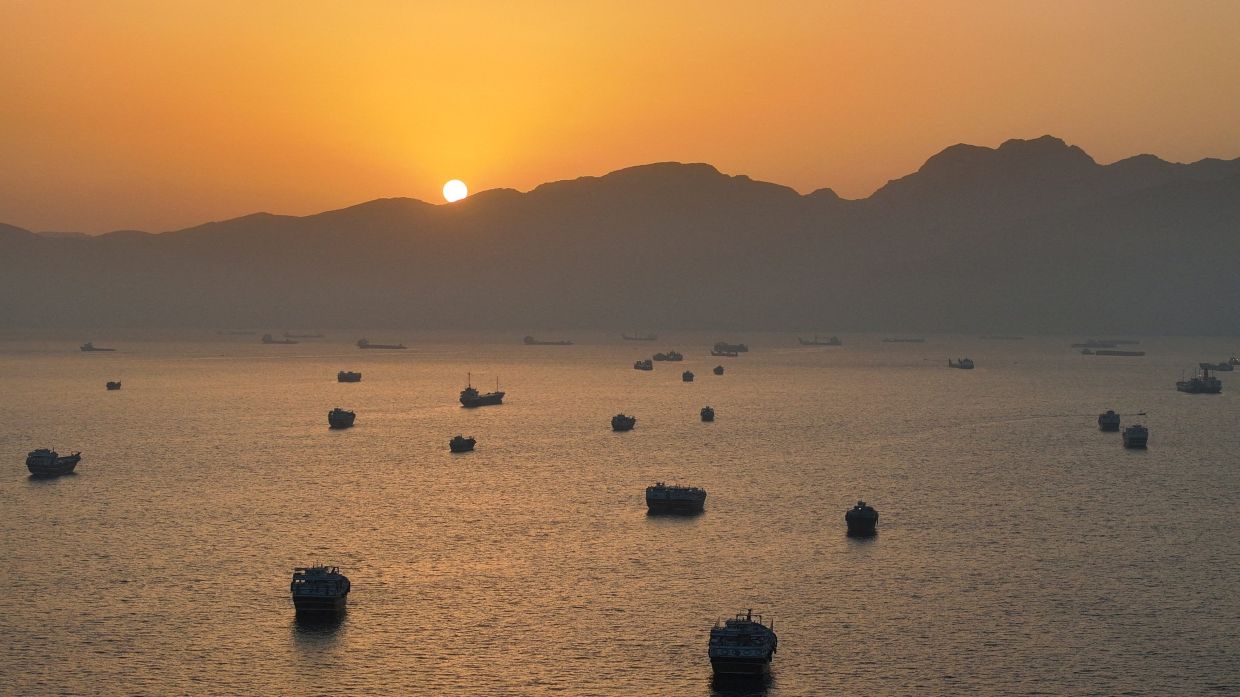
The gradual unwinding of a critical Gulf bottleneck accelerated this week as three large tankers carrying approximately 5 million barrels of crude successfully transited the Strait of Hormuz, signalling that an interim agreement between Iran and the United States is beginning to unlock one of the world's most strategically important shipping corridors. The movement of these vessels—two destined for Asian markets and one for the Middle East—offers the first tangible evidence that the diplomatic breakthrough may deliver material relief to global energy markets that have endured weeks of supply uncertainty.
The South Korean-flagged VL Breeze, one of the world's largest crude carriers capable of holding 2 million barrels, passed through the strait en route to Daesan with a combined cargo of Qatari condensate and crude from Abu Dhabi. The very large crude carrier, chartered by South Korean refiner Hyundai Oilbank, represents the kind of mega-vessel that has become increasingly scarce in the region as shipping companies and traders have grown wary of navigating waters plagued by security concerns and geopolitical tensions. Its successful passage underscores a gradual normalisation of shipping patterns that had been severely disrupted since the escalation of Middle East hostilities.
Two additional vessels followed suit: the Liberian-flagged VLCC Plata Carrier, operating under a charter agreement with India's state-owned Oil Corporation, departed with 2 million barrels of Saudi crude, whilst the Suezmax tanker Prudent Warrior made its way toward the Omani port of Sohar carrying 1 million barrels of Iraqi Basrah crude. The Indian direction of the Plata Carrier proves particularly significant given India's pivotal role in global crude demand and its substantial reliance on Middle Eastern supplies. The successful navigation of these tankers demonstrates that the diplomatic framework established by the interim deal is functioning to restore confidence among major trading partners.
The scale of what has been trapped in the Gulf prior to this week's developments cannot be overstated. Market analysts from both Kpler and Vortexa had recently estimated that approximately 90 million barrels of crude remained stuck within the Persian Gulf region, representing an extraordinary accumulation that both suppresses seller revenues and constrains buyer access. This massive inventory overhang has weighed heavily on global crude pricing dynamics, as traders and refiners across Asia and beyond have faced unpredictable supply flows and elevated logistics costs. The movement of even 5 million barrels therefore represents just a modest reduction of the broader logjam, suggesting that the clearing process will be lengthy despite improved diplomatic conditions.
South Korea's maritime authorities reported that four vessels flagged or operated by South Korean shipping interests had cleared the strait during the week, with one vessel heading directly to Korean shores whilst others proceeded to third-country destinations. However, the broader picture remains sobering: eighteen of the twenty-six vessels that had been immobilised since the beginning of the Middle East conflict remain trapped within the Gulf, indicating that despite this week's progress, the majority of the stranded fleet continues to languish in uncertain circumstances. The fact that roughly two-thirds of the stranded vessels have yet to resume transit suggests that confidence restoration remains incomplete and that additional diplomatic or security assurances may still be required before shipping normalisation becomes routine.
The mechanisms for safe passage have been carefully constructed to facilitate this gradual resumption. Oman, working in conjunction with the International Maritime Organization, has designated two temporary shipping corridors—one running north of the conventional shipping lane and another to the south—to provide vessels with clearly marked safe-passage routes. Critically, the Sultanate has publicly committed to keeping the Strait of Hormuz accessible to international shipping without imposing new toll charges or fees, a declaration that has provided economic and legal certainty for shipping companies contemplating the journey. These institutional arrangements represent a stabilising force that may prove as important as the diplomatic agreement itself in restoring regular traffic patterns.
Liquefied natural gas markets are showing equally encouraging signs of recovery. Two empty LNG carriers—the Shandong Redwood and Milaha Qatar—were recently observed transiting westbound through the strait, positioning themselves to load cargoes from Qatar. This activity brings the total number of empty LNG vessels currently in transit to load Qatari LNG to nine, the highest number recorded since the regional conflict commenced. The surge in repositioning empty LNG tankers suggests that buyers and operators increasingly believe they can execute LNG transactions without incurring unacceptable shipping risks or delays.
Qatar's leadership has reinforced this optimistic trajectory by signalling that the nation's liquid natural gas production will return to normal operating levels within several weeks, according to recent statements made by the country's Prime Minister Sheikh Mohammed bin Abdulrahman al-Thani. This timeline suggests that global LNG supply chains, which have faced considerable disruption as vessels avoided the Strait of Hormuz and its associated risks, will soon experience material relief. For Asian buyers who depend significantly on Qatari LNG—including major consumers in Malaysia, South Korea, and Japan—such a recovery would substantially improve fuel security and price stability for liquefied natural gas commitments extending across 2024 and beyond.
For regional economies like Malaysia, the implications are multifaceted and deeply interconnected. As a net energy importer that relies on Middle Eastern oil and gas for substantial portions of its energy consumption, Malaysia stands to benefit directly from lower global crude prices driven by improved Gulf supply flows. The Malaysian petrochemical and refining sectors, which maintain significant capacities, would gain from more competitive feedstock pricing and improved logistics certainty. Additionally, as an important regional maritime hub through the Port Klang and other strategic locations, Malaysia has a vested interest in the normalisation of shipping patterns and the resumption of predictable transit flows through Hormuz.
However, the persistent bottleneck also reflects deeper structural vulnerabilities in global energy markets. The concentration of crude oil transit through the Strait of Hormuz—estimates suggest roughly 20-25 percent of globally traded oil passes through this single chokepoint—remains a fundamental source of systemic risk. While the interim Iran-US agreement has eased immediate tensions, the underlying geopolitical fragility that rendered 90 million barrels immobilised remains unresolved. Energy security for nations across Asia depends on these sorts of diplomatic breakthroughs, but also on more diversified supply routes, strategic petroleum reserves, and coordinated regional energy strategies.
The movement of these three tankers and the LNG carriers repositioning toward Qatar therefore represents progress that is both genuine and necessarily limited. Global crude prices will likely experience further downward pressure as the accumulated inventory begins moving toward end-markets, but the broader question of whether sustained normalisation can be achieved depends on whether the diplomatic framework endures. For Malaysian policymakers and energy industry participants, this week's developments offer cautious encouragement that global energy markets are beginning to stabilise, even as they underscore the continued strategic importance of Middle Eastern stability for regional prosperity.