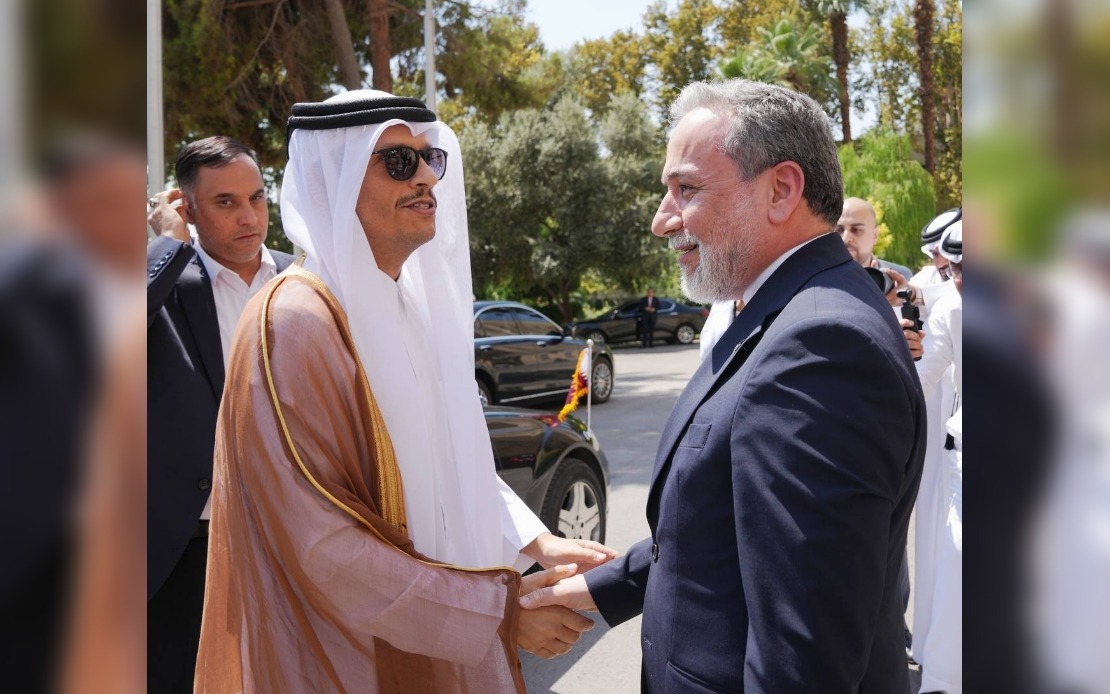
Iranian Foreign Minister Abbas Araghchi has struck an unexpectedly optimistic tone regarding the possibility of restoring diplomatic channels with the United States, stating that such a development is far from impossible if Washington approaches negotiations with genuine intent. Speaking through social media following high-level discussions in Tehran, Araghchi emphasised that while tensions have run high between the two nations, the pathway to renewed engagement exists provided both sides commit to fundamental principles of mutual respect and good faith.
The Iranian diplomat's remarks emerged during a significant visit by Qatar's Prime Minister and Foreign Minister Sheikh Mohammed bin Abdulrahman bin Jassim Al Thani to Tehran on Thursday. This engagement underscores Doha's intensifying role as a crucial intermediary in Middle Eastern geopolitics, a position the Gulf state has cultivated with considerable diplomatic skill. Qatar has positioned itself as a bridge between rival regional powers and between the Middle East and Western nations, a strategy that has proven invaluable in recent months as tensions between Tehran and Washington have escalated dramatically.
During his Tehran visit, Sheikh Mohammed conducted an extensive round of consultations that encompassed the full spectrum of Iran's decision-making apparatus. Meetings included Iranian President Masoud Pezeshkian, Araghchi, Parliament Speaker Mohammad Bagher Qalibaf, and Mohsen Rezaei, who heads Iran's Supreme National Security Council. This comprehensive engagement at the highest governmental levels signalled both the seriousness with which Iran treats Qatari mediation efforts and the complexity of the issues at stake in any potential rapprochement with Washington.
Araghchi's central message to the international community was unambiguous: coercive diplomacy has reached its limits. The Iranian foreign minister explicitly rejected the notion that sustained pressure campaigns could compel Iranian concessions, arguing instead that the United States must fundamentally recalibrate its approach. His statement that "pressure doesn't work" represents Iran's firm position that previous American sanctions regimes and military posturing have hardened rather than softened Tehran's negotiating position, a perspective that carries significant implications for how future talks might be structured.
The Iranian response articulates several preconditions that Araghchi believes must underpin any serious diplomatic initiative. Beyond abandoning coercive measures, Araghchi insists that Washington must acknowledge Iranian rights, demonstrate respect in communications, and genuinely commit to honouring agreements. This framing suggests Iran views the breakdown in relations as stemming from American bad faith, pointing to the United States withdrawal from the 2015 Joint Comprehensive Plan of Action, also known as the Iran nuclear deal. That unilateral American exit remains a persistent source of acrimony and mistrust between the parties.
The timing of Qatar's mediation efforts carries particular significance given the broader regional context. The visit represented Sheikh Mohammed's first journey to Iran since February when US and Israeli military strikes escalated tensions dramatically. The intervening months have witnessed mounting regional instability, with multiple military confrontations and proxy conflicts creating an environment where backdoor diplomacy has become increasingly vital. Qatar's willingness to engage both Tehran and Washington repeatedly suggests that neutral actors perceive genuine diplomatic openings that might not be immediately visible in public posturing.
Among the specific proposals under discussion during the Qatar-Iran talks were measures designed to rebuild mutual confidence and reduce flashpoints. These included establishing a temporary joint navigational corridor through the Strait of Hormuz, one of the world's most strategically critical waterways through which vast quantities of global petroleum supplies transit daily. Additionally, discussions addressed coordinated mine-clearing operations in the region, a technical measure that nonetheless carries symbolic significance as evidence of willingness to cooperate on practical matters affecting regional security and commerce.
For Malaysian and Southeast Asian observers, these diplomatic developments warrant close attention for several reasons. First, the Strait of Hormuz remains critical to regional energy security, with many ASEAN nations dependent on reliable oil and gas supplies flowing through those waters. Any escalation of Iran-US tensions or military incidents in the strait could disrupt energy markets across the region, directly affecting fuel prices and economic stability. Second, the broader principle of peaceful conflict resolution through dialogue rather than military confrontation aligns with ASEAN's own emphasis on non-interference, consensus-building, and the peaceful settlement of disputes through established mechanisms.
Moreover, Araghchi's emphasis on the failure of pressure-based diplomacy offers lessons relevant to contemporary international relations more broadly. The assertion that coercive measures often entrench resistance rather than facilitate compromise reflects a dynamic that applies beyond the Iran-US relationship. This observation has particular resonance in Southeast Asia, where smaller nations frequently find themselves navigating between competing great powers, and where the effectiveness of diplomacy often depends on genuine dialogue rather than ultimatums.
The role of Qatar in these mediation efforts also merits examination. As a wealthy, strategically located Gulf state with diplomatic presence across ideological and political divides, Qatar has invested considerable diplomatic capital in maintaining channels of communication during periods of intense regional tension. This capacity to operate as a neutral intermediary has become increasingly valuable in a fractured geopolitical environment where direct bilateral contacts prove insufficient or counterproductive.
Crucially, Araghchi's statement should be interpreted not as an indication that Iran is prepared to capitulate on fundamental issues, but rather that Iran remains open to genuine dialogue provided basic principles of reciprocity and respect are observed. The Iranian position appears to be that if the United States genuinely wishes to restore relations, it must first demonstrate through actions rather than words that it is prepared to treat Iran as an equal participant in negotiations rather than as a target for pressure campaigns.
Looking forward, the success of any diplomatic initiative will depend significantly on whether American policymakers can shift from adversarial frameworks toward engagement strategies based on mutual interest rather than coercion. Qatar's continued mediation efforts suggest that regional actors believe such a shift, while challenging, remains achievable. However, translating Araghchi's measured optimism into concrete diplomatic progress will require sustained commitment from all parties and a fundamental recalibration of assumptions that have driven policy for years.

