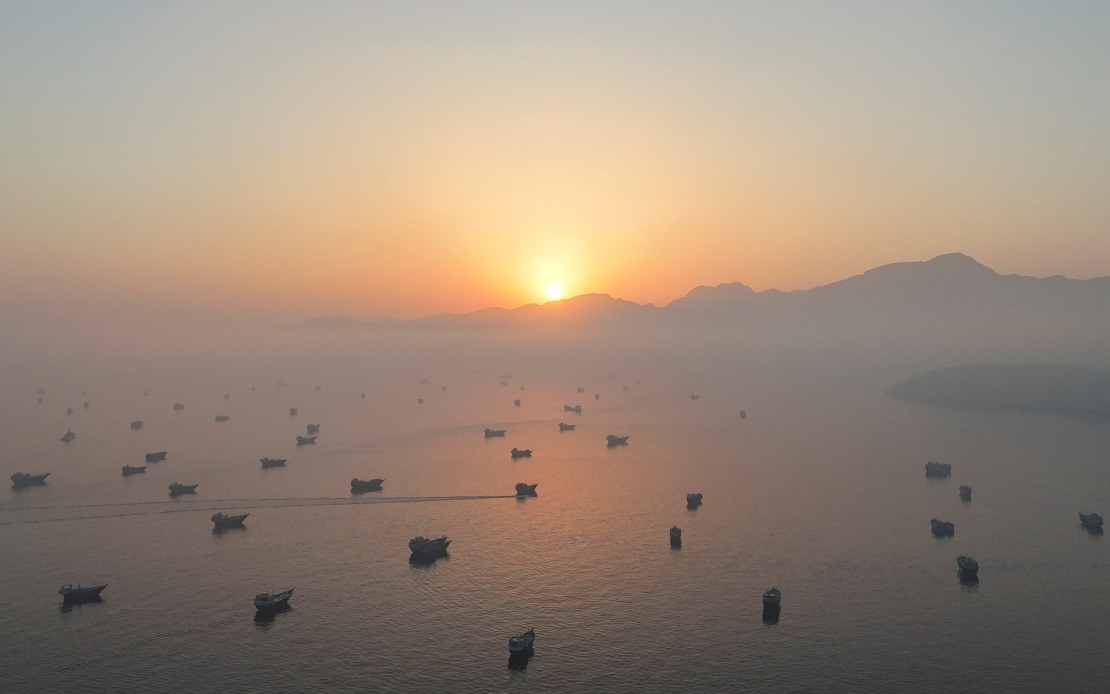
Iran's Foreign Minister Abbas Araghchi announced in Baghdad on 28 June that his country will exercise exclusive authority over maritime passage through the Strait of Hormuz for the coming month, effectively signalling the breakdown of negotiations with the United States following a sequence of tit-for-tat military provocations. The declaration, made during a press conference in the Iraqi capital, represents a significant escalation in regional tensions and a fundamental shift in how Tehran intends to manage one of the world's most strategically important waterways.
The Strait of Hormuz stands as the chokepoint through which approximately one-fifth of global oil and liquefied natural gas transits daily, making it indispensable to international energy markets and economic stability. When Iran asserts control over this passage, it wields leverage that extends far beyond the Middle East, affecting shipping lanes relied upon by traders and energy companies worldwide. The government's ability to restrict or obstruct traffic through the strait has historically served as a negotiating tool during periods of heightened confrontation with Western powers.
Araghchi emphasised that Iran bears sole responsibility for administering the waterway and cautioned against external intervention or the establishment of competing governance mechanisms. He characterised any such interference as counterproductive, warning that external meddling would "further complicate the situation, generate additional tensions, and delay the reopening of this strategically vital waterway." This language suggests that Tehran views the strait not merely as a physical space to be controlled, but as a domain through which it can project power and enforce its regional interests.
The current crisis traces its origins to February, when Israeli and American military operations targeted Iranian positions, prompting an aggressive response from Tehran. In that earlier confrontation, Iran deployed threats and sporadic attacks to effectively halt commercial shipping traffic, using economic disruption as a bargaining chip to extract concessions regarding a broader conflict resolution framework. The strategy demonstrated how regional military escalation can rapidly translate into global economic consequences.
Understanding the recent agreement that now appears to be collapsing requires grasping its fundamental structure. The accord between Washington and Tehran established a 60-day negotiation window during which Iran agreed to permit unobstructed passage for commercial vessels without imposing transit fees. This provision represented a significant concession from the Iranian side, as it foregoes a potential revenue stream while demonstrating willingness to normalise maritime commerce. The arrangement was predicated on the assumption that both parties would exercise restraint and avoid military provocations during the talks.
The unravelling of this ceasefire stems from mounting violations by both sides, each claiming the other initiated fresh hostilities. These accusations have created a spiral of retaliatory actions that has progressively eroded confidence in the framework's viability. For Malaysia and other Southeast Asian nations dependent on stable energy supplies through the Strait of Hormuz, such instability poses tangible risks to shipping safety, insurance costs, and fuel security.
Looking ahead, Iran intends to engage Oman in consultations regarding the management of the strait in accordance with international maritime law and in coordination with neighbouring Gulf states. These discussions carry profound implications for how the waterway will be administered going forward. Analysts expect that the question of transit fees will emerge as a major point of contention, particularly regarding how any charges imposed by Iran align with international legal frameworks and the obligations Iran has assumed as a signatory to maritime conventions.
For regional trading partners and for Southeast Asian economies reliant on Persian Gulf energy supplies, the implications of Iran reasserting unilateral control are sobering. Malaysia's position as a major trading nation means that disruptions or increased uncertainty in the Hormuz Strait directly affect shipping routes to Europe, increased maritime insurance premiums, and potential supply chain complications. The nation's refineries and petrochemical industries, significant components of its economy, depend on stable access to Middle Eastern crude oil and natural gas supplies.
The broader geopolitical dimension encompasses the structural tension between Iran's assertion of regional sovereignty and the international community's interest in maintaining open, neutral shipping corridors. Iran frames its actions as necessary assertions of territorial rights and responses to external aggression, while Western powers view Iranian restrictions on maritime traffic as destabilising and economically coercive. This fundamental disagreement over the legitimacy of Iran's authority suggests that the current 30-day window may prove insufficient to resolve underlying disputes.
The involvement of Oman in future negotiations is noteworthy, as the sultanate has historically played a mediating role in Gulf disputes and maintains diplomatic relationships with both Iran and Western nations. Oman's participation signals that regional actors recognise the necessity of multilateral engagement to prevent the Strait of Hormuz from becoming a permanent flashpoint for international conflict. However, the success of such mediation efforts depends on whether the underlying military escalation can be halted and whether both the United States and Iran demonstrate genuine commitment to de-escalation.
For Malaysian policymakers and business leaders, the current situation underscores the vulnerabilities inherent in depending on a single waterway for critical energy imports and the strategic importance of diversifying energy sources and maritime routes where feasible. The incident also highlights how regional conflicts thousands of miles distant can rapidly create ripple effects across global supply chains and economies integrated into international trade networks.

