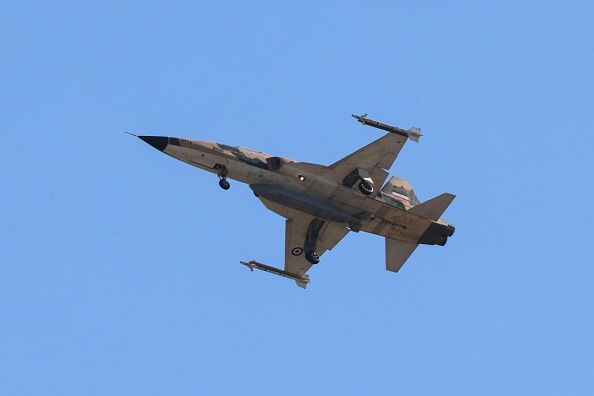
Tensions between Iran and two Gulf Arab states have escalated sharply as Tehran demands answers about missing military personnel and the fate of pilots it alleges were captured during an airspace incident. Mohammad Baqerzadeh, who heads the Committee for the Search for Missing Persons within Iran's Armed Forces General Staff, announced on Sunday that his country's investigators have been waiting months for permission to enter Qatar to conduct their own assessment of what happened to the disputed pilots, according to reports from the semi-official Tasnim news agency.
The core dispute centres on an incident in March when Iranian aircraft entered Qatari airspace without authorization and failed to respond to warning communications from Doha. Qatar's account of events differs markedly from Iran's narrative. Qatari officials have explicitly denied that they are holding any Iranian pilots and instead claim that search and rescue personnel discovered the remains of one pilot following the airspace violation. In a statement issued on Saturday, Doha asserted that it had made genuine efforts to facilitate the return of these remains to Tehran and had invited Iranian officials to examine the details and processes of its search and rescue operation, though it noted that Iran had not responded to these overtures.
Baqerzadeh's public statements represent an intensification of Iran's position, moving beyond simple inquiries to formal accusations of obstruction. He charged that Qatari authorities have repeatedly postponed and blocked the proposed investigation, preventing the return of the pilots to Iranian soil. The language employed—suggesting deliberate delay and obstruction rather than bureaucratic complications—signals a hardening of Tehran's stance toward Doha. In an apparent bid to internationalize the dispute and add pressure on Qatar, Baqerzadeh called for the International Committee of the Red Cross to urgently intervene and monitor the situation, invoking the humanitarian organization's traditional role as a neutral arbiter in disputes involving detained or missing military personnel.
The disagreement between Iran and Qatar occurs against a backdrop of broader Middle Eastern tensions and reflects the fragile nature of Gulf diplomacy. The incident's classification—whether as an accidental airspace violation or a more deliberate incursion—carries significant weight in how each side interprets the other's conduct and motivations. For Qatar, the unauthorized entry into its airspace by Iranian aircraft represents a security violation that required immediate response. For Iran, the insistence by Qatari authorities on investigating the matter independently, rather than immediately granting access to Iranian investigators, appears as a delaying tactic that prevents full transparency.
Separately, Baqerzadeh expanded his criticism to include Kuwait, accusing Kuwaiti authorities of similarly refusing to disclose information about the status of four Iranian nationals whom he claimed are being held in the country. According to Iran's version of events presented in May, these four individuals were affiliated with the Revolutionary Guards and were engaged in a routine maritime patrol operation when navigational difficulties caused them to inadvertently cross into Kuwaiti territorial waters. This account emphasizes accident rather than intent, portraying the border crossing as an unfortunate consequence of technical malfunction rather than a deliberate act.
Kuwait's perspective on the detained Iranians differs fundamentally from Tehran's characterization. Rather than viewing them as victims of a navigation error, Kuwaiti officials have indicated suspicion that these individuals were engaged in activities aimed at threatening Kuwait's security. The accusation that they were planning hostile actions transforms the incident from a regrettable border crossing into a potential security threat, justifying detention under national security protocols rather than treating it as a humanitarian issue requiring rapid resolution.
The simultaneous tensions with both Qatar and Kuwait expose a pattern of friction between Iran and its Gulf Arab neighbours that extends beyond individual incidents. These disputes touch on fundamental questions about territorial sovereignty, maritime boundaries, military operations in shared waters, and the proper protocols for handling personnel from different nations when irregular incidents occur. The Gulf region's complex waterways and competing claims over resources and boundaries have historically generated friction, and contemporary incidents continue to test the region's diplomatic mechanisms and relationships.
For Malaysia and other Southeast Asian nations observing Gulf developments, these disputes carry implications for broader regional stability and international security cooperation. The Gulf remains globally significant as a vital shipping corridor and energy supplier, and tensions that disrupt normal operations or create unpredictability can have ripple effects across international commerce and strategic calculations. Furthermore, how these disputes are resolved—whether through direct bilateral negotiation, third-party mediation, or international mechanisms—establishes precedents that may influence how similar incidents are handled in the future.
The involvement of the International Committee of the Red Cross, should Iran's appeal gain traction, would formalize international scrutiny of both cases. This organization's mandate includes monitoring detention conditions and investigating the fates of missing or captured personnel, giving it considerable credibility in humanitarian matters. Its potential engagement would elevate the disputes from purely bilateral affairs to matters of international humanitarian concern, potentially exerting quiet but significant pressure on both Qatar and Kuwait to demonstrate transparency and comply with international standards regarding detained persons.
The broader regional context matters significantly for understanding these tensions. Iran's Revolutionary Guards maintain extensive naval and security operations throughout the Persian Gulf and Gulf of Oman, while Qatar and Kuwait, as smaller Gulf states with different strategic alignments, view Iranian military activities with varying degrees of concern. The four Iranians detained in Kuwait and the pilots allegedly captured by Qatar represent not merely individual cases but symbols of a larger pattern of mistrust and competing strategic interests in one of the world's most strategically consequential regions.

