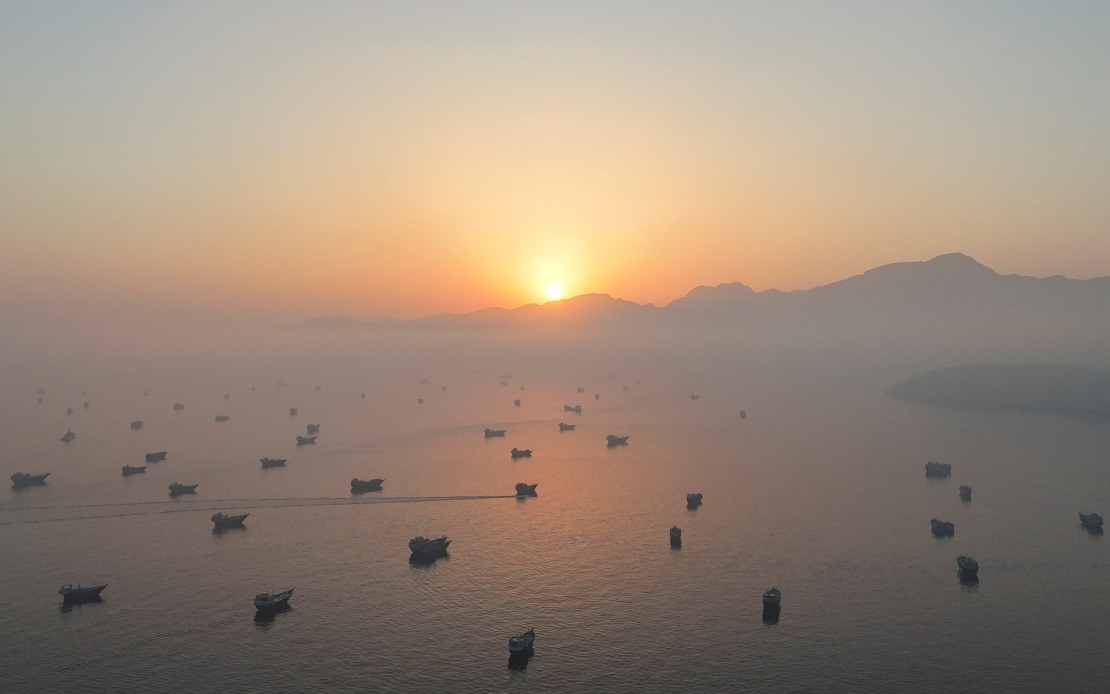
Iran's Islamic Revolutionary Guard Corps has escalated its control over maritime traffic through the Strait of Hormuz, announcing on Sunday that no petroleum or natural gas tanker will be permitted passage without explicit Iranian authorization. The announcement follows incidents involving four vessels reportedly backed by the United States that attempted transit through what the IRGC described as an unsafe route while disabling their navigational tracking systems. Two of the vessels were intercepted following confrontations, while the other two reversed course, according to the Iranian military authority.
The Strait of Hormuz remains one of the world's most strategically vital waterways, serving as the primary maritime route for global oil shipments and liquefied natural gas exports. Through this narrow channel between Iran and Oman, roughly one-third of all seaborne traded crude oil passes daily, making Iranian control over the passage a matter of profound consequence for international energy markets and regional stability. Any sustained disruption to shipping through Hormuz ripples across global economies, with particular implications for energy-dependent nations across Southeast Asia, including Malaysia, which relies heavily on Middle Eastern oil supplies.
The IRGC's assertion of total dominion over the waterway represents an intensification of Iranian policy regarding maritime movements in the region. Military officials stressed that Iran maintains comprehensive command over the Strait of Hormuz and has unilaterally designated the safe shipping corridors for international commerce. This declaration effectively positions Tehran as the sole arbiter of whether commercial vessels may proceed with their journeys, a position that challenges international maritime law and established freedom of navigation principles that have governed these waters for decades.
The latest incident forms part of an escalating pattern of tensions dating back to early July, when the United States initiated multiple military operations targeting Iranian positions. American Central Command justified these strikes as responses to Iranian attacks against commercial shipping transiting the Strait of Hormuz. In retaliation, Iranian military forces have conducted counterstrikes against American military installations located across the wider West Asian region, demonstrating the dangerous cycle of tit-for-tat military actions that threatens regional peace and commercial stability.
For Malaysia and other Southeast Asian nations, these developments carry immediate economic ramifications. The Association of Southeast Asian Nations economies depend substantially on stable energy supplies and predictable shipping routes. Any sustained Iranian assertion of control over Hormuz shipping, particularly through permitting requirements that favor certain nations or restrict others, could increase fuel costs for regional economies and complicate energy security planning. Malaysian shipping companies and oil traders operating in global markets must contend with heightened uncertainty when routing vessels through this critical passage.
The IRGC's statement that not even minimal quantities of oil, gas, or fertiliser would transit without Iranian coordination represents an unusually comprehensive claim of authority over the waterway. International maritime conventions and established practice have long recognized the Strait of Hormuz as a shared shipping lane where vessels from all nations possess rights of transit passage. Iran's assertion of unilateral permitting authority challenges these long-standing frameworks and introduces legal uncertainty regarding the status of commercial shipping operations.
The tactical decision by the four vessels to disable their navigation systems suggests deliberate operational choices rather than mechanical failures. Modern maritime vessels rely on Automatic Identification Systems to broadcast their positions, course, and speed to other ships and coastal authorities. Disabling these systems renders vessels invisible to tracking mechanisms used for maritime safety and commerce coordination. The IRGC's framing of this action as violations of its designated safe routes implies that Iran views vessels navigating outside prescribed channels as subject to interception and enforcement action.
The broader geopolitical context reveals how maritime disputes intersect with Iran's confrontation with the United States and its regional allies. American military support for Gulf Cooperation Council nations, coupled with sustained economic sanctions against Iran, has produced an environment where Iranian officials view foreign military presence in the Persian Gulf as threatening. The Strait of Hormuz thus becomes both a strategic chokepoint through which Iran can exert leverage and a contested space where Iranian security interests clash with international commercial interests and American military positioning.
For Malaysian policymakers monitoring regional developments, the situation underscores the vulnerability of Southeast Asian economies to geopolitical turmoil in distant regions. Rising tensions in the Middle East directly affect fuel prices, shipping insurance costs, and supply chain reliability for Malaysian businesses. As a maritime nation with substantial trading interests across global shipping lanes, Malaysia has inherent stakes in maintaining freedom of navigation and preventing any nation from unilaterally imposing control mechanisms that could fragment international commerce or establish dangerous precedents for restricting passage through critical waterways.
The incident also highlights the limitations of military posturing as a sustainable approach to resolving underlying disputes. Both Iranian and American actions appear calibrated to demonstrate resolve and capability without entirely severing diplomatic channels, yet each incident raises risks of unintended escalation. Commercial shipping operators face mounting pressure to navigate around potential conflict zones, adding costs and complexity to global trade flows that ultimately affect consumer prices and economic competitiveness across Southeast Asia and beyond.
The Strait of Hormuz remains too important for global energy security and international commerce to remain a zone of escalating military friction. Previous episodes of tension in the waterway, including the tanker war of the 1980s between Iran and Iraq, demonstrated how such conflicts can inflict substantial economic damage across neutral nations far removed from the immediate conflict zone. The international community, including Southeast Asian nations dependent on stable passage through these waters, has considerable interest in de-escalating current tensions and reestablishing predictable maritime conditions that allow commerce to proceed without excessive risk premiums or political uncertainty.

