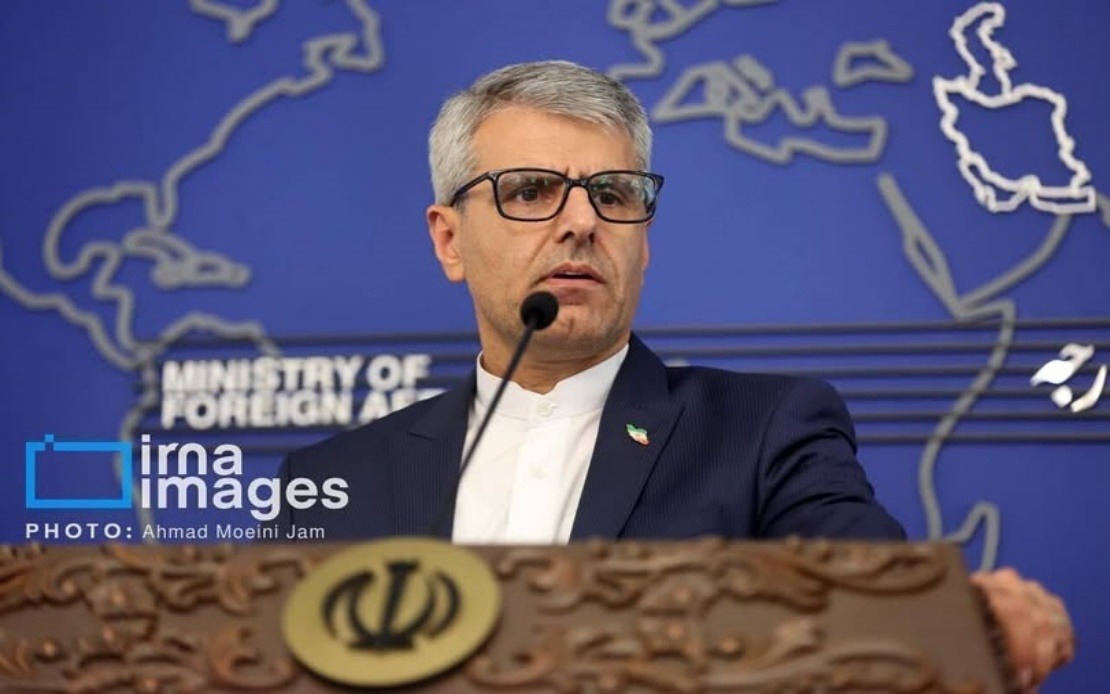
Iran's Foreign Ministry intensified diplomatic pressure on Washington this week, insisting that the United States enforce an immediate and unconditional Israeli withdrawal from all occupied Lebanese territories as a prerequisite for implementing a broader regional understanding signed in June. Speaking at a news briefing in Istanbul, ministry spokesman Esmaeil Baqaei outlined Tehran's non-negotiable position on Lebanon, presenting it as a cornerstone condition for regional stability rather than a negotiable point in ongoing talks between the two countries.
The Iranian demands reflect growing frustration with what Tehran perceives as insufficient American commitment to enforcement mechanisms within the June 18 memorandum of understanding reached after weeks of escalating military tensions. Baqaei specifically called for Washington to establish a clear timetable for Israeli forces to vacate Lebanese soil, framing this as integral to any sustainable regional agreement. The statement signals that Iran views the Lebanon question not as a peripheral issue but as central to the entire architecture of any peace framework being negotiated between Tehran and Washington.
Beyond diplomatic rhetoric, Iran has woven the Lebanon withdrawal demand into the fabric of its negotiating position on multiple fronts. According to Baqaei's comments, Tehran has consistently placed "ending the war and military operations of the Zionist regime in Lebanon" alongside demands for an end to military operations targeting Iran itself, positioning these as parallel and equally important objectives. This linkage suggests that any broader agreement between Iran and the United States may face difficulty if the Lebanon component remains unresolved or inadequately addressed.
Tehran's insistence on Lebanese sovereignty and territorial integrity goes beyond military considerations to encompass broader humanitarian and political dimensions. Baqaei emphasized that safeguarding "the dignity and security of all Lebanese people" constitutes an essential foundation for any durable accord. This framing attempts to position Iran as a protector of Lebanon's interests rather than a party imposing its own strategic objectives, though it also reflects genuine concern within Tehran's leadership that Lebanese state capacity and independence could be undermined by prolonged Israeli military presence or unresolved territorial disputes.
The appointment of Parliament Speaker Mohammad Bagher Qalibaf as chief negotiator underscores the political weight Iran assigns to these talks. In a recent conversation with Lebanese Parliament Speaker Nabih Berri, Qalibaf reiterated that Tehran is pursuing the Lebanon cessation "seriously," signaling to Beirut that Iranian commitments on this issue carry the backing of senior political figures, not merely diplomatic functionaries. This direct engagement at the parliamentary level suggests that Lebanon's political leadership remains a crucial audience for Iranian messaging during these negotiations.
Details revealed about the Switzerland talks from last week provide insight into the mechanisms being discussed to enforce compliance. Qalibaf disclosed that negotiators have agreed to establish a conflict-control unit comprising representatives from Iran, the United States, and Lebanon to monitor implementation of ceasefire provisions and territorial arrangements. This arrangement reflects hard experience: Iran contends that previous understandings have been violated, necessitating robust verification structures to prevent future infractions. The creation of such a trilateral mechanism indicates at least provisional agreement on the principle that Lebanon's own representatives should have a seat at the table monitoring outcomes.
For Malaysian and Southeast Asian observers, these developments carry implications for understanding how regional powers in the Middle East pursue security arrangements and dispute resolution. Iran's insistence on concrete timelines and enforcement mechanisms mirrors concerns that smaller states throughout Asia express when negotiating with more powerful neighbours or external actors. The emphasis on third-party monitoring and the involvement of the affected state in oversight reflects lessons learned from previous agreements that collapsed due to weak implementation.
The ongoing implementation of the broader 14-point understanding between Iran and the United States remains conditional on resolving the Lebanon dimension. This conditional architecture creates potential leverage points for all parties involved. For Beirut, it means that Lebanon's internal stability and territorial recovery become bargaining chips in larger US-Iranian negotiations. For Washington, it introduces complexity into efforts to achieve comprehensive regional de-escalation. For Tehran, it provides leverage to extract concessions on other fronts while maintaining that Lebanese freedom from occupation constitutes a legitimate and non-negotiable objective.
The emphasis on "unconditional" withdrawal language reflects Iran's determination to prevent any arrangement that would allow Israel to retain positions or claim residual rights in Lebanese territory. This categorical stance leaves little room for compromise on the core issue, even as negotiators may find flexibility on implementation timelines, verification procedures, or compensation mechanisms. By anchoring its position in absolute principles rather than practical details, Tehran may be attempting to establish a floor beneath which negotiations cannot descend.
Within the context of broader Middle Eastern diplomacy, Iran's public statements on Lebanon serve multiple audiences simultaneously. Domestically, they demonstrate to Iranian constituencies that their government resists external pressure and champions the rights of neighbouring peoples. Regionally, they signal to other Arab states, particularly those wary of Israeli military dominance, that Tehran remains committed to limiting Israeli strategic advantage. To Washington, they communicate that no comprehensive arrangement can succeed without addressing what Tehran views as ongoing occupation and aggression.
The involvement of both parliamentary and foreign ministry voices in articulating these demands suggests Iran is building consensus across its political establishment on the non-negotiability of Lebanese territorial restoration. This multi-channel messaging strategy indicates that the position represents settled Iranian policy rather than negotiating theatre. Whether Washington possesses either the willingness or capacity to enforce Israeli compliance with Iranian demands remains an open question that will likely determine the trajectory of these broader negotiations.

