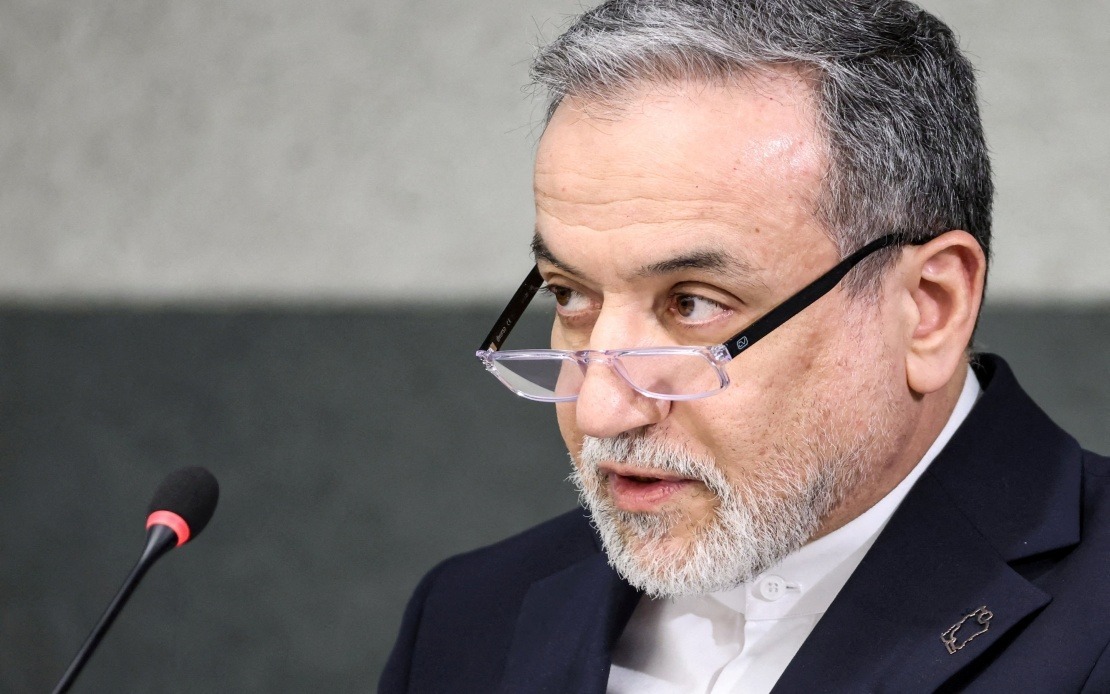
Iran has doubled down on its claim to stewardship of one of the world's most critical shipping lanes, challenging US President Donald Trump's proposal to impose significant fees on vessels transiting the Strait of Hormuz. Foreign Minister Abbas Araghchi made the declaration on Monday, signalling Tehran's intention to maintain its grip over the strategic passage that handles roughly one-third of global maritime trade.
Araghchi's statement came in direct response to Trump's announcement that the United States would blockade Iranian waters and levy a 20 per cent toll on commercial shipping for protection. The foreign minister's response employed carefully calibrated rhetoric, acknowledging the principle that entities providing security services deserve compensation whilst simultaneously rejecting the specific financial terms being proposed. This rhetorical manoeuvre suggests Iran recognises the legitimacy of the broader concept whilst maintaining its opposition to American unilateral action.
The Strait of Hormuz represents far more than a simple maritime route; it functions as the jugular vein of global energy commerce. The waterway's significance to Malaysia and wider Southeast Asia cannot be overstated, given the region's heavy dependence on Middle Eastern oil and gas imports. Any disruption to shipping through this passage would reverberate through supply chains and energy prices across Southeast Asia, making the dispute between Washington and Tehran a matter of direct regional concern.
Araghchi's declaration that Iran will remain the "guardian" of the strait permanently reflects Tehran's historical positioning as the dominant regional power in the Persian Gulf. Iran's geographic advantage, with coastlines extending along much of the strait's length, has long underpinned its claim to custodianship. The foreign minister's use of absolute language—describing this role as eternal—signals an unwillingness to cede any authority to outside powers, particularly the United States.
Trump's proposal for a 20 per cent toll appears designed to assert American control over one of the world's most strategically important corridors whilst simultaneously generating revenue. However, Araghchi's response hints at potential negotiation, with his statement that "20 per cent is of course too much. We will be fair" suggesting Iran might entertain a more modest arrangement. This language opens a door to dialogue that neither party has completely closed, despite escalating rhetoric.
The current tensions between Washington and Tehran over the Strait of Hormuz must be understood within the context of broader regional instability. Relations between the two nations remain deeply fractured following decades of hostility. Compounding matters, both countries have engaged in direct military exchanges despite the existence of a Pakistani-mediated memorandum of understanding intended to de-escalate tensions and establish a foundation for lasting peace.
For Malaysian policymakers and business leaders, the implications are substantial. Malaysia's maritime trade, energy security, and position as a major international shipping hub depend critically on unobstructed passage through the Strait of Hormuz. Any escalation between the United States and Iran threatens Malaysia's economic interests and could disrupt global supply chains in which Malaysian companies are deeply embedded. The dispute also raises questions about freedom of navigation and the right of major powers to impose unilateral control over international waters.
The strategic calculus underlying both positions reveals competing visions for global maritime governance. The United States seeks to project power and control through a toll mechanism, effectively asserting hegemonic authority over a passage crucial to worldwide commerce. Iran, conversely, leverages its geographic position to claim custodial rights and extract compensation from the international community for maintaining security. These competing claims reflect broader tensions about international law, sovereignty, and the rights of regional versus global powers.
The memorandum of understanding brokered by Pakistan demonstrates that diplomatic channels remain theoretically available, yet the current trajectory suggests both parties are moving toward confrontation rather than resolution. Pakistan's role as mediator indicates the involvement of other regional actors concerned about Gulf stability. The breakdown or success of these mediation efforts will shape not only US-Iran relations but also wider Middle Eastern geopolitics affecting Southeast Asia's interests.
For Malaysia and other Southeast Asian nations, the strategic imperative involves advocating for freedom of navigation whilst maintaining neutral positions in great power competitions. The region's economic dependence on unobstructed maritime trade demands that multilateral institutions and international law frameworks be strengthened rather than circumvented by unilateral claims. Any resolution to the Strait of Hormuz dispute must incorporate guarantees for all maritime users, not merely accommodate the interests of dominant regional or global powers.
Looking forward, the trajectory of US-Iran tensions over the Strait of Hormuz will likely intensify unless diplomatic breakthroughs materialise. The economic stakes for Southeast Asia and the broader international community are enormous. Malaysia and its regional partners must actively engage with international institutions and advocate for solutions grounded in established maritime law rather than raw power politics. The security of the Strait of Hormuz is not merely a bilateral concern between Washington and Tehran but a matter affecting global stability and prosperity.

