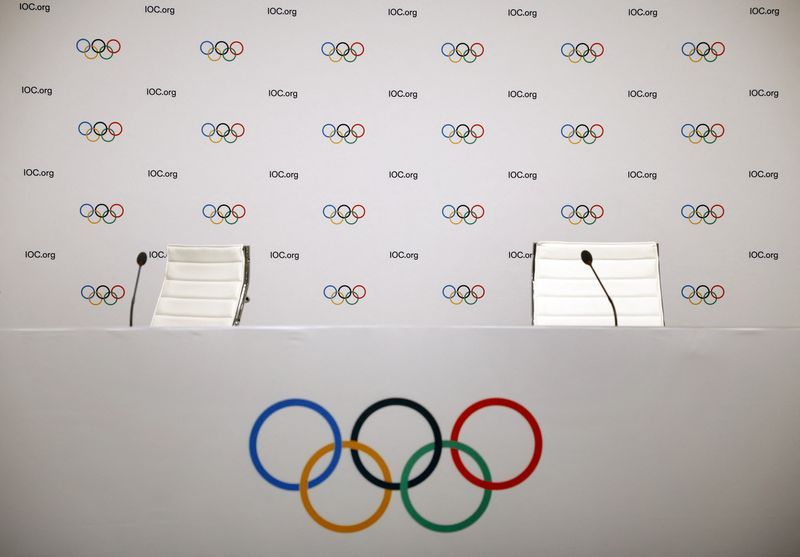
The International Olympic Committee is set to examine proposed alterations to the Olympic Charter this week that would reinforce the principle of political neutrality within global sport. The timing of these amendments has drawn significant scrutiny from observers and watchdog organisations, particularly given ongoing tensions surrounding Russian participation in international sporting events and the broader geopolitical backdrop affecting Olympic governance.
The proposed revisions would bolster language throughout the Charter emphasising that athletic competition must remain insulated from political interference. Central to the amendments is a clause that would explicitly underscore the IOC's responsibility to safeguard neutrality "at all times, free from governmental, cultural, societal or economic pressure." The IOC's official position frames these changes as protective measures designed to shield both athletes and competitions from external manipulation, preventing the Olympic movement from becoming a tool for advancing national political agendas.
However, the proposed framework has encountered substantial opposition from sports accountability groups. Rob Koehler, director general of Global Athlete, an influential advocacy organisation, has characterised the amendments as potentially counterproductive to Olympic principles. His concerns centre on what he perceives as the risks posed by diluting existing safeguards. Koehler warned that approving such measures would effectively transmit a troubling message: that major infractions including military aggression, systematic state-sponsored doping, and documented breaches of the Olympic Charter no longer function as disqualifying factors for full participation in the international sporting community.
Russia's complex relationship with Olympic governance stems from multiple layers of transgression. Russian athletes have endured sanctions stemming from a state-orchestrated doping programme traceable to the 2014 Sochi Winter Games, revelations that fundamentally damaged trust in the Russian sporting apparatus. The 2022 invasion of Ukraine prompted the IOC to recommend the exclusion of Russian and Belarusian competitors from international events. Subsequently, in October 2023, the IOC suspended the Russian Olympic Committee itself after the body recognised regional Olympic councils operating in territories under Russian military occupation in Ukraine, actions the IOC deemed violations of both the Olympic Charter and recognised principles of territorial sovereignty.
Despite these formal censures, the IOC has embarked on a gradual trajectory toward relaxing restrictions on Russian participation. In December, the Committee signalled that youth athletes from Russia and Belarus should be permitted to compete internationally without qualification limitations. Last month, the IOC took the more dramatic step of entirely lifting restrictions on Belarusian athletes, effectively enabling their unimpeded access to international competitions, including qualifiers for the 2028 Los Angeles Olympics. Notably, comparable relief was not extended to Russian athletes in that announcement, yet analysts have begun speculating about the possibility of analogous decisions materialising in the coming months.
The strategic logic underpinning the proposed Charter amendments becomes clearer when examined against this backdrop. By emphasising political neutrality as the overriding Olympic principle, the IOC would effectively reframe discussions about Russian participation as matters of depoliticisation rather than accountability for specific violations. This linguistic and philosophical shift could provide institutional cover for gradually restoring Russian access to international sporting platforms, as IOC leadership advocates for an approach detached from what some describe as geopolitical considerations.
Russian officials have actively pursued this pathway. Mikhail Degtyarev, serving simultaneously as Russia's sports minister and chairman of the Russian Olympic Committee, declared in April that his ministry and the ROC were mobilising all available resources to achieve the complete reinstatement of the Russian national team to international competitions, explicitly under the Russian flag rather than as neutral athletes. Such statements underscore Moscow's determination to restore not merely marginal participation but full Olympic standing with associated national representation and prestige.
President Vladimir Putin himself weighed in on the matter in April, expressing hope that the IOC's recently appointed leadership would adopt a more accommodating posture toward Russian interests. This public intervention from Russia's highest political office illustrates how comprehensively the Olympic question has become intertwined with broader state priorities in Moscow, lending weight to concerns that the neutrality amendments could inadvertently facilitate what amounts to political rehabilitation of Russian sport through the back door of institutional governance.
Simultaneously, the World Anti-Doping Agency maintains ongoing investigations relevant to Russian athletics, adding another layer of complexity. In May, the IOC announced that its legal affairs commission was reviewing information concerning the ROC while simultaneously examining Russia's anti-doping system, with WADA's investigations identified as a continuing point of concern. This procedural circumspection suggests some institutional hesitation about moving too precipitously toward full Russian reintegration, even as the broader policy environment appears to be shifting.
Beyond the Russian dimension, the proposed Charter modifications include provisions that would remove the fixed roster of international sports federations from the Olympic Charter framework. This change would grant the IOC substantially greater discretion in determining which sports appear on future Olympic programmes, with decisions increasingly weighted toward considerations of operational cost, logistical feasibility, and worldwide commercial appeal. For nations in the Southeast Asian region and beyond, such reforms could significantly alter which athletic disciplines receive Olympic platform status and associated resources and prestige.
The amendments arriving for consideration this week thus represent far more than technical governance adjustments. They constitute potential pivots in how the Olympic movement balances principles of political neutrality against accountability for systemic sporting violations and geopolitical transgressions. The outcomes will reverberate across international sport and establish precedents affecting athletes from multiple nations, including regional competitors who may face either expanded or contracted opportunities depending on how the IOC ultimately reconciles competing institutional pressures and philosophical commitments.