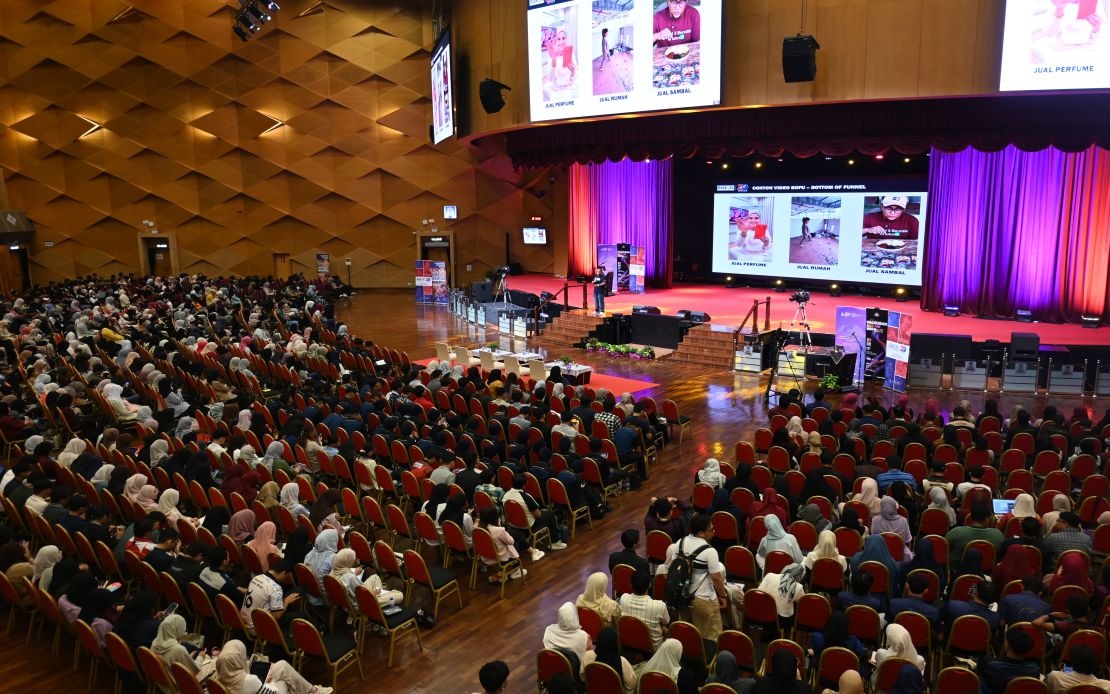
A landmark entrepreneurship seminar held at Universiti Teknologi MARA's Shah Alam campus has achieved a historic milestone by drawing nearly 7,000 student participants, both in person and via digital channels. The Usahawan MADANI Mega (SUM MEGA) 2026 gathering earned official recognition from the Malaysia Book of Records for hosting the largest student participation in an entrepreneurship seminar, underscoring the mounting enthusiasm among Malaysian youth for launching their own ventures. Organised by the National Entrepreneurship Institute (INSKEN) in partnership with the Malaysian Academy of SME and Entrepreneurship Development (MASMED) and UiTM, the event brought together aspiring entrepreneurs from university campuses across the country for intensive knowledge exchange and networking opportunities.
The scale of attendance points to a pronounced shift in how Malaysia's younger generation perceives business creation as a legitimate and attractive career trajectory. Datuk Mohamad Alamin, deputy minister for Entrepreneur and Cooperatives Development, characterised the turnout as evidence that entrepreneurship has transcended its status as a niche pursuit and now resonates as a mainstream aspiration among students. He emphasised that this cultural transformation carries significant weight for the nation's economic competitiveness, particularly as Malaysia navigates an increasingly complex global marketplace where innovation and agility determine success.
The government views entrepreneurship as far more than individual career advancement. Through the Ministry of Entrepreneur and Cooperatives Development (KUSKOP), the MADANI administration has positioned small and medium enterprise creation as a cornerstone of national economic policy. Mohamad Alamin outlined the ministry's multifaceted support framework, encompassing capacity building programmes, targeted financing mechanisms, pathways to market access, digital transformation assistance, and business advisory services. This integrated approach recognises that aspiring entrepreneurs require not merely inspiration but concrete infrastructure, mentorship, and capital to transition from concept to operational reality.
The economic significance of entrepreneurship development extends beyond individual success stories. Job creation through small business ventures alleviates pressure on formal employment markets while simultaneously strengthening local supply chains and reducing reliance on imports. Entrepreneurs function as innovation catalysts, introducing new products, services, and business models that challenge incumbents and drive productivity gains across entire sectors. For a nation seeking to upgrade its economic structure and move away from dependence on low-cost manufacturing, this entrepreneurial dynamism proves essential to long-term prosperity.
Datuk Mustaffa Kamil Ayub, chairman of INSKEN's Board of Trustees and a UiTM board member, framed the seminar's exceptional response as validation that entrepreneurial culture is taking deeper root within Malaysian society. He stressed the importance of repositioning entrepreneurship not merely as a career option among many but as a foundational mindset and collective movement capable of reshaping the nation's economic trajectory. This reframing carries pedagogical implications, suggesting that educational institutions must integrate entrepreneurial thinking throughout their curricula rather than confining it to specialised business programmes.
During the seminar, participants engaged with practitioner-led sessions structured around the MOFA framework, an instructional approach that systematically covers marketing, operations, finance, and business administration dimensions. This methodology equips emerging entrepreneurs with tangible operational knowledge, helping them understand how theoretical business concepts translate into day-to-day management challenges. By addressing these four interconnected pillars, the framework builds resilience among new venture founders, enhancing their likelihood of surviving the critical early years when many startups falter.
INSKEN's broader portfolio of entrepreneurship initiatives extends well beyond single-day seminars. The institution administers ongoing programmes including the INSKEN Masterclass, designed for intensive skill development; BANGKIT, which targets specific entrepreneurial segments; and PROTÉGÉ, a mentorship-oriented scheme pairing established business leaders with emerging entrepreneurs. This layered approach acknowledges that different entrepreneurs require customised support depending on their experience level, industry sector, and growth stage. A university graduate launching a technology startup faces entirely different challenges than a mature-age individual transitioning from employment to self-employment.
The coordination evident in SUM MEGA 2026 reflects a growing recognition that entrepreneurship development functions optimally when multiple stakeholders align their efforts. Government agencies, higher education institutions, commercial banks and microfinance providers, specialist entrepreneurship development organisations, and the business community must operate in concert rather than isolation. Financial institutions need clear signals about which ventures merit funding; government must remove regulatory barriers while maintaining prudent oversight; universities should equip graduates with practical skills; and established businesses can serve as mentors and potential partners for startups.
The seminar directly advances Malaysia's National Entrepreneurship Policy 2030, a comprehensive framework articulating the nation's ambitions for entrepreneurial development over the coming decade. This policy represents a deliberate strategic choice to make entrepreneurship central rather than peripheral to Malaysia's economic identity. By nurturing what policymakers term "resilient, competitive, and high-impact entrepreneurs," the nation aims to cultivate ventures capable of competing globally and creating meaningful employment for Malaysian workers across diverse sectors.
For Malaysian businesses and economic observers, the implications warrant serious attention. Sustained investment in entrepreneurship capacity today determines the competitive posture of Malaysian enterprises over the next decade. An economy that systematically develops entrepreneurs from university age onwards accumulates human capital that manifests as innovation, job creation, and export competitiveness. Conversely, nations that neglect entrepreneurship education risk talent drain as ambitious individuals seek environments offering better support for business creation. SUM MEGA 2026's unprecedented participation suggests that Malaysian youth sense genuine commitment from government and educational institutions, potentially reversing previous patterns of brain drain.