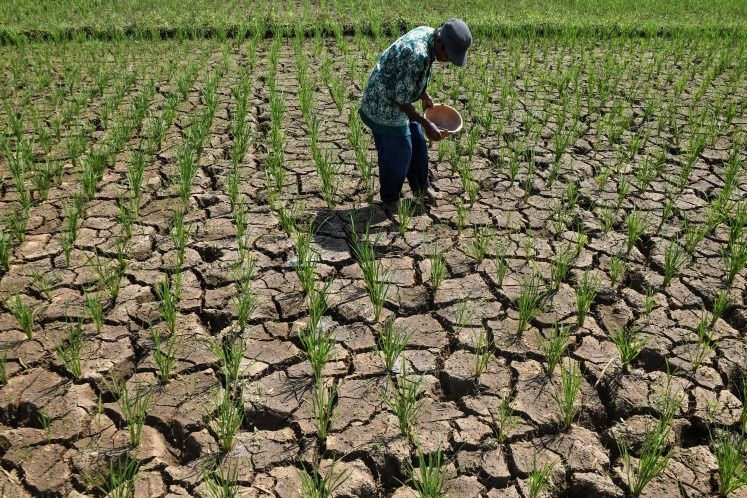
Indonesia faces a deepening water crisis as drought conditions spread across multiple regions, driven by El Niño climate patterns that have triggered an exceptionally dry season. The National Disaster Mitigation Agency recently identified three additional areas—Gunungkidul in Yogyakarta, Semarang in Central Java, and Jember in East Java—where at least 700 households are struggling without adequate water supplies. This expansion of the affected zone signals a broader climate emergency that threatens to destabilize both rural communities and national food production systems across the archipelago.
The geographic scope of the crisis has expanded dramatically in recent weeks. Beyond the newly affected regions, more than 7,100 households across multiple provinces were already experiencing severe water shortages, including communities in Cilacap, Klaten, and Jepara in Central Java; Bantul in Yogyakarta; Karawang, Tasikmalaya, and Sukabumi in West Java; and Seram in Maluku. Local governments have initiated emergency water distribution programs using tanker trucks to deliver drinking water directly to affected areas, but such measures represent only temporary relief rather than sustainable solutions. The scale of intervention required underscores the severity of conditions and the strain being placed on regional administrative capacity.
Several provinces have formally declared drought alert status in attempts to streamline emergency response protocols. Gunungkidul entered a 90-day drought alert phase in June, while West Java implemented similar measures this month. West Nusa Tenggara took more dramatic action when authorities in West Lombok declared a full drought emergency on June 15 as approximately 3,600 households faced critical water shortages. Banten province remained in assessment mode, deliberating whether to issue a province-wide alert that would authorize accelerated water distribution efforts. These formal declarations carry significant implications for resource allocation and demonstrate the political acknowledgment that conditions have surpassed normal seasonal fluctuations.
The underlying cause of this intensifying crisis is El Niño, a climate phenomenon characterized by abnormally warm Pacific Ocean surface temperatures that alter global precipitation patterns. Indonesia's meteorological authorities have warned that this year's dry season could prove "extreme," potentially extending water scarcity and agricultural disruption far beyond typical seasonal norms. By mid-June, more than one-third of Indonesia's climate zones had entered the dry season officially, while nearly half the nation was already recording rainfall levels significantly below historical averages. The Meteorology, Climatology and Geophysics Agency projects that conditions will peak between July and September, with below-normal rainfall expected across more than 80 percent of the archipelago.
The implications for Indonesia's agricultural sector have alarmed policymakers and prompted urgent discussions within government circles. Water scarcity directly threatens rice production, the staple crop underpinning national food security and the primary livelihood for millions of rural farmers. Climatology experts from the meteorological agency have advocated for immediate adaptive strategies, including adjusting planting calendars to align with water availability, promoting drought-tolerant crop varieties with shorter growing cycles, and diversifying cultivation beyond traditional rice monoculture. Agriculture Minister Amran Sulaiman has claimed the ministry anticipated worsening conditions and accelerated mitigation strategies, including expanded irrigation pump deployment to maintain water availability throughout critical growing phases.
Government officials have attempted to address public anxieties regarding food supply stability, with the Agriculture Ministry repeatedly emphasizing that national rice reserves have reached historically elevated levels and remain sufficient to meet domestic demand through the coming year. The House of Representatives' Commission IV, which oversees agricultural and food policy, has pressured the government to expedite targeted assistance in vulnerable regions, specifically requesting accelerated distribution of high-quality seeds, fertilizers, farming equipment, and livestock feed. These interventions aim to minimize planting delays and production losses, though their effectiveness depends on swift implementation and adequate resource availability.
However, technical responses alone cannot address the systemic vulnerabilities exposed by the current drought. Bagas Yusuf Kausan, a researcher at Yayasan Amerta Air Indonesia, a think tank specializing in water policy, has emphasized that Indonesia requires substantial long-term infrastructure investment to ensure water security in chronically drought-affected regions. He advocates for expanding piped water delivery systems managed by regional water utilities, particularly in areas with historically limited groundwater access. Critically, he suggests that government support should include subsidized water pricing for vulnerable populations, framing affordable clean water access as a fundamental public service rather than a market commodity.
Beyond climate variables, environmental degradation amplifies Indonesia's vulnerability to drought impacts. Human-driven environmental damage, including large-scale land conversion and unsustainable groundwater extraction, has progressively depleted natural water reserves and diminished landscape capacity to retain precipitation. Wetland conversion, forest clearing, and agricultural intensification have disrupted hydrological cycles, making many regions increasingly fragile during periods of below-normal rainfall. Kausan argues that government policy should leverage El Niño as a catalyst for strengthening environmental protections, particularly restricting land conversion in water catchment zones that replenish groundwater and maintain hydrological balance.
For Southeast Asian observers, Indonesia's drought crisis carries significant regional implications. As the world's third-most-populous nation and a major agricultural producer, disruptions to Indonesian food production create ripple effects throughout regional markets. Rice price volatility linked to Indonesian supply constraints can destabilize food security across neighboring countries that depend on regional grain supplies. The crisis also illustrates broader climate vulnerabilities affecting tropical archipelagic regions, where monsoon pattern disruptions and oceanic temperature anomalies create acute challenges for populations dependent on agriculture.
The Indonesian government faces a critical juncture requiring coordination across multiple agencies and budget allocations. Immediate priorities include ensuring emergency water access for affected populations while simultaneously implementing agricultural adaptation strategies to minimize production losses. Simultaneously, policymakers must confront longer-term structural challenges, including aging water infrastructure, unsustainable groundwater depletion, and environmental degradation that compounds climate vulnerabilities. Without comprehensive policy approaches addressing both emergency response and systemic reform, Indonesia risks facing recurring crises as climate variability intensifies in coming years.

